
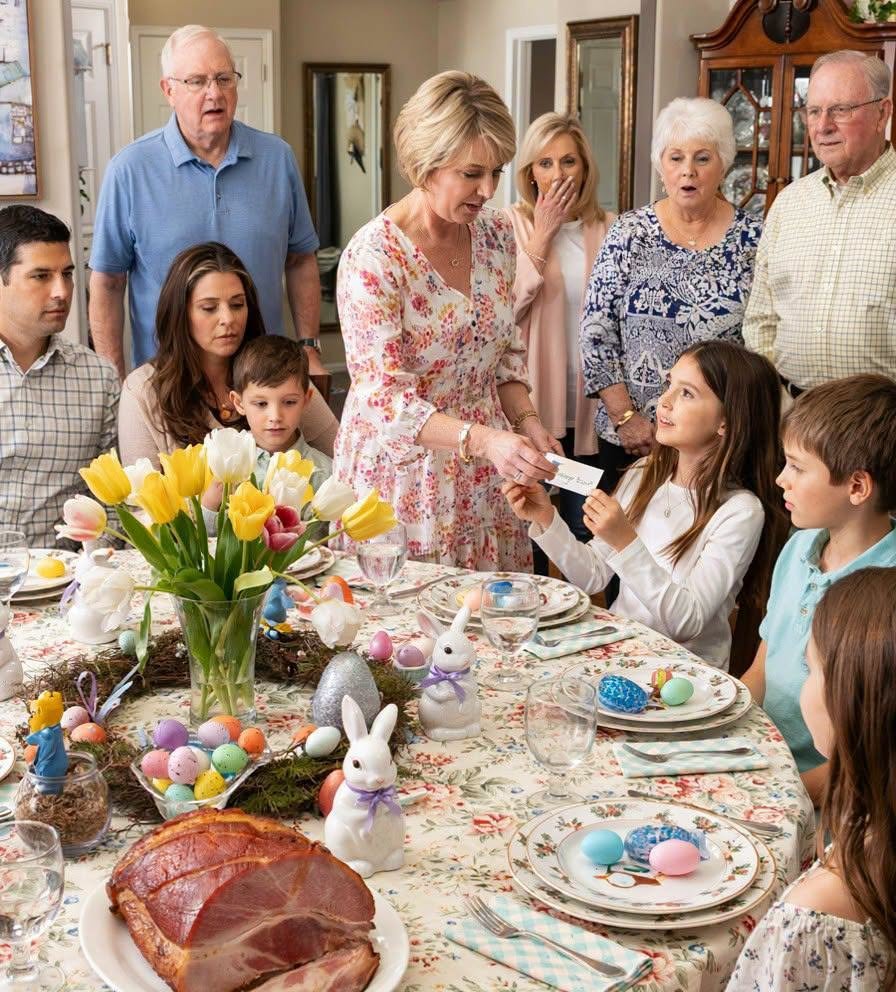
Easter at my parents’ house always had a way of pretending everything was fine.
The table looked beautiful. My mother had pressed the floral linen herself, the good plates were stacked beside the ham, and sunlight came through the kitchen windows in clean yellow strips that made the whole house look softer than it really was. The air smelled like brown sugar glaze, coffee, lemon candles, and the kind of expensive hand soap my mother only put out when relatives were coming over. In the backyard, the kids ran between the bushes looking for pastel eggs while the adults stood around with drinks and made polite conversation. From the outside, it looked like the kind of family people are lucky to have. But families can look warm from the porch and still have cold rooms inside.
My wife, Marianne, was in the kitchen before most people had even arrived. She was rinsing serving spoons, moving foil off the casseroles, refilling cups, and checking on my father because he had been moving slowly ever since his surgery. She brought him coffee without being asked. She adjusted a pillow behind his back. She noticed my mother was close to burning the rolls and pulled them out before anyone else smelled it. That was Marianne. She loved people in tasks. Not in speeches. Not in big emotional performances. She loved by remembering appointments, packing snacks, sending thank you cards, sitting in waiting rooms, folding laundry that was not hers, and showing up early enough that nobody had to panic.
We had been married eight years. In those eight years, she had helped care for my grandmother when the rest of the family suddenly got busy. She had planned birthdays for cousins who barely remembered to text her back. She had held my mother’s hand through one long hospital hallway after another. She had become family in every way that should matter.
But my Aunt Carol had never let that happen in her mind. To Carol, Marianne was still the woman Ryan married. She never said it loudly at first. That was not Carol’s style. Carol preferred soft insults wrapped in manners. She would ask whether Marianne’s real family was coming for Thanksgiving. She would say things like, well, of course Marianne wouldn’t understand how our side does things. She would smile while saying it, as if the smile erased the blade.
I remembered the first time I noticed it clearly, years earlier, at a Fourth of July barbecue where Carol had spent twenty minutes describing a cousin’s wedding in exhaustive detail to everyone at the table except Marianne, angling her body so precisely that it could not have been an accident, then turning at the very end to ask Marianne, almost as an afterthought, whether she even liked weddings. I had laughed it off that night, told myself I was reading too much into a woman who simply had a strong personality. It took years of small moments like that, stacked one on top of another, before I finally understood that Carol’s coldness toward Marianne was not incidental. It was a position she had chosen and maintained with the same discipline she brought to everything else in her life.
I had called her on it before. Sometimes directly. Sometimes with that tired family compromise where you try to correct cruelty without ruining dinner. That was my mistake. Some people take your restraint as permission.
Carol arrived that Easter morning wearing a pastel floral dress and carrying a designer purse that looked more guarded than some bank vaults. She kissed my mother on both cheeks, gave my father a careful little hug, and glanced at Marianne like she was part of the hired help who had wandered too close to the dining table. Marianne noticed. Of course she did. She just turned back to the sink and kept washing dishes.
Ethan noticed too. My son was ten, which meant he noticed more than adults wanted him to and understood less than he needed to. Lily was seven and still young enough to believe that if someone smiled at you, they probably meant well. That belief did not survive the afternoon.
Lunch started the way Easter lunch always did. My mother fussed over the ham. My father made the same joke about deviled eggs that he made every year. The kids argued over who had found the most plastic eggs in the backyard. Marianne sat beside me, tired but calm, with her hair tucked behind one ear and her sleeves still pushed up from helping in the kitchen.
Carol sat near the middle of the table. She liked the middle. She liked any chair that made people turn their heads when she spoke. That had been true for years, but it got worse after my grandfather died. He left behind the family trust, several commercial properties, and a mess of land use clauses that most of the family did not understand. Carol understood enough. More importantly, she made everyone believe she understood everything. She managed the trust distributions. She attended the lender meetings. She kept the files. She decided when information was too complicated for the rest of us. For years, my parents let her do it because it was easier than arguing. My cousins let her do it because they liked the checks. And I let too much slide because I had my own career, my own family, and the foolish belief that blood eventually behaves like blood.
After lunch, the table settled into that heavy holiday quiet. Plates were scraped clean. Coffee cups sat beside half eaten slices of cake. The kids were flushed from sugar and sunshine. My mother was gathering forks when Carol tapped one polished nail against the clasp of her purse. It was a small sound. But everyone heard it.
Carol stood a little straighter. Alright, kids, she said. Come here. I’ve got something special for you.
The children came fast. They always did when an adult used that voice. Lucas came first, then Emily, Noah, and Sophie. Ethan stood just behind them, trying not to look too eager. Lily leaned into my knee, holding my hand and watching Carol’s purse like magic might come out of it.
Carol opened the purse and pulled out envelopes. White envelopes. Thick ones. The kind that do not hold greeting cards alone.
For Lucas, she said. Lucas took his and grinned. For Emily. Emily bounced once on her toes. For Noah. Noah tore his open before Carol had even finished saying his name. For Sophie. Sophie squealed when she saw what was inside.
Five hundred dollars, Lucas shouted.
The room erupted in impressed laughter. One parent said, Carol, that’s too much. Another pulled out a phone and started recording. My father smiled in that careful way he smiled whenever Carol did something large enough to make disagreement seem ungrateful.
Five hundred dollars is not candy money. It is not a cute Easter surprise. It is enough money for school clothes, groceries, car insurance, a utility bill, or a week of breathing room. Every adult in that room knew that.
Ethan shifted forward. He was trying to be patient. I saw him smooth the front of his shirt with both hands, and that small gesture went through me harder than it should have. Lily looked up at me. Her eyes were bright. She thought her turn was coming.
Carol closed her purse. Just like that. The clasp clicked. It was not loud. It did not need to be.
Lily tugged my sleeve. Daddy, she whispered, did she forget us?
The room froze. My father’s coffee cup stopped halfway to his mouth. My mother’s hand tightened around a stack of plates. One of the cousins looked down at the envelope in his hand as if it had suddenly become dangerous. Marianne’s hands went still in her lap. The ceiling fan kept turning. A spoon slid slightly against a plate. Somewhere near the window, one of my mother’s lemon candles guttered in a draft. Nobody moved.
I looked at Carol. I gave her one chance. Not because she deserved it. Because my children were watching, and I wanted them to see that their father did not go looking for a fight.
Carol, my mother said quietly. You skipped Ethan and Lily.
Carol smiled. That was when I knew. It had not been a mistake.
Oh, please, she said, waving one hand. I didn’t skip anyone. This money comes from the family trust earnings. I gave envelopes to the family children.
The word family landed on the table like a glass breaking.
What is that supposed to mean, I asked. My voice was calm. That kind of calm has fooled people before.
Carol looked at me, then turned her eyes toward Marianne. It means exactly what it means, Ryan. The trust is for blood relatives. Marianne isn’t family. She’s just someone you married. Why should her children benefit from our family’s hard work?
Marianne’s face changed. Not dramatically. That would have been easier to watch. Her expression simply closed, like someone had pulled a curtain across a lit window.
Our children are blood relatives, I said. They are my son and daughter.
Carol’s smile thinned. Adopted or not, it’s different, and you know it, she said. If Marianne wants her kids to have five hundred dollars, she can work an extra shift.
Someone gasped. Someone else whispered Carol’s name like that would fix it. It did not. A gasp does not defend a child. A whisper does not undo public shame.
Lily pressed her face into my side and started crying softly. Ethan stared at the floor. His ears had gone red. He was trying to hold himself still, trying to become invisible, trying not to give the room one more thing to watch.
That is what broke something in me. Not Carol’s words. Not my parents’ silence. My son trying to disappear at a family dinner.
For one ugly heartbeat, I pictured flipping the table. I pictured ham, envelopes, coffee, and Carol’s perfect purse sliding across the hardwood floor. I pictured shouting so loudly nobody could pretend they had not heard. But Marianne was sitting across from me, and the kids were beside me, and rage would have made the room about me. This was about them.
I looked at Carol. Then I looked at my parents. My mother’s eyes were wet, but she still said nothing. My father looked older than he had that morning, but he said nothing too. Their silence was not confusion. It was a choice.
Then don’t call us family anymore, I said.
My chair scraped back hard against the floor. Ethan flinched at the sound. I reached for his hand and lifted Lily into my arms.
Marianne, I said, let’s go.
Carol gave a brittle little laugh behind us. Ryan, don’t be dramatic. It’s just an inheritance policy.
I kept walking. Marianne rose without a word. She did not look at Carol. She did not look at my parents. She picked up Lily’s sweater from the back of a chair and followed me through the hallway. We passed the Easter baskets by the door. We passed the family photos on the wall. We passed the little American flag my mother kept in a planter on the front porch. The afternoon was bright enough to hurt.
The kids climbed into our SUV in silence. I buckled Lily because her hands were shaking too badly to manage the strap. Ethan buckled himself and turned his face toward the window. No one came out after us. Not my mother. Not my father. Not one cousin. The front door stayed closed.
On the drive home, Marianne held my hand. Her thumb moved in small circles over my knuckles. That was how she comforted people. Quietly. Even when she was the one bleeding inside.
I’m sorry, she whispered once.
End Part Here: Aunt Carol’s Easter Envelopes Exposed The Cruelest Family Secret