
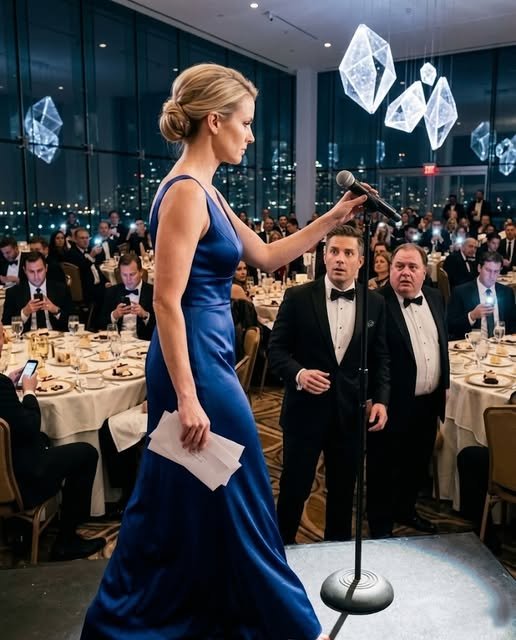
HE BET $1,000 THAT I WOULD BREAK DOWN IN PUBLIC
My husband’s laugh reached me before his words did.
I was standing in the hallway with his freshly pressed tuxedo draped over my arm, the plastic garment bag rustling softly beneath my fingers. His office door was half open, and his phone was on speaker.
He was talking loudly enough for every word to spill into the hallway.
“She’ll make a scene,” Greg said through the speaker, clearly amused. “I’m serious, Derek. Full breakdown. Tears, yelling, the whole thing. Women like her always think emotion is power.”
Derek chuckled.
I heard ice tap against the side of his glass.
“Double or nothing,” he said. “She cries before dessert.”
I stopped breathing.
The tuxedo slipped slightly from my arm, but I caught the hanger before it hit the floor.
For several seconds, I didn’t move.
I simply stood there staring at the thin strip of light beneath his office door, feeling as though I were standing at the edge of something I could never return from.
Greg laughed again.
“A thousand dollars says she loses it the second you announce it. You better have someone ready to film.”
“Oh, someone will,” Derek replied.
His voice was calm.
Almost pleased.
“The whole leadership team will be there. Investors too. She won’t be able to help herself. Drama is like oxygen for her.”
Drama.
Like oxygen.
He was talking about me.
My heart pounded so hard that I could feel it in my throat.
For one furious second, I wanted to storm into the office, throw his tuxedo across his desk, and demand an explanation.
I wanted to ask how long he had been telling people this version of me.
The hysterical wife.
The unstable partner.
The emotional woman who couldn’t control herself.
A woman whose public humiliation was apparently entertaining enough to turn into a dinner bet.
But I didn’t move.
Greg shifted the conversation toward the gala.
They discussed seating arrangements.
The board.
The investors.
The timing of Derek’s announcement.
Then Greg said something about making the transition look graceful.
That was when I understood.
They were talking about removing me from the company.
My resignation.
They never said the word directly.
They didn’t have to.
A week earlier, I had seen an unfinished email on Derek’s laptop.
The subject line read:
LEADERSHIP TRANSITION.
My name appeared inside the message like a body hidden in a drawer.
At the time, I had convinced myself there had to be an explanation.
Now I knew better.
I remained in the hallway until the call ended.
I heard Derek push back his chair.
Then the soft clink of his glass.
Then that familiar exhale he always made when he believed he had handled something cleverly.
His footsteps moved toward the office door.
I quickly stepped into the darkness beside the guest bathroom and pressed the tuxedo against my chest.
Derek walked past me without looking up.
His attention was fixed on his phone.
His expression was relaxed.
Satisfied.
He never saw me.
He never realized his wife was standing only a few feet away, holding his clothes while her marriage quietly split open.
When he disappeared down the stairs, I went into our bedroom.
I hung the tuxedo carefully on the wardrobe door.
Then I smoothed the lapels as though nothing had happened.
Finally, I sat on the edge of the bed.
The clock read 6:42 p.m.
December 27.
Four days until the gala.
Four days until my husband planned to erase me from the company we had built together in front of three hundred people.
And apparently, four days until he expected to win a thousand dollars by watching me fall apart.
Most people would probably say that hallway was where my story began.
It wasn’t.
My story had started three years earlier.
Back then, Derek and I were standing inside a glass-walled conference room on the thirtieth floor of a downtown Chicago tower.
Champagne sparkled in my hand.
Outside the windows, the city was turning blue beneath the evening sky, office lights glowing silver across the skyline.
On the table in front of us was a contract.
Our names were printed across it in gold.
Harrison & Blake Consulting.
Derek stood at the head of the table with his tie loosened and his shirt sleeves rolled to his elbows.
He looked handsome.
Confident.
Alive with possibility.
He poured champagne into my glass himself.
“To Harrison & Blake Consulting,” he said.
Then he smiled.
“To the firm we’re going to build.”
He lifted his glass.
“To us.”
I smiled and touched my glass to his.
“To us.”
Those two words had always worked on me.
We had spent months building the company together.
I had left a stable director position at a larger firm because Derek believed we could create something better on our own.
Something smarter.
Leaner.
More ambitious.
Derek had confidence, polish, and the ability to walk into a room and make people believe they were witnessing the future.
I had something different.
I understood clients.
Operations.
Growth.
Structure.
I knew how to take ambition and turn it into something people could actually depend on.
By the time our names were etched onto the conference room door, I had already secured two major accounts and written most of the company’s original growth strategy.
Derek handled visibility.
I handled the things that kept the company standing.
At the time, I loved the balance.
Or at least I believed I did.
The next morning, we got married at city hall.
That had been Derek’s idea too.
He wanted everything completed at once.
The company paperwork.
Our marriage license.
Estate planning.
Founder agreements.
Legal protections.
He called it elegant.
Symbolic.
Efficient.
Derek loved words like that.
Words that made control sound romantic.
I remember standing near the clerk’s desk, still glowing from the previous night, when Derek handed me a perfectly organized stack of documents.
Each signature page had a small silver tab attached to it.
“A few legal housekeeping pieces,” he said.
Then he kissed my forehead.
“Nothing dramatic. You know me. I overprepare.”
I laughed.
“I know.”
And then I signed wherever he pointed.
That was the danger of being deeply in love with a man who needed to be admired.
You could mistake certainty for safety.
Derek moved through life as though he had already decided how every conversation should end.
When I was in love with him, that confidence felt like protection.
For a while, maybe it even was.
The first year of the company nearly destroyed both of us.
We worked impossible hours.
We slept on office couches.
We ate cheap takeout over spreadsheets.
There were nights when I woke up at three in the morning thinking about payroll.
During the ninth month, the company ran dangerously short on cash.
We were going to miss staff salaries.
I owned a condo my grandmother had left me.
It was the only significant asset I had entered the marriage with.
I sold it.
Then I used the money to keep our employees paid.
When I told Derek what I had done, he cried.
Or at least I believed he did.
He held me and whispered,
“We will never forget this.”
Then he pulled back and looked directly into my eyes.
“When this company becomes huge, I’m going to tell everyone who really saved it.”
I believed him.
But he never told them.
Success came quickly after that.
New clients signed.
The staff grew.
Revenue climbed.
Business magazines started describing us as a married founder team with complementary strengths.
Derek loved those interviews.
He was good at them.
He had a remarkable ability to say something only half true with such confidence that nobody thought to question the other half.
In public, he called me the strategic heart of Harrison & Blake.
In private, he slowly began excluding me from important conversations.
At first, the changes were small.
A meeting scheduled without me.
A client call I somehow wasn’t included on.
A decision made before I entered the room.
Then it became more obvious.
Executives began saying things like,
“Derek already filled us in.”
Or,
“Derek said you might be too busy for this one.”
Sometimes people looked at me strangely after I disagreed with him.
Not angry.
Cautious.
As if someone had warned them that disagreement with me could become dangerous.
The first time I truly became afraid wasn’t when I found evidence that Derek was having an affair.
That hurt.
But betrayal was something I could understand.
The frightening part came later.
It was realizing that Derek had been preparing rooms before I entered them.
He had been telling people who I was before they had the chance to decide for themselves.
Too emotional.
Too reactive.
Overwhelmed.
Difficult under pressure.
Sensitive.
Derek never made the accusations dramatic enough to sound cruel.
He was smarter than that.
He planted them carefully.
A concerned husband here.
A worried business partner there.
A small joke followed by a sympathetic smile.
By the time I entered certain meetings, people had already been given instructions for how to interpret me.
If I disagreed strongly, I was emotional.
If I defended myself, I was defensive.
If I remained quiet, I was clearly struggling.
Whatever I did, Derek’s version of me arrived first.
I had been rewritten before I even entered the room.
I didn’t understand it immediately.
I noticed it in pieces.
In strange pauses.
Changed expressions.
Conversations that stopped when I entered.
Decisions I somehow learned about last.
At first, I thought success had changed our marriage.
Then I thought Derek was simply becoming arrogant.
Later, when I found evidence of another woman, I thought the affair explained everything.
But standing in that hallway on December 27, listening to my husband bet money on my public breakdown, I finally understood the truth.
The affair wasn’t the plan.
It was only part of it.
Derek wasn’t simply betraying our marriage.
He was dismantling my credibility.
And he had been doing it for much longer than I realized.
By the time I understood the game, he had already written my exit.
He had invited three hundred people to watch it.
And he had placed a thousand-dollar bet on how badly I would fall apart.
What Derek didn’t know was that I had heard everything.
And for the first time in our marriage, I wasn’t going to react the way he expected.
PART 2 — THE GALA
For the next four days, I behaved exactly the way Derek expected me to.
I smiled.
I answered emails.
I reviewed gala materials.
I confirmed the seating chart.
I even reminded him to pick up his cuff links from the jeweler.
If he noticed anything different about me, he never said it.
That was Derek’s greatest weakness.
He believed people only understood what he allowed them to understand.
And because I had spent years reacting to his manipulation instead of studying it, he assumed I would keep doing exactly that.
This time, I didn’t.
The morning after I overheard his phone call, I went to the office two hours early.
The building was almost silent.
No assistants.
No interns.
No Derek.
Just the cleaning staff finishing the lobby floors and the soft hum of elevators moving through thirty floors of glass and steel.
I closed my office door and opened every document I had spent years avoiding.
Founder agreements.
Corporate bylaws.
Insurance records.
Ownership schedules.
Board voting rights.
Employment contracts.
The papers Derek had once called “legal housekeeping.”
For the first time, I read every line.
By 8:15 a.m., I understood why Derek had always been so comfortable.
Three years earlier, I had signed an agreement giving him executive authority over day-to-day leadership decisions.
But that wasn’t the whole story.
Buried deeper in the documents was something he had apparently forgotten.
Because I had funded the company during its first major cash crisis with proceeds from the sale of my inherited condo, my attorney at the time had insisted on one protection before releasing the funds.
My investment had been converted into preferred founder equity.
Not ordinary shares.
Preferred.
With enhanced voting protection for any action involving forced removal of a founder.
Derek could recommend that I resign.
He could embarrass me.
He could tell everyone I was unstable.
But he could not legally remove me without triggering a formal board vote.
And on certain founder-level decisions, my shares carried enough weight to block him.
I stared at the document for almost a full minute.
Then I laughed.
Quietly.
For the first time in days.
Derek had spent years convincing me that I was becoming irrelevant inside a company I had helped build.
The paperwork said otherwise.
That afternoon, I called Claire Morgan, our outside corporate attorney.
Not Derek’s attorney.
The company’s.
I asked one question.
“If a founder is publicly pressured to resign without prior board approval, what happens?”
There was a pause.
Then Claire said, “Why are you asking?”
“Because I think Derek is planning to do exactly that at the gala.”
The silence on the other end changed.
“What makes you think that?”
“I heard him.”
I told her everything.
The phone call.
The bet.
The planned announcement.
The email draft.
The way he had spent months framing me as unstable.
When I finished, Claire spoke carefully.
“Do you have evidence?”
“I can get some.”
“Then get it.”
So I did.
Derek had made one enormous mistake.
He had always assumed I was too emotional to be methodical.
I spent the next three days becoming methodical.
I saved copies of emails.
Messages.
Meeting schedules.
Board communications.
I documented decisions I had been excluded from.
I found drafts of statements describing my “voluntary transition.”
Voluntary.
That word appeared repeatedly.
The problem was that I had never volunteered.
Then I found something worse.
An email from Greg to Derek.
If she refuses, push the burnout angle. People already believe she’s unstable under pressure.
Another message followed.
Once she reacts publicly, nobody will question why she has to go.
I read it twice.
Then a third time.
Derek had not simply predicted my breakdown.
He needed it.
The scene was part of the strategy.
My humiliation was evidence they planned to manufacture in real time.
I forwarded everything to Claire.
Her response came twenty minutes later.
Do not confront him privately.
We’ll handle this correctly.
The gala was held on New Year’s Eve at the Grand Meridian Hotel.
Three hundred guests filled the ballroom.
Clients.
Executives.
Investors.
Board members.
Local business reporters.
The chandeliers glowed over black-and-gold table settings while champagne moved through the room on silver trays.
Derek looked perfect.
Of course he did.
Black tuxedo.
White shirt.
Hair carefully styled.
The expression of a man certain the evening belonged to him.
When he saw me at the top of the ballroom stairs, he smiled.
For half a second, I saw genuine surprise in his face.
I had chosen a simple black gown.
No dramatic jewelry.
No bright color.
Nothing that could be described as attention-seeking.
I walked down the stairs calmly.
Derek came toward me and kissed my cheek.
“You look incredible.”
“Thank you.”
His hand rested briefly at my waist.
To anyone watching, we looked exactly like the successful founder couple people had read about in magazines.
Only Derek and I knew we had become strangers.
Or at least I knew.
He still thought he knew me.
Greg appeared behind him holding a champagne glass.
He smiled too widely.
“Big night.”
I looked directly at him.
“I have a feeling it will be.”
His smile flickered.
Dinner began at eight.
Derek spent most of it moving between tables.
Laughing.
Shaking hands.
Performing confidence.
I stayed seated.
At 9:15, Greg passed behind me and whispered something to Derek.
Derek glanced at me.
Then toward the stage.
That was the moment.
I could feel it.
My hands were resting quietly in my lap.
Across the room, Claire stood near one of the board members.
She gave me the smallest nod.
At 9:27, Derek walked onto the stage.
Applause filled the ballroom.
He stepped behind the podium.
“Three years ago,” he began, “Harrison & Blake started with two people, one idea, and far more confidence than common sense.”
Everyone laughed.
I smiled.
He talked about growth.
Clients.
Leadership.
The future.
Then his voice softened.
“And growth sometimes requires change.”
The room became quieter.
I saw Greg watching me from the side of the ballroom.
His phone was in his hand.
Recording.
There it was.
Derek continued.
“Tonight, I also want to recognize someone whose contribution has been essential to our story.”
He looked toward me.
“My wife, Elise.”
Applause.
I stood because everyone else expected me to.
Derek smiled.
But there was no love in it.
Only calculation.
“Elise has decided that the next chapter of her life requires stepping away from daily leadership responsibilities.”
A few people turned toward me.
My stomach tightened.
But I didn’t move.
Derek continued.
“She’ll remain part of the Harrison & Blake family while taking time to focus on her personal well-being and new priorities.”
Personal well-being.
There it was.
The burnout angle.
The unstable wife rewritten as someone quietly leaving for her own good.
Derek stretched out one hand toward me.
“Elise, would you join me?”
The ballroom erupted in polite applause.
Greg was still filming.
Derek expected tears.
Anger.
A scene.
I stood.
Then I walked toward the stage.
Every step felt strangely calm.
When I reached him, Derek leaned in and whispered through his smile,
“Just keep it graceful.”
I looked at him.
“I plan to.”
Then I turned toward the audience.
Derek offered me the microphone.
I took it.
The room went quiet.
I looked at the crowd.
At the board.
At the investors.
At Greg’s raised phone.
Then I smiled.
“Thank you, Derek.”
He relaxed slightly.
That was his second mistake.
“I actually didn’t know I was resigning tonight.”
The room froze.
Derek’s smile vanished.
Somewhere near the front, a fork hit a plate.
I continued.
“So I imagine this announcement is as surprising to me as it is to many of you.”
“Elise,” Derek said quietly.
I ignored him.
“I also want to clarify something before anyone leaves this room believing I stepped away voluntarily.”
Now the ballroom was completely silent.
“I did not.”
Derek reached for the microphone.
I stepped slightly away.
“And because Harrison & Blake has governance procedures, founder protections, and a board of directors, one executive cannot simply announce another founder’s resignation at a gala.”
People began looking toward the board table.
Derek’s face had gone pale.
I looked toward Greg.
“And Greg?”
He lowered his phone.
“No,” I said.
“Keep recording.”
A murmur went through the room.
“You wanted a reaction.”
I looked back at Derek.
“So let’s make sure you get the whole thing.”
Derek’s jaw tightened.
“This is not the place.”
I almost laughed.
“You chose the place.”
Then Claire Morgan stood.
She walked toward the stage holding a folder.
Derek saw her.
And for the first time that night, I watched fear replace confidence in his face.
Claire stepped to the front.
“Mr. Harrison,” she said, “the board received formal notice this afternoon of several governance concerns, including attempted misrepresentation of a founder’s voluntary resignation.”
Now nobody was pretending not to listen.
She continued.
“The board will be meeting immediately after this event to review the evidence.”
Derek stared at me.
“You went to the board?”
“No.”
I looked at him calmly.
“I went to the truth.”
The room exploded in whispers.
Greg began moving toward the exit.
Claire turned toward him.