
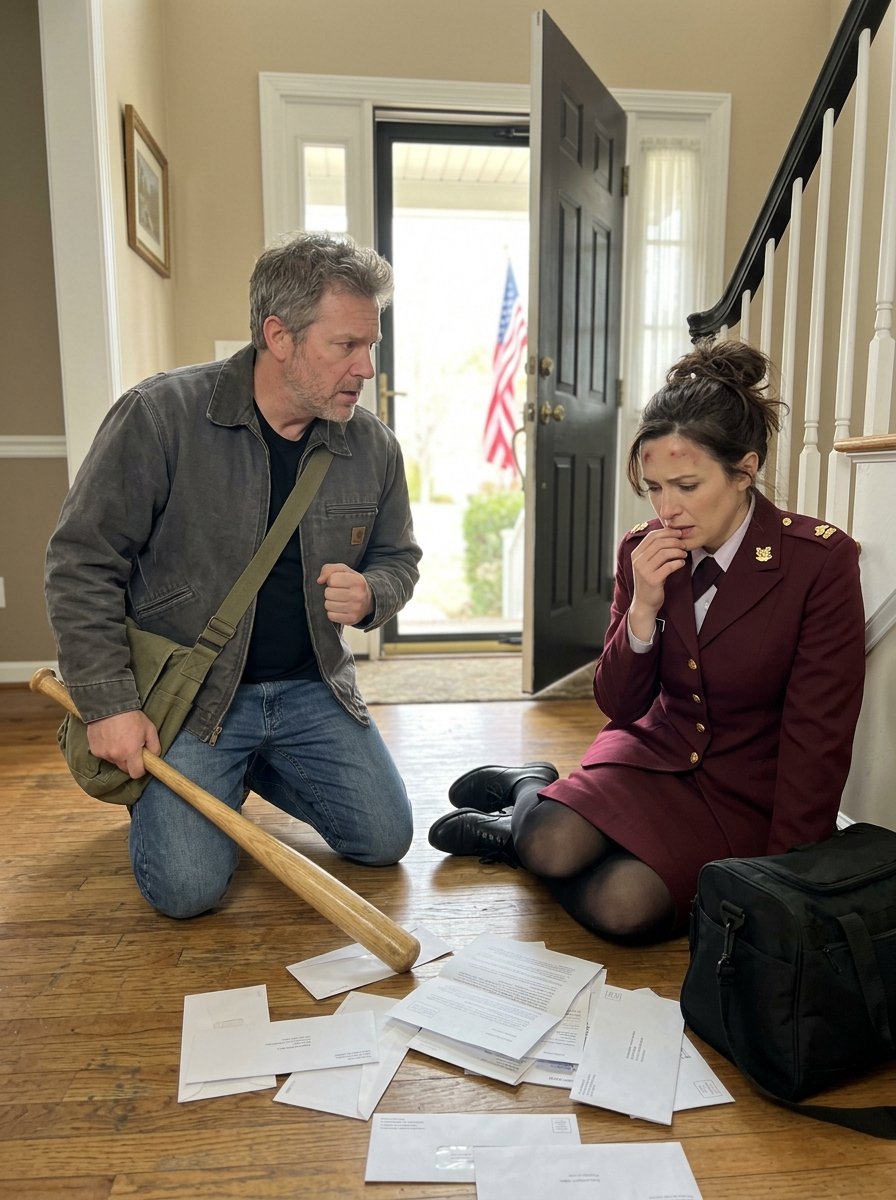
I Came Home Early for My Daughter’s Sixteenth Birthday and Found Her Dying on the Hallway Floor. The Police Called It a Robbery, but One Line in the Alarm Log Told Me Someone We Trusted Had Let the Monsters Inside.
It did not say forced entry.
The alarm history showed something much worse.
3:11 P.M. — SYSTEM DISARMED. USER 04: VIOLET.
I stared at the screen.
Violet had turned the alarm off herself.
At 3:13, the front door opened.
At 3:47, it closed.
At 3:51, the alarm was armed again.
Someone had spent thirty-four minutes inside my house.
Thirty-four minutes.
I read the times until they burned into me.
Detective Grant was still talking.
“Mr. Walker?”
I looked up.
He stood at the end of the hospital corridor with one hand resting on his belt, wearing the patient expression cops use when they think grief has made someone irrational.
“You said there have been robberies nearby,” I said.
“Yes.”
“How many?”
He hesitated.
“A few.”
“How many houses had their alarms voluntarily disabled by the victim before the intruder entered?”
Grant’s expression changed.
Barely.
But I saw it.
For fifteen years I had watched men’s faces at the exact second they realized someone else knew more than they expected.
“What?”
I held up my phone.
“Violet disarmed the house two minutes before the front door opened.”
“That doesn’t mean anything.”
“It means she expected whoever came in.”
“Teenagers let friends in.”
“Exactly.”
Grant folded his arms.
“What are you suggesting?”
“I’m suggesting you stop calling this a burglary before your people have even processed my house.”
His jaw tightened.
“I understand you have a military background.”
That sentence was not accidental.
Neither was the next one.
“You need to let us do our job.”
I stepped closer.
“I intend to.”
Harper caught my wrist.
“Mason.”
I looked at her.
Her face was destroyed.
Our daughter was behind two locked doors with surgeons trying to keep swelling in her brain from killing her.
This was not the place.
Not yet.
I turned back to Grant.
“Do your job.”
He held my stare.
Then walked away.
Harper waited until he disappeared around the corner.
“What are you thinking?”
“I don’t know yet.”
“That look says you do.”
“I know Violet let somebody into the house.”
“Maybe Olivia.”
“Maybe.”
“Or Ben. Or Kelsey.”
Names.
People we knew.
Children who had eaten at our table.
Kids I had driven to football games, movie theaters, school dances.
Violet had never been the kind of girl who collected fifty superficial friends. She had four or five people she trusted completely.
I pulled up our text thread.
The last message from her had arrived two days earlier.
DAD ARE YOU STILL COMING FRIDAY???
I had lied.
Looks that way. Sorry, Bug.
Three broken-heart emojis.
Then:
You owe me pancakes.
I had replied:
Lifetime supply.
Below that was a message sent yesterday evening.
There was something else.
Dad, when you get back I need to show you something. Don’t tell Mom I said that or she’ll freak out.
I had been boarding a transport when it came through.
I answered:
You okay?
She sent:
YES. Just weird school stuff. Tell you when you’re home.
I had let it go.
Weird school stuff.
Two words.
I read them again.
Harper watched me.
“What?”
I handed her the phone.
She read the message.
Her eyes lifted.
“What did she mean?”
“I thought you might know.”
“No.”
“She specifically said not to tell you.”
Pain crossed Harper’s face.
“Why?”
“I don’t know.”
The operating room doors opened.
Everything else disappeared.
A surgeon came toward us removing his cap.
Dr. Ellis.
I knew his name because I had repeated it silently for the last two hours.
Harper stood so quickly her chair fell backward.
“How is she?”
Dr. Ellis looked exhausted.
But he was not rushing.
That gave me hope.
“We controlled the bleeding and relieved the pressure. She has a fractured orbital bone, a broken nose, two fractured ribs, and significant soft-tissue injuries.”
Harper covered her mouth.
I asked the only question that mattered.
“Is she going to live?”
“We expect her to.”
My knees almost stopped working.
Harper collapsed against me.
Dr. Ellis continued.
“The next twenty-four hours are important. Brain injuries can evolve. She is sedated and ventilated for now.”
“Will she wake up?”
“That is what we expect.”
Expect.
Not promise.
I had lived long enough to understand the difference.
“Was she—”
I could barely say it.
The doctor understood.
“Based on the examination, we have no immediate indication of sexual assault.”
Harper began crying harder.
I hated the relief I felt.
My daughter had been nearly beaten to death, and I was grateful because there were worse things.
That is what evil does.
It rearranges your definition of mercy.
We were allowed to see Violet thirty minutes later.
Nothing prepared me.
Not Afghanistan.
Not Iraq.
Not the houses where I had helped recover children after men far worse than anything television liked to imagine.
Nothing prepares a father for tubes running into his little girl.
I sat beside her.
Her fingers were bruised.
There were crescent-shaped cuts on two knuckles.
Defensive injuries.
She fought.
Of course she fought.
Violet had been stubborn since the day she learned the word no.
When she was four, she tried to climb onto the roof because I told her she could not.
At eight, she punched a boy for pulling Olivia’s hair.
At twelve, she spent three days refusing to speak to me after I told her she was too young for a phone, then presented me with a handwritten seven-page argument explaining why I was wrong.
My beautiful impossible girl.
Someone had tried to break her.
I leaned close.
“Dad came home, Bug.”
Nothing.
“I’m here.”
Harper stood on the opposite side of the bed.
I looked at her.
“Who is User Four?”
She frowned.
“What?”
“The alarm code.”
“I don’t know.”
“You set the accounts up.”
“You’re User One. I’m Two.”
“Three?”
“My sister, Rachel.”
“Four?”
Harper went pale.
“Mason…”
“What?”
“Violet asked me for her own code about six months ago.”
“So Four is Violet.”
“Yes.”
I looked back at our daughter.
She had personally disabled the security system.
Whoever entered, she had expected them.
Someone knocked.
Detective Grant stood in the doorway.
Behind him was another officer carrying an evidence bag.
Grant said, “We recovered her phone.”
I stood.
“Where?”
“Under the couch.”
That was wrong.
Violet lived through her phone.
If she invited a friend in, it should have been with her in the hallway.
“Was it broken?”
“No.”
“Anything missing?”
“Her laptop appears to be gone.”
“Anything else?”
“We’re still inventorying.”
“Jewelry?”
“Your wife will have to confirm.”
“Televisions?”
“No.”
“Cash?”
“We don’t know.”
I stared at him.
“A robber enters a house by invitation, ignores electronics and beats a sixteen-year-old girl nearly to death before taking one laptop.”
Grant sighed.
“I said it may have been a burglary.”
“You called it a break-in.”
“Mr. Walker—”
“Who did she text before the attack?”
“We need a warrant to fully search the phone.”
“You just said you have it.”
“We do.”
“Did you check emergency information?”
“I’m not discussing evidence with you.”
“Then why are you standing in my daughter’s hospital room?”
His eyes hardened.
Harper stepped between us.
“Stop. Both of you.”
Grant looked at her.
“I came because one of our technicians noticed something.”
He removed a small plastic evidence bag.
Inside was a silver charm.
A tiny football helmet.
“Does this belong to Violet?”
Harper shook her head.
I knew immediately.
“No.”
Grant looked at me.
“You recognize it?”
“Yes.”
My stomach had already tightened.
“Whose?”
“Tyler Grant’s.”
For the first time, the detective stopped looking like a detective.
He looked like a father.
Tyler Grant was eighteen.
Captain of the high-school lacrosse team.
Popular.
Polite.
Good grades.
And Detective Aaron Grant’s only son.
He had dated Violet for four months the previous year.
Harper whispered, “Are you sure?”
I nodded.
“I helped him fix the clasp.”
Tyler had worn a bracelet with three charms.
A football helmet from his grandfather.
A small cross from his mother.
And a metal tag engraved with his jersey number.
He once caught the bracelet on my backyard gate.
I had repaired the connecting ring with pliers.
I remembered the scratch along the helmet.
The evidence bag held the same charm.
Grant took one step backward.
“That doesn’t prove he was there today.”
“No.”
My voice was calm.
It had become very calm.
“But it proves you are no longer handling this case.”
His face hardened.
“You don’t tell me how to conduct—”
“If your son’s property was found beside my daughter’s blood, you have a conflict.”
“You think I don’t understand procedure?”
“I think you walked into this hospital one hour after your son’s former girlfriend was nearly murdered and told me it looked like a random robbery.”
Grant stared at me.
Harper whispered, “Oh God.”
I continued.
“Did you know that charm was found before you gave me your burglary theory?”
He did not answer.
That was the answer.
I stepped toward him.
Harper grabbed my arm.
“Mason.”
Grant’s hand drifted toward his belt.
Not his gun.
His radio.
Still, my body noticed.
Old instincts.
Distances.
Angles.
Hands.
I stopped.
I was not going to give him what he needed.
Not here.
Not while Violet was unconscious ten feet away.
“I want a supervisor.”
Grant’s face turned rigid.
“You’ll have one.”
“And your son gets interviewed.”
“If evidence supports it.”
I smiled.
For the first time, Grant looked uncomfortable.
“You should go,” I said.
He left.
I did not follow.
That was my first victory.
Not hunting him.
Not grabbing him.
Staying beside Violet.
Because rage wants movement.
Training teaches purpose.
And I had exactly one purpose now.
Keep my daughter alive.
The case was transferred before midnight.
Detective Lena Ortiz arrived just after one.
She was forty-something, compact, direct, with tired eyes and no interest in impressing me.
Good.
She introduced herself, shook Harper’s hand, then mine.
“I know about Grant.”
“Then you know why I don’t trust the department.”
“I know why you don’t trust him.”
“Is there a difference?”
“Yes.”
She pulled up a chair.
“You worked Army special operations?”
“Ranger Regiment.”
“And now?”
“I consult for a nonprofit that supports law-enforcement teams locating exploited and trafficked minors.”
She nodded.
“So you know enough to be useful and enough to become a problem.”
Despite everything, I almost smiled.
“Probably.”
“I’m going to ask you not to investigate this independently.”
“I’m going to ask you to move faster than the person who did this.”
“Fair.”
That answer earned something from me.
Not trust.
Attention.
She opened a notebook.
“Tell me about Tyler Grant.”
I told her everything I knew.
Tyler and Violet started dating the previous fall.
He seemed respectful.
Maybe too polished.
The kind of teenager who called adults sir without sounding sarcastic.
I had been gone for much of the relationship.
Harper knew him better.
“Why did they break up?”
Ortiz asked.
Harper looked at me.
I looked at her.
“I thought Violet ended it because he was jealous,” Harper said.
“When?”
“January.”
“What kind of jealous?”
“He wanted to know where she was all the time. Who she texted.”
“Violence?”
“Violet said no.”
“Threats?”
“She said no.”
“Did you believe her?”
Harper hesitated.
That pause mattered.
“What?” I asked.
She looked miserable.
“About a month after they broke up, Tyler came here.”
“When?”
“While you were overseas.”
“You never told me.”
“Nothing happened.”
“What did he want?”
“To talk to Violet. She refused to come downstairs. He got angry.”
“How angry?”
“He punched the mailbox when he left.”
I stared at her.
“And you didn’t tell me.”
“Mason, you were in the middle of an operation.”
“I wasn’t unreachable.”
“I handled it.”
“Apparently not.”
Her face collapsed.
I regretted the words before they finished leaving my mouth.
Ortiz interrupted.
“This part can wait. Did you report the incident?”
Harper shook her head.
“Why?”
“Because Aaron came over.”
Detective Grant.
Every muscle in my body tightened.
“Why did his father come over?”
“Tyler told him what happened. Aaron apologized. He said Tyler was struggling after the breakup and that he would handle it.”
Ortiz stopped writing.
“He asked you not to report it?”
Harper looked at her.
“Not exactly.”
“What exactly?”
“He said a police report over a damaged mailbox could create problems for Tyler’s college applications. He offered to replace it.”
“And you agreed.”
“Yes.”
I stood and walked toward the window.
I needed distance.
Not from Harper.
From the rage.
Behind me, Ortiz asked, “Any other incidents?”
Harper began crying.
“One.”
I turned.
“What incident?”
“Three weeks ago, Violet came home from school upset.”
“What happened?”
“She said someone had gotten into her school email.”
“Who?”
“She didn’t know.”
“What did they take?”
“I don’t know.”
“Why didn’t you tell me?”
“She asked me not to.”
I laughed bitterly.
“So both of you were protecting me.”
Harper flinched.
“I thought she was handling normal teenage drama.”
“Our daughter told me yesterday she needed to show me something.”
Harper wiped her face.
“What?”
I showed Ortiz the message.
She photographed it.
“‘Weird school stuff,’” she read aloud.
Then she looked at us.
“I want names of her closest friends.”
Kelsey Moore.
Olivia Bennett.
Ben Alvarez.
Mia Reynolds.
And Tyler, even though they were no longer together.
Ortiz stood.
“I’m going to start interviews.”
“Tonight?”
“Yes.”
“What about Tyler?”
“Another team is already at the Grant residence.”
That surprised me.
“His father?”
“Has been instructed not to contact anyone involved in the investigation.”
“Will he listen?”
Ortiz met my eyes.
“We’re going to find out.”
She left.
At 3:16 in the morning, Violet moved her hand.
Barely.
Three fingers curled.
I had been staring at the monitor.
Harper saw it first.
“Mason.”
We both stood.
“Violet?”
Her eyelids did not open.
But her hand moved again.
I pressed the nurse button.
By dawn, doctors had reduced some of the sedation.
At seven thirty-four, my daughter opened one eye.
Only slightly.
Her other eye was too swollen.
I leaned forward.
“Bug?”
Her gaze drifted.
Then found me.
For one second, confusion.
Then recognition.
Her fingers moved.
I took her hand.
“Dad.”
It came as air around the tube.
“Don’t talk.”
A tear rolled sideways toward her ear.
I kissed her forehead.
“You’re safe.”
Her fingers tightened.
She tried to say something.
“Don’t.”
Again.
This time I understood one word.
“Kelsey.”
My stomach dropped.
“What about Kelsey?”
The nurse stepped in.
“Mr. Walker, don’t push her.”
I nodded.
Violet’s heart rate had climbed.
I squeezed her hand.
“Later.”
Her eye closed.
But she kept holding me.
At nine seventeen, Ortiz called.
“Kelsey Moore is missing.”
I looked toward Violet.
“Since when?”
“Her mother says she never came home yesterday.”
“Was she at our house?”
“We don’t know.”
“You found something.”
Silence.
Then Ortiz said, “Kelsey texted Violet at 3:02 yesterday.”
“What did it say?”
“I can’t give you everything.”
“Detective.”
A pause.
Then:
“Please let me in. I need your help. Don’t tell anyone.”
My blood went cold.
Violet had not invited Tyler.
She had invited her best friend.
Kelsey was the door.
Whether she meant to be or not.
At noon, Ortiz came to the hospital with an update.
Security footage from a house across the street captured a gray Honda stopping two houses away at 3:09.
Three people exited.
Kelsey.
Tyler Grant.
And another male teenager identified as seventeen-year-old Logan Price.
Violet opened the front door.
Kelsey entered first.
Tyler and Logan were initially out of view near the side of the porch.
Once Violet stepped back, they rushed inside.
My jaw tightened.
“Ambush.”
Ortiz nodded.
“They used Kelsey.”
“Where is she?”
“We’re looking.”
“Tyler?”
“His parents say he left home around two yesterday afternoon and returned shortly after five.”
“His father lied?”
“His mother gave that timeline.”
“And Aaron?”
“He says he was working.”
I stared at her.
“Was he?”
“We’re verifying.”
“What did Tyler say?”
“He has counsel.”
Of course.
“Logan?”
“Also lawyered up.”
“Where is Kelsey?”
“We found her phone in a storm drain five miles from your house.”
Harper covered her mouth.
“Is she dead?”
“We have no reason to believe that.”
No reason.
Not evidence she was alive.
I asked, “What was Violet trying to show me?”
Ortiz hesitated.
“We recovered her phone data.”
“And?”
“There is a hidden folder.”
She looked at Harper.
“Your daughter had been collecting screenshots and recordings involving Tyler.”
I sat very still.
“What kind?”
“Threats.”
“Against Violet?”
“Some.”
“Some?”
“Mostly against other students.”
The story began six months earlier.
Tyler had created a private group with Logan and several older boys.
At first, according to the messages, it was ordinary teenage cruelty.
Rumors.
Humiliating photographs.
Ranking classmates.
Then it changed.
They began obtaining private images from other students’ accounts.
Not explicit material in every case.
Sometimes embarrassing messages.
Sometimes photographs meant for one person.
Sometimes medical information.
Anything that could be weaponized.
Tyler used the material to control people.
Do my homework.
Give me money.
Lie for me.
Get me answers before an exam.
Tell your girlfriend to stop talking about us.
Most victims stayed silent.
Violet discovered the group while dating him.
She demanded he delete everything.
He promised.
Then she discovered he had not.
So she broke up with him.
“She should have told us,” Harper whispered.
Ortiz said, “Teenagers often think disclosure will make everything worse.”
I looked at Violet.
“She started collecting evidence.”
“Yes.”
Kelsey had been one of Tyler’s victims.
That was the first reversal.
My daughter’s best friend had not casually betrayed her.
Tyler had something on Kelsey.
Something involving Kelsey’s younger brother, Noah.
Not illegal.
But humiliating enough that Kelsey believed it could destroy him socially.
Tyler ordered her to lure Violet into opening the door.
“She could have warned Violet.”
I heard the hardness in my own voice.
Ortiz did too.
“She may have tried.”
“What does that mean?”
“Her text said, ‘I need your help. Don’t tell anyone.’ We think she intended to warn her.”
“But Tyler was with her.”
“Yes.”
“Why wouldn’t she just run?”
Ortiz looked at me for a long moment.
“You know better than most that frightened children don’t always make decisions adults find logical.”
That shut me up.
Because she was right.
I had sat with rescued teenagers who returned to abusers.
Kids who lied to protect the person hurting them.
Children who could cross a street and ask for help but didn’t because coercion had taught them the street was more dangerous than the cage.
I understood it professionally.
Understanding it when my daughter’s blood was involved was harder.
“What happened inside?”
Ortiz asked.
“We’re reconstructing it.”
But by that afternoon, they knew more.
Violet’s smartwatch had recorded audio automatically after detecting a hard fall.
The first several minutes were corrupted.
The last ninety seconds were clear enough.
Violet was crying.
Tyler was shouting.
“Where is it?”
Then Violet:
“You’re finished.”
A male voice, Logan:
“Check the backpack.”
Then Kelsey screaming:
“Stop hitting her!”
Tyler:
“Shut up.”
A crash.
Then Violet’s voice.
Weak but unmistakable.
“My dad will find you.”
Tyler laughed.
“Your dad isn’t here.”
A final impact.
Kelsey screaming again.
Then footsteps.
The recording ended.
I sat in a hospital conference room listening to my daughter’s last conscious words before someone nearly killed her.
My dad will find you.
I did not feel pride.
I felt shame.
She had believed in me when I had been thousands of miles away missing half her life.
Harper leaned against the table crying.
Ortiz stopped the audio.
“There’s something else.”
“What?”
“Tyler took Violet’s laptop.”
“We know that.”
“He apparently believed it contained the only copies.”
“It didn’t.”
“No.”
My daughter had sent the evidence to an email address she created solely for storage.
She also mailed a memory card.
“To who?” I asked.
Ortiz looked at me.
“You.”
I stared.
“What?”
A package was waiting at my office.
Violet had addressed it three days earlier.
I remembered a text from my receptionist asking whether I wanted mail forwarded while I was away.
I told her no.
The package sat unopened.
Ortiz obtained it with a warrant and my permission.
Inside was a handwritten birthday card.
Not for Violet.
For me.
Dad,
I know you always say evidence matters more than being right, so I tried to do this the way you would.
I found something bad.
I don’t think Tyler is just being a jerk. I think people are scared of him because his dad keeps fixing things.
Please don’t go Army Dad and scare everybody. Just look first.
Love,
V
I read the note three times.
Then I saw the line beneath her signature.
P.S. If you miss my birthday again, none of this gets you out of pancakes.
I put my head down.
Harper wrapped both arms around me.
For the first time since I found Violet, I cried.
Not quietly.
Not with dignity.
I cried like a father who finally understood exactly how much his daughter had been carrying alone.
The memory card contained more than Violet’s screenshots.
There were emails.
Audio clips.
Copies of school disciplinary reports.
And something Tyler apparently did not know she possessed.
A recording of Detective Aaron Grant.
The conversation had taken place outside school two weeks earlier.
Violet had apparently left her phone recording in her jacket pocket.
Grant’s voice was clear.
“You’re a smart girl, Violet.”
“I know what Tyler did.”
“My son made mistakes.”
“He threatened Kelsey.”
“Kids threaten each other every day.”
“He stole things from people’s accounts.”
“You need to be careful using words like stole.”
“I have screenshots.”
A pause.
Then Grant:
“Listen to me. You’re sixteen. You don’t understand what accusations can do to someone’s future.”
“What about what he did to everyone else’s future?”
“Give me whatever you have. I’ll handle Tyler.”
“No.”
Another pause.
Then his voice changed.
Not dramatically.
Just enough.
“You don’t want to turn a school problem into something that follows your father home.”
I stopped breathing.
Harper looked at me.
Ortiz said nothing.
The recording continued.
Violet:
“Are you threatening my dad?”
Grant laughed.
“You’re hearing things.”
“My dad hunts men who threaten kids.”
“I know exactly what your father does.”
The audio ended.
I stood.
Ortiz stood too.
“Mason.”
“He threatened my daughter.”
“Yes.”
“And then he came to this hospital and tried to call her attempted murder a robbery.”
“Yes.”
“Arrest him.”
“We need—”
“Arrest him.”
“We are building the case.”
“He obstructed.”
“We believe he may have.”
“May?”
“He contacted the responding officer before I took over. He framed the initial report as a likely burglary based on prior incidents. That is improper. Whether it’s criminal obstruction depends on what else we establish.”
“He knew his son was involved.”
“We’re working on that.”
I stared at her.
“How much more do you need?”
“Enough that a defense attorney can’t turn your daughter’s case into a father’s revenge fantasy.”
That stopped me.
Again.
Ortiz stepped closer.
“I know what you want.”
“No, you don’t.”
“I do.”
She lowered her voice.
“You want to act.”
Yes.
Every part of me wanted movement.
Tyler Grant lived eleven minutes from the hospital.
Aaron Grant worked in the same building where Ortiz kept her desk.
Logan Price’s family owned a body shop near Route 7.
I knew all of it.
I knew how easily an angry man could convince himself that justice and revenge were the same mission if the target deserved both.
Ortiz said, “Your daughter needs a father, not a defendant.”
I looked through the glass toward Violet’s room.
That sentence saved three lives.
Possibly mine.
I sat.
“Find Kelsey.”
“We will.”
They found her the following morning.
Alive.
A bus driver recognized her from an alert at a rest stop forty miles outside the city.
She had spent the night hiding in the rear of an abandoned delivery trailer before walking to the highway.
She was dehydrated, bruised, terrified and convinced Tyler would kill her.
When police interviewed her with her mother and an attorney present, she told them what happened.
Tyler ordered her to message Violet.
He and Logan followed her to the house.
Kelsey planned to enter first and warn Violet.
Tyler slipped through before she could close the door.
Violet immediately understood.
She tried to reach the alarm panic button.
Logan grabbed her.
Tyler demanded her laptop and phone.
Violet refused.
He struck her.
Kelsey screamed at him to stop.
He kept going.
Then Violet managed to kick Logan, grabbed her backpack and tried to run toward the kitchen.
Tyler hit her again.
And again.
Kelsey tried pulling him away.
He shoved her into the wall.
When Violet finally stopped moving, all three froze.
Logan wanted to call an ambulance.
Tyler refused.
That detail would matter later.
He searched the house for the evidence, found Violet’s laptop, grabbed her backpack, dumped it and left when he couldn’t find what he wanted.
Then his father called.
Kelsey heard the conversation.
That was the piece that changed everything.
Ortiz came to the hospital personally to tell me.
“Tyler called Aaron from the driveway.”
“What did he say?”
“Kelsey only heard Tyler’s side at first. He said, ‘Dad, I messed up.’ Then Aaron apparently asked what happened.”
“And?”
“Tyler told him Violet was hurt.”
My hands curled.
“What did his father do?”
“He came to the house.”
The world went quiet.
“What?”
“Approximately twelve minutes after they left.”
I stared at her.
“He was inside my house?”
“We have traffic-camera data placing Grant’s vehicle on Maple Drive.”
My pulse thudded.
“Before I arrived?”
“About twenty minutes before.”
Everything suddenly fit.
The door cracked open.
The alarm rearmed.
Violet’s phone beneath the couch.
The robbery narrative prepared before Grant ever walked into the hospital.
“What did he do inside?”
“We believe he checked Violet.”
“Was she alive?”
“Yes.”
My throat closed.
“He left her there.”
Ortiz did not answer.
She did not need to.
A police officer.
A father.
A man trained to save lives.
He found a beaten sixteen-year-old girl breathing on the floor.
And he left.
Because calling an ambulance would expose his son.
I stood so quickly the chair slid backward.
“Mason.”
I walked to the wall.
Pressed both hands against it.
Breathed.
Once.
Twice.
Three times.
My mind offered images I will not describe.
Things I knew how to do.
Things I had once done to men carrying rifles in places without street names.
Then I heard the creak of Violet’s hospital bed behind me as a nurse adjusted her position.
My daughter needs a father, not a defendant.
I turned around.
“Keep going.”
Ortiz watched me carefully.
“Aaron apparently moved Violet’s phone and attempted to wipe parts of the home security history through the installer portal.”
“How did he have access?”
“He didn’t.”
I stared.
“Then who did?”
“Your system was installed by Sentinel Residential Security.”
“Yes.”
“Grant’s brother-in-law works there.”
There it was.
Another traitor.
Not someone I loved.
But someone who had entered my home.
Mitch Keller.
I remembered him.
Forty.
Soft handshake.
Talked too much about guns when he learned my background.
He had configured our cameras two years earlier.
Grant called Keller from the house.
Keller remotely disabled cloud camera access and attempted to delete logs.
But the alarm company stored redundant server records he could not alter.
Grant then left Violet on the floor and told Tyler to go home, change clothes and say nothing.
He used his badge to shape the initial response once my 911 call exposed that Violet had survived.
The robbery story was not incompetence.
It was a rescue operation.
For his son.
Ortiz said, “Grant was arrested forty minutes ago.”
I closed my eyes.
“Keller?”
“Also in custody.”
“Tyler?”
“Charged.”
“Logan?”
“Charged.”
“Kelsey?”
“No charges at this time. Prosecutors are reviewing coercion and her cooperation.”
Harper sat beside Violet.
“What happens now?”
Ortiz exhaled.
“Now it gets slow.”
She was right.
Justice in real life rarely kicks down a door.
It sends forms.
Schedules hearings.
Argues over admissibility.
Waits for lab reports.
Negotiates.
Postpones.
And asks victims to repeat the worst day of their lives under fluorescent lights.
Violet spent eleven days in the hospital.
The first time she saw herself in a mirror, she did not cry.
That scared me more than tears would have.
She stared.
Touched the bruising near her cheek.
Then asked, “Do I look horrible?”
I sat behind her.
“You look alive.”
She looked at my reflection.
“That was cheesy.”
“I’m a father. It’s allowed.”
Her mouth twitched.
Then she cried.
I held her carefully because of her ribs.
“I thought I was going to die.”
“I know.”
“Tyler kept hitting me.”
“I know.”
“Kelsey brought him.”
“I know.”
“She didn’t mean to.”
I looked at her.
“You know that?”
“She kept saying sorry.”
“That’s not the same as innocent.”
Violet looked down.
“She was scared.”
“So were you.”
“I know.”
“She made a choice that put you in danger.”
“So did I.”
“What choice?”
“I didn’t tell you.”
I shook my head.
“No.”
“Dad—”
“No. We’re not doing that.”
“I thought I could get enough evidence first.”
“You were sixteen.”
“Fifteen.”
“Not helping.”
That earned another tiny smile.
Then she became serious.
“You tell people not to move before they understand the whole situation.”
“I also tell them not to investigate dangerous people alone.”
“I wasn’t alone.”
“You mailed evidence to a man in another country.”
She looked guilty.
“Technically.”
“Violet.”
“Okay.”
I took her hand.
“You do not have to prove you are brave by being unsafe.”
She looked at me.
That sentence hit both of us.
Because I had spent most of her childhood doing exactly that.
Leaving.
Deploying.
Hunting people who hurt children while my own daughter learned to handle things without me.
“I’m sorry,” I said.
“For what?”
“For making you think Dad was someone you sent evidence to instead of someone you could call.”
Her face crumpled.
“You were working.”
“I was your father first.”
“You couldn’t just come home every time something happened.”
“No.”
I swallowed.
“But I could’ve made it easier for you to tell me.”
She squeezed my fingers.
“You’re here now.”
Those three words almost broke me again.
Harper and I had harder conversations.
She blamed herself for trusting Grant.
I blamed her too, at first.
Then I realized what I was doing.
Grant had relied on normal decency.
He was a police detective and a father telling another parent he would handle his son’s behavior.
Most people would have believed him.
The person responsible for Grant’s corruption was Grant.
The person responsible for Tyler’s violence was Tyler.
Harper’s mistake was silence.
Mine was absence.
Neither of those put our fists into Violet’s face.
We learned to separate regret from guilt.
Kelsey visited three weeks after Violet came home.
I did not want her in the house.
Violet insisted.
So we met in the backyard.
Kelsey looked twenty pounds smaller.
Maybe she wasn’t.
Fear made her look smaller.
Her mother sat nearby.
I stayed on the porch.
Violet and Kelsey sat beneath the maple tree.
For several minutes neither spoke.
Then Kelsey said, “I’m sorry.”
Violet looked at her.
“I know.”
“I thought he was just going to scare you.”
“You lied to me.”
“I know.”
“You knew Tyler was there.”
“Yes.”
“You could’ve screamed before I opened the door.”
“I know.”
Violet started crying.
“So why didn’t you?”
Kelsey cried too.
“Because he said he’d send everything about Noah to everyone at school, and I thought if I could just get inside first—”
“You almost got me killed.”
“I know.”
The silence afterward was brutal.
Finally Violet said, “I don’t forgive you.”
Kelsey nodded.
“I understand.”
“Maybe someday.”
“Okay.”
“But not because everyone says you were scared.”
“Okay.”
“And not because I feel bad for you.”
“Okay.”
Violet wiped her face.
“I just don’t hate you.”
Kelsey broke completely.
I looked away.
Forgiveness is often described by people who have never needed it as if it were one noble decision.
It is not.
Sometimes it begins with I don’t hate you and takes years to move another inch.
The criminal cases unfolded over the following year.
Logan cooperated first.
He admitted participating in the attack and the coercion scheme.
His testimony confirmed Tyler had planned to seize Violet’s devices and intimidate her into silence.
He claimed no one intended to kill her.
I believed him.
That did not comfort me.
People imagine attempted murder requires some dramatic declaration.
Sometimes it is simply a violent person refusing to stop.
Tyler’s attorneys tried to characterize the beating as a fight that escalated.
Then prosecutors played the smartwatch audio.
Stop hitting her.
My daughter crying.
Tyler demanding the evidence.
The defense changed strategies.
Aaron Grant faced separate charges involving obstruction, evidence tampering, official misconduct and failure to render aid, among others.
The most damaging evidence came from his own patrol communications.
At 3:39 that afternoon, while Violet was still alive on our floor, Grant radioed that he was taking an early meal break.
He spent seventeen minutes inside my house.
Then drove away.
For me, those seventeen minutes were worse than the attack.
Tyler was eighteen, violent, panicked and cruel.
Aaron was a trained adult.
He looked at a dying child and performed a calculation.
My son’s future.
Her life.
He chose his son.
When asked in court why he left, Grant claimed he believed Violet was already dead.
The prosecutor displayed her medical records.
Then Kelsey’s testimony.
Then Grant’s internet search made four minutes after leaving my house.
How long can unconscious person survive head injury without medical treatment.
I watched the jury read it.
Grant lowered his head.
That was the moment his defense died.
Not with shouting.
With a search box.
Mitch Keller pleaded guilty.
His role had been narrower but essential.
He remotely interfered with the security system because Grant told him there had been “an incident involving Tyler” and asked for help buying time.
Keller insisted he never knew Violet was dying.
Maybe that was true.
It did not make deleting evidence legal.
Violet testified once.
I hated every second.
She wore a dark blue dress Harper bought her.
The scar near her eyebrow had faded but remained visible.
When Tyler’s attorney asked whether she had hated Tyler after their breakup, Violet answered:
“I was afraid of him.”
“That’s not what I asked.”
“I know.”
“Did you hate him?”
“No.”
“Were you angry?”
“Yes.”
“So you collected information to hurt him.”
Violet looked toward the jury.
“No.”
“Then why collect it?”
“Because nobody believed girls until they had screenshots.”
The courtroom became very quiet.
The attorney paused.
I saw something change in the jury.
He saw it too.
He changed subjects.
Afterward, Violet threw up in the courthouse bathroom.
Bravery rarely looks impressive once the audience leaves.
Sometimes it is a sixteen-year-old leaning over a sink while her mother holds her hair.
Tyler eventually accepted a plea before the final stage of trial.
The sentence was substantial.
Not enough for me.
Probably nothing would have been.
Aaron Grant went to trial and was convicted on several counts.
When the judge asked if he wanted to speak before sentencing, he turned toward us.
His eyes found Violet.
“I made an unforgivable decision.”
I felt my hands tighten.
Violet sat still.
Grant continued.
“I saw my son’s life collapsing, and I chose him.”
He swallowed.
“I told myself you were beyond saving.”
Violet’s face changed.
The judge interrupted.
“Mr. Grant, be careful.”
Grant nodded.
“I know now that what I was really doing was choosing the version of reality that protected me.”
That sentence stayed with me.
Because it was true far beyond him.
Harper chose to believe Tyler’s mailbox incident had been handled because the alternative required admitting our daughter might be unsafe.
Kelsey chose to believe she could control an ambush because the alternative meant facing Tyler’s threats.
Logan chose to believe they were only retrieving a laptop.
I chose to believe my family understood my absences because admitting what those absences cost was harder.
People rarely lie to themselves because the falsehood is convincing.
They lie because the truth demands action.
Grant apologized.
Violet did not respond.
She owed him nothing.
After sentencing, reporters gathered outside.
Someone shouted at me:
“Mr. Walker, as a former Ranger, did you ever consider taking justice into your own hands?”
Harper grabbed my arm.
I stopped.
I had been told not to comment.
I turned anyway.
“Yes.”
Microphones rose.
The crowd became silent.
“I considered it every hour for the first week.”
Harper looked at me.
I continued.
“I knew where they lived. I knew what I was capable of. I also knew exactly what would happen if I confused revenge with protecting my daughter.”
A reporter asked, “What stopped you?”
I looked toward Violet, standing near the courthouse doors.
“She needed me more than I needed them to suffer.”
That quote traveled farther than I expected.
People called it discipline.
Some called it heroism.
It wasn’t.
It was fatherhood.
There were nights I sat in my truck imagining different choices.
I did not make them.
That is the only part that matters.
Violet turned sixteen six weeks after the attack.
Her birthday came late because she refused to celebrate on the actual date.
When we finally did it, there were no crowds.
No giant party.
Just family.
Olivia.
Ben.
A few cousins.
Kelsey was not there.
Not yet.
I made pancakes at seven in the evening because I owed her a lifetime supply.
They were terrible.
Violet ate three.
She had cut her hair shorter because treatment had required shaving part of it near the wound.
She hated the uneven growth.
Harper told her it looked fashionable.
Violet told her she was lying.
I agreed with Harper.
Violet accused both of us of parental propaganda.
She opened presents.
Then I gave her the package she had mailed me before the attack.
The envelope was resealed.
Inside I had placed her original note.
Dad,
I know you always say evidence matters more than being right…
She read it.
Then looked at me.
“You kept it?”
“Always.”
“That’s kind of creepy.”
“It’s evidence.”
She smiled.
Then noticed something behind me.
Her old backpack.
The one from the hallway.
Police had returned it after the case.
Harper wanted to throw it away.
Violet didn’t.
Blood stains remained near one strap despite cleaning.
The crushed birthday-card envelope was still inside.
“What are you doing with that?”
I put the backpack on the table.
“You decide.”
“Decide what?”
“Keep it. Burn it. Throw it away. Whatever you want.”
She stared for a long time.
Then opened it.
Inside were school papers.
A cracked calculator.
Two pens.
A lip balm.
Normal pieces of the afternoon before her life split into before and after.
At the bottom she found the birthday card.
It had been from Olivia.
Violet read it.
Then started laughing.
“What?”
She handed it to me.
Olivia had written:
HAPPY 16TH TO THE ONLY PERSON STUBBORN ENOUGH TO ARGUE WITH A STOP SIGN.
I laughed.
Violet held the card against her chest.
Then looked at the backpack.
“I’m keeping it.”
Harper frowned.
“You don’t have to.”
“I know.”
“Why?”
Violet shrugged.
“Because it’s mine.”
Simple.
The hallway was hers.
The house was hers.
The memories were hers.
Tyler did not get ownership merely because he had put blood on them.
Recovery took longer than the court case.
Headaches.
Nightmares.
Sudden panic when the doorbell rang.
Violet stopped sitting with her back to entrances.
She hated anyone walking behind her.
For months she could not hear a male voice rise without freezing.
Therapy helped.
Time helped.
Safety helped.
But healing was not a line.
On her seventeenth birthday, she had a panic attack because a classmate jokingly grabbed her backpack.
The following afternoon she drove herself to the grocery store for the first time.
Both things were recovery.
I changed too.
I left my overseas contract.
Not because Violet asked.
She specifically told me not to “ruin your whole life because of me.”
So I didn’t.
I accepted a stateside role training investigators and victim-recovery teams.
Less excitement.
Less money.
More breakfasts.
I attended school events.
I learned the names of teachers.
I discovered that sixteen-year-old girls could spend forty minutes describing a disagreement involving people whose names I never heard before and still expect meaningful analysis.
I got good at it.
Mostly by listening.
One evening, almost two years after the attack, Violet found me repairing the front porch railing.
She was eighteen now.
College acceptance letter taped to the refrigerator.
Scar barely visible.
“What are you doing?”
“Fixing this.”
“It’s not broken.”
“It moves.”
“It moves like two millimeters.”
“Structural weakness.”
“You need hobbies.”
“You are my hobby.”
“That’s unhealthy.”
She sat on the steps.
For a while we worked in silence.
Then she said, “Kelsey got into nursing school.”
I stopped tightening the screw.
“You still talk?”
“Sometimes.”
I nodded.
“Good.”
“You don’t like her.”
“I don’t have to.”
“Do you forgive her?”
I sat beside Violet.
“That isn’t mine to decide.”
“What do you feel?”
I thought carefully.
“I think she made a terrible choice while being manipulated by someone dangerous.”
“That’s very therapist of you.”
“I’ve grown.”
She smiled.
I continued.
“I also think terrible choices can have consequences even when we understand why someone made them.”
Violet nodded.
“I forgave her.”
“I know.”
“How?”
“She came to your graduation.”
“You noticed?”
“I notice everything.”
“Army Dad.”
“Exactly.”
She leaned against my shoulder.
The same daughter I once found curled on the hallway floor.
Alive.
Warm.
Annoying.
Brilliant.
Mine.
“I used to think you could find anybody,” she said.
“What?”
“When I was little.”
“Why?”
“You disappeared for work and then came back talking about people you found.”
I smiled.
“We didn’t always find them.”
“I know that now.”
She looked toward the street.
“When Tyler hit me, I really thought you would find him.”
My throat tightened.
“You said it on the recording.”
“I barely remember.”
“He laughed.”
She was quiet.
Then she said, “He was wrong.”
I nodded.
“Yes.”
But after everything, I understood something Violet had understood before I did.
Finding Tyler was never the hard part.
His name was in her messages.
His charm was on the floor.
His face existed on cameras.
The harder thing was finding the truth beneath the people determined to bury it.
The father who wore a badge.
The installer willing to delete a log.
The friend too frightened to warn someone clearly.
The teenager who convinced himself helping with intimidation was different from committing violence.
The adults who saw pieces and looked away because seeing the whole picture would require courage.
That was the real enemy.
Not one monster.
A chain of choices.
A chain could be broken.
The house on Maple Drive eventually stopped feeling like a crime scene.
For the first year, I saw blood every time I walked down that hallway.
Even after the boards were replaced.
Even after Harper painted the walls.
Memory does not care what renovations cost.
Then one Saturday, I found Violet sitting on the floor in almost the exact place where I had found her.
My heart stopped.
She looked up.
“What?”
I realized she was surrounded by textbooks.
College textbooks.
Colorful sticky notes everywhere.
“Nothing.”
“You look weird.”
“I always look like this.”
“No, you look extra weird.”
I sat beside her.
She was studying psychology.
Of course she was.
“What chapter?”
“Coercive control.”
I laughed softly.
“What?”
“Nothing.”
She narrowed her eyes.
“You’re doing that emotional dad thing.”
“I don’t have an emotional dad thing.”
“You absolutely do.”
Harper called from the kitchen.
“He does.”
“Traitor,” I shouted.
Harper laughed.
The word no longer hurt.
That surprised me.
Traitor.
For a long time I thought betrayal was the center of our story.
It wasn’t.
Survival was.
Not mine.
Violet’s.
She survived the attack.
Then she survived being reduced to “the girl from the Maple Drive case.”
She survived testimony.
Headlines.
Scars.
Panic.
Anger.
Pity.
She learned that surviving something did not mean carrying it forever.
The people who hurt her received consequences.
Not the kind my rage initially imagined.
Better ones.
Documented ones.
Public ones.
Consequences that could not turn Violet into the daughter of a man who threw his life away for revenge.
Years later, someone asked her during a college seminar what she remembered most clearly about the attack.
I know because she told me afterward.
They expected her to describe Tyler.
She didn’t.
She said:
“My father’s hand.”
The professor asked what she meant.
“The hospital. When I woke up, I couldn’t open one eye, and I didn’t understand where I was. Then I felt my dad holding my hand.”
She smiled when she told me.
“That’s what I remember.”
I had spent years believing my value came from what I could do.
Doors I could breach.
People I could track.
Danger I could recognize faster than someone else.
Violet taught me the hardest skill I ever learned.
Sometimes the person you love does not need you to hunt the monster.
Sometimes she needs you to remain beside the bed while better systems do their work.
Sometimes calm is not the absence of rage.
Sometimes calm is having every reason to destroy someone and choosing instead to stay long enough to help your daughter rebuild herself.
On Violet’s twenty-first birthday, I made pancakes.
Still terrible.
She complained.
Still ate three.
Her old backpack sat inside a storage box in her bedroom closet.
She had kept it.
So had I kept the note.
Evidence matters more than being right.
She thought she learned that from me.
The truth was that I learned its most important meaning from her.
Because on the worst afternoon of my life, the house had told me what happened.
The alarm told me they were invited.
The bracelet told me who came.
The recordings told me why.
And the truth eventually exposed every person who believed silence would protect them.
But none of those things became the most important evidence.
The most important evidence was Violet herself.
She lived.
She healed.
She laughed again in the hallway where I once believed I was losing her.
And every ordinary day afterward proved something the men who attacked her never understood.
They had not declared war on a Ranger. They had attacked a girl who refused to surrender the truth—and she was the one who ultimately destroyed every lie they used to protect themselves.