I finally answered the question they had been asking me, in one form or another, for eleven years without ever hearing themselves ask it.
“Not with me.”
My mother’s eyes filled. “You’ve ruined Christmas.”
“No,” I said, and I found that I meant it completely. “I stopped letting you ruin mine.”
Her face hardened in an instant, the tears somehow still there but her jaw set. “There it is.”
“There’s what?”
“The selfishness. The real you. I always knew it was in there.”
David, who had loaded the last of our bags into the car and had been standing quietly by the driver’s door, walked over then and stood beside me. He is not a man who says much. When he does, it counts.
“That’s not selfishness,” he said, evenly, to all of them. “What you’re looking at is a woman who finally stopped mistaking exhaustion for love. She gave you eleven years. She’s allowed to keep the twelfth.”
Nobody answered him, because on some level every person standing on that sidewalk knew he was right, and the knowing sat heavily on them.
My mother looked around, a little wildly, as if a solution might materialize out of the frozen air. “What are we supposed to do now?”
“All the hotels are booked this close to Christmas,” Ryan muttered.
“This is unbelievable,” Bethany said, to no one, crossing her arms over her good coat.
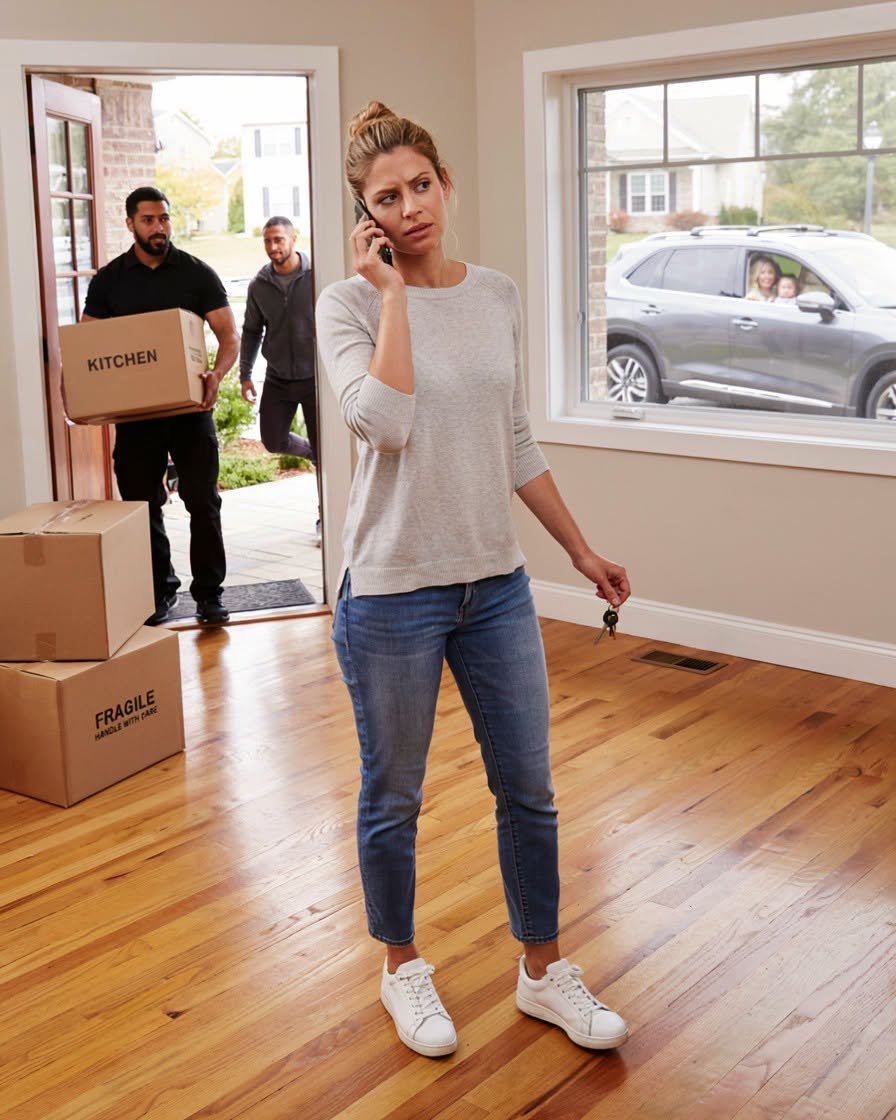
Rebecca, looking as though she wished the ground would open and take her, offered, timidly, “I could… I have the number for a hotel just off the highway, if that would help?”
“No, thank you,” my mother said, and her voice was ice. She wasn’t angry at Rebecca. Rebecca had done nothing but buy a house. My mother was angry because for the first time in longer than she could remember, there was no one in front of her to command. No one whose job it was to absorb her displeasure and turn it into a solved problem. The machine that had run her Christmases for eleven years had simply switched itself off, and she was standing in the cold discovering that she had never learned how it worked.
I looked at all of them, gathered there on the sidewalk with their suitcases and their coolers and their wrapped presents, and for the first time I saw them clearly, without the fog of obligation over my eyes. They weren’t the owners of my Christmas. They never had been. They weren’t even the victims of some injustice I’d committed. They were guests. That was all. Guests who had arrived, year after year, without ever once being invited, because I had made not-inviting them feel impossible, and they had let me.
I turned to Rebecca and put out my hand, and she shook it.
“Congratulations on your new home,” I said. “I mean that. It’s a good house. It kept a lot of people warm.”
“Thank you,” she said, quietly. “I hope you find somewhere that feels like yours.”
“I think I already have.”
David took my hand. We walked to our car, the two of us, past the small crowd of them, and I did not look back even when my mother called my name one last time, sharp and pleading, across the frozen yard. I had spent eleven years turning around at the sound of my name. Some conversations exist only because one person keeps answering, and I understood at last that the fastest way to end them was to stop.
We drove north.
Three hours into the mountains, to a small cabin David had found and rented in a burst of quiet faith weeks before, back when the plan was still forming and I hadn’t yet found the nerve to say it out loud. It had one bedroom. One fireplace. A kitchen barely big enough for the two of us to stand in at the same time. There was no guest room. There were no folding tables. There would be no grocery bill the size of a car payment. There was snow falling steadily past the windows, thick and slow, and it made the whole world feel padded and hushed, as though someone had finally turned the volume of my life all the way down.
The first morning, I woke at six.
My body had learned, over eleven Decembers, that Christmas meant work. Six o’clock meant the turkey went in. It meant the coffee, the first casserole, the first load of dishes from the night before, the frantic quiet hour before the house woke and began to want things from me. I lay in the dark of that cabin and waited for the familiar tightening in my chest, the low hum of dread that had been my holiday companion for so long I’d stopped noticing it, the way you stop noticing a sound you’ve heard your whole life.
It didn’t come.
I lay there and waited, and the panic simply never arrived. There was only the weight of the quilt, and the cold clean air, and the pale light beginning to touch the window, and David’s slow breathing beside me.
He stirred and rolled toward me and half-opened one eye. “You’re awake.”
“I keep thinking I’ve forgotten something,” I whispered. “Something important.”
“You did,” he murmured.
“What?”
“To take care of yourself.” He kissed my forehead, his lips warm in the cold room. “You’ve had eleven years of doing everything. Go back to sleep.”
So I did. For two more hours, in a small cabin in the snow, I slept the sleep of someone with nowhere to be and no one to feed, and it was, without exaggeration, the best gift I had received in more than a decade.
My phone stayed mostly silent through those days. The family group chat, I noticed when I finally checked, had gone quiet, and then quieter, and then Ryan had left it entirely, which changed its name to something impersonal and administrative. Bethany’s Facebook post disappeared sometime on Christmas Eve. Several of the relatives who had commented so freely about family and belonging quietly deleted their contributions, the way people do when the audience thins and the performance stops paying. It’s a curious thing, how quickly a public opinion evaporates once no one is left to applaud it.
On the twenty-seventh, my aunt Linda called. Not to lecture. To apologize, which was so unexpected that I sat down.
“I didn’t know,” she said, and her voice was small. “Claire, I swear to you, I didn’t know. Your mother made it sound like you’d just decided you were too good for us all of a sudden. Like it came out of nowhere. I thought she was exaggerating, the way she does, and I still should have called you, and I didn’t.”
“She usually is exaggerating,” I said. “But not about how much there was to do.”
“She left out the part where nineteen people were staying in your house for free,” Linda said. “She left out a great many parts, now that I’m hearing the whole of it.”
Then she told me something that made me put down my coffee.
“You should know,” she said, “that your cousins ended up cleaning your mother’s house after everyone finally cleared out.”
“My mother’s house? She hosted?”
“She did. She got up on her high horse after you left, said fine, if Claire won’t do it then I’ll show everyone how it’s done, a proper family Christmas the way it used to be. She hosted the whole crowd. Eighteen people, I think, in the end.”
“How did it go?”
Linda actually laughed, a real, helpless laugh. “Oh, Claire. She called everyone lazy before the turkey was even carved. She was hollering about it in the kitchen. Nobody would help her, she said. Nobody appreciated a thing. And then, and Marcy saw this with her own eyes, she stood at the sink after dinner washing pots by herself, and she cried. She cried into the dishwater. Eighteen people in the other room watching television and her alone at the sink, crying.”
Neither of us said anything for a moment.
“I think she understands now,” Linda said finally. “I don’t think she’d ever once, in her whole life, actually done it. Any of it. She always had someone. Her mother, then you. She never knew what she was asking of you because she’d never had to do it herself. And now she has, one single time, and it nearly killed her.”
That wasn’t revenge. I want to be clear about that, because it would be easy to mistake it for revenge and I refuse to. I hadn’t sold my house to teach my mother a lesson. I had sold it to save my own life. But perspective is a strange and stubborn thing. It cannot be argued into someone. It cannot be explained, or posted, or won in a group chat. It only ever arrives one way, which is by walking the exact road you made someone else walk, and it arrives precisely when the excuses run out and there is no one left to hand the work to.
In February, my mother called. I almost didn’t answer. I let it ring three times, my thumb hovering, before I picked up.
Her voice sounded older than I remembered. Smaller. The imperious note that had run through every conversation of my life was gone, and what was left underneath it surprised me.
“I owe you an apology,” she said.
I stayed quiet. I had learned, finally, the power of not rushing to fill a silence.
“I kept telling myself you were overreacting,” she went on. “That you were being dramatic. That it wasn’t as much as you made it out to be. I told other people that too, and I shouldn’t have.” A pause. “I hosted, this year. One dinner. One single dinner, Claire, and I could not manage it. I stood in that kitchen and I could not understand how you had done it for eleven years without once, without one time, throwing all of us out into the snow where we belonged.”
“You never asked how I did it,” I said.
“No.” Her voice cracked around the word. “No, I never did. It never occurred to me to ask. You just… did it. You were always just doing it, and I let myself believe that meant it was easy for you. Or that it was your nature. Or something. I told myself something so I wouldn’t have to feel this.”
For the first time in my entire life, my mother was not asking me to rescue her from her own guilt. She was simply sitting inside it, letting me hear that it existed, not begging me to make it go away.
“I can’t change what happened,” she said. “I know I can’t. I’m not asking you to pretend it didn’t. But will you forgive me? Eventually? Someday?”
Forgiveness, I have come to understand, is not forgetting. It is not pretending the wound was never there. And it is certainly not flinging open the door that nearly broke you and inviting the whole thing back inside.
“It’ll take time,” I told her, honestly. “I’m not going to say something I don’t mean yet. But time, yes. I’m willing to give it time.”
“I understand.” And I could tell that, for once, she did.
“And Mom,” I said. “If we ever do a holiday together again. If. Everyone brings food.”
“Yes.”
“Everyone cleans up. No exceptions. Not me doing it all and calling it help.”
“Yes.”
“And nobody, nobody, stays overnight in my home unless I’ve invited them by name. Ahead of time. In words.”
A small, wet laugh escaped her. “Deal.”
Whether the deal would hold, I didn’t know. People can promise change as easily as they promise anything else. Only time proves out a promise, and I had learned to wait for the proof rather than the vow.
That first year, David and I lived small and quietly in a rented townhouse while we looked for something to buy, and I was astonished by how little I missed the space I’d lost. Seven hundred square feet held everything I actually needed, which turned out to be him, and quiet, and a door I controlled.
The following December, we had our own home again. Smaller than the old one, deliberately. One bedroom for us and a little office that could just barely fit a guest if a guest were invited. One tree, which we decorated together over one evening with hot cider, rather than the towering thing I used to wrestle into place alone. One dining table with room for four, not fourteen. Two chairs by the window where David and I drank our coffee in the mornings and watched the birds at the feeder.
On Christmas Day, the doorbell rang at noon.
For one instant, out of old reflex, my stomach clenched. Eleven years of that sound meaning the beginning of two days of unending labor. My hand paused on the doorknob.
Then I opened it.
My mother stood on the step. Alone. In her good coat, with her hair done, holding a pie in both hands like an offering.
“I’m early,” she said.
“You are,” I agreed.
“I can wait in the car if you’re not ready. I don’t want to be underfoot. I just… I didn’t want to be late, and I overcorrected.” She held the pie a little higher, as if presenting evidence of good behavior. “Pumpkin. I made it myself. It took me three tries.”
I looked at her for a long moment. Really looked, the way I hadn’t let myself in years. No suitcase at her feet. No cooler. No list of who else was coming, no announcement that Ryan and the kids were an hour behind her, no assumption of a bed. Just my mother, on my step, alone, holding a pie she’d made herself and failed at twice.
“I invited you,” I reminded her, gently. “It’s all right that you’re here.”
“I know.” She smiled, carefully, the way you smile when you’re not sure you’ve earned it. “I just wanted to make sure I remembered how invitations work. I’m still practicing.”
And I laughed. A real laugh, surprised out of me, the first true laugh I had shared with my mother in more years than I could count. It came from somewhere deep and it startled us both, and then she was laughing too, standing there in the cold with her pie, and something between us that had been frozen solid for a very long time cracked, just slightly, and let a little warmth through.
She stepped inside. She wiped her feet without being told. She carried the pie to my small kitchen and set it carefully on the counter, and then she turned to me, and she asked me seven words I had waited most of my adult life to hear from her.
“What can I do to help you?”
Not because Christmas had become magically, effortlessly perfect. It hadn’t. There were still years of hurt between us that would take years more to soften, and some of it never fully would, and I had made my peace with that. But she’d asked. She’d walked in, and put down her pie, and asked what she could do, instead of standing in the doorway telling me what I’d done wrong. And that, I understood, was the whole distance between the old life and the new one. That was everything.
Because the house I sold before Christmas had never really been the thing I lost. A house is walls and a roof and a driveway that remembers headlights. It can be sold in thirty days to a kind young woman with a folder from the closing office, and you can hand over the key and drive north into the snow and feel lighter with every mile.
What I finally gave up, standing on that frozen sidewalk with the last key in my hand, was something much heavier than a house. I gave up the belief I’d carried since I was a girl, the quiet lie at the bottom of everything, that keeping everyone else comfortable was the price of my belonging. That I had to earn my place at the table by serving everyone else’s plate first. That love was a thing you worked off, like a debt, and that if you ever stopped working you would be cast out into the cold.
The moment I stopped being their hotel and their kitchen and the person they aimed their guilt at every December, the moment I let the house go and stood empty-handed in the snow, I found the thing I’d been trying to build for eleven exhausting years and had been looking for in entirely the wrong place.
I finally became my own home.