
FAMILY COMES FIRST
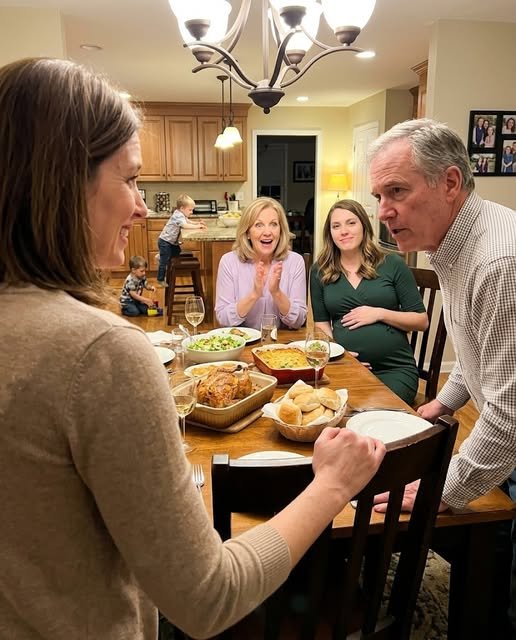
During Mother’s Day dinner, my younger sister proudly announced that she was pregnant with her third child.
My mother clapped her hands in delight.
“This is everything I ever wanted.”
Then my father looked directly at me and said, as casually as if he were asking me to pass the salt,
“You’ll be helping with the kids.”
I froze.
“Excuse me?”
My sister rolled her eyes.
“You’re not doing anything with your life anyway. This will give you purpose.”
For a few seconds, nobody said a word.
I smiled, pushed my chair back, picked up my purse, and walked out.
The next morning, my phone rang from an unknown number.
“Good morning, ma’am,” a man said. “This is the police department.”
And that was when I realized that walking away from dinner had only been the beginning.
My name is Martha Pierre, and I was thirty-seven years old when I finally stopped mistaking endurance for love.
Families like mine rarely fall apart in one dramatic explosion.
They crack slowly.
Quietly.
Along weak places that have existed for so long that everyone learns to pretend they aren’t there.
Then one day, somebody steps in the wrong place.
And the whole floor gives way.
For my family, that day was Mother’s Day.
I had almost skipped dinner entirely.
I sat outside my parents’ house for three full minutes with the engine running, staring at the white mailbox with PIERRE painted across it in fading black letters.
The neighborhood hadn’t changed in years.
Brick ranch houses.
Trimmed hedges.
Porch swings.
Wind chimes.
The kind of street that looked peaceful and dependable from the outside.
Beside me on the passenger seat was a lemon pound cake inside a bakery box. I had baked it that morning using my grandmother Odessa’s old recipe, the one that called for extra lemon zest and sour cream.
It was soft, fragrant, golden on top.
I brought dessert to almost every family gathering.
It gave my hands something to do.
More importantly, it made me useful before anyone else had the chance to decide how I should be useful.
When I finally went inside, the house smelled of roasted chicken, garlic, onions, and my mother’s powdery floral perfume.
My mother, Francine, stood at the stove wearing a lavender blouse. She moved around the kitchen with the brisk confidence of a woman who liked controlling a room before anyone else had a chance.
She didn’t hug me.
She didn’t ask how I had been.
She only glanced at the cake.
“Set that on the counter.”
My father, Renard, was sitting in the living room with baseball blaring from the television and a beer balanced against his stomach.
He gave me a small nod.
That was his greeting.
My younger sister, Colette, was stretched across the couch, glossy lips, polished nails, one ankle crossed over the other while she scrolled through her phone.
Her son, Enzo, was smashing a plastic dinosaur against the coffee table.
Her daughter, Soleil, wore one sock and dragged a doll across the floor by its hair.
“Hey, Martha,” Colette said without looking up.
That single moment summarized my family perfectly.
My mother commanded.
My father withdrew.
My sister absorbed the center of every room as though it had been promised to her.
And I adapted.
I was four years older than Colette, which had made me the practice daughter for most of my life.
I was expected to understand.
To adjust.
To need less.
To take less.
When Colette forgot something, she was overwhelmed.
When I stayed quiet, I was mature.
When she created a problem, everyone rushed in to help.
When I handled my problems alone, everyone decided that meant I didn’t need help at all.
The strange part was that I actually had a good life.
I worked as a medical billing coordinator at a private clinic.
I owned a small condo.
I paid my own bills.
Every Thursday evening, I took ceramics classes because I enjoyed making things with my hands—things nobody could demand that I repair, organize, or sacrifice for someone else.
But none of that counted as a real life to my family.
Not because I wasn’t successful.
Because I wasn’t married.
Because I didn’t have children.
Because nobody could point at me and say I had followed the approved script.
We sat down for dinner at six around the same scarred oak table I had eaten at since childhood.
One leg still wobbled if anyone leaned too heavily on the left side.
My father had been promising to fix it for twenty years.
The food was beautiful.
My mother had always known how to cook.
Roasted chicken with crisp skin.
Rice and gravy.
Collard greens cooked until they were silky and dark.
Cornbread brushed with honey.
It was a table covered in care prepared by people who struggled to offer care in almost any other form.
For the first half hour, dinner stayed within its usual brittle routine.
My mother talked about women from church.
My father told a story about someone he had worked with years ago.
Enzo knocked over his water.
Without thinking, I stood and went to get a towel while Colette remained seated.
“Be careful,” she told him lazily.
That was how things worked.
Someone made a mess.
I cleaned it.
Then Colette put down her fork and smiled at my mother.
Immediately, I felt something tighten in the back of my neck.
That smile had history.
She usually wore it when she had gained something she believed I had failed to achieve.
“I have news,” she said.
My mother went still.
My father muted the television in the other room.
Colette placed one hand over her stomach and let the silence build before finally saying,
“Baby number three.”
My mother gasped.
Then she burst into tears and hurried around the table to hug Colette.
My father slapped the table and laughed.
“That’s my girl.”
That’s my girl.
The words landed harder than I expected.
Not because I desperately wanted him to say them to me.
But because I realized I had never inspired that tone in him.
Pride in our family belonged to milestones they understood.
Marriage.
Babies.
Dependence disguised as femininity.
My mother immediately began planning.
“We’ll clear the guest room for after the baby comes if you want to stay here. We still have the old bassinet. The church ladies are going to be thrilled.”
Colette sat there glowing.
She accepted everyone’s excitement as though it were something naturally owed to her.
Then my father turned toward me.
“You’ll be helping with the kids.”
I blinked.
“Excuse me?”
He shrugged.
“Colette is going to need support.”
My mother dabbed at her tears.
“It would be wonderful for this family if everyone pitched in.”
I looked at Colette.
“Everyone?”
She gave me the irritated expression people use when they believe someone is being deliberately difficult.
“You’re not doing anything with your life anyway.”
I stared at her.
Then she added,
“This will give you purpose.”
The room became painfully silent.
Nobody defended me.
My mother didn’t say, “Colette, that was rude.”
My father didn’t correct her.
Nobody even looked uncomfortable enough to pretend.
My father simply picked up his fork.
My mother lowered her eyes toward her plate.
Their silence hurt more than Colette’s insult.
Because in that moment, years of my life rearranged themselves in my mind.
Every holiday when I had automatically been handed extra responsibilities because I was “so organized.”
Every time I had been expected to pick up one of Colette’s children.
Run an errand.
Stay late.
Cancel something.
Be flexible.
Understand.
Every time Colette’s choices became a family emergency while my life became the resource everyone used to solve it.
I smiled.
Not because anything was funny.
Because I knew that if I spoke while I was angry, I would tell the truth too clearly.
I pushed my chair back.
“Martha,” my mother said in that familiar warning voice.
I picked up my purse.
“Happy Mother’s Day.”
Then I walked out.
Behind me, Colette huffed.
My father muttered something about me overreacting.
My mother called my name once, sharply, exactly the way she had when I was a child and failed to respond quickly enough.
I didn’t turn around.
Outside, the evening air felt too warm.
My hands were shaking so badly that I had to sit inside my car before driving.
I cried for the first two blocks.
Then I became angry at myself for crying.
Then I cried harder because anger had been the emotion I was least allowed to express growing up.
By the time I reached my condo, I felt empty.
I threw the leftovers my mother had insisted I take directly into the trash.
Then I placed the untouched lemon cake on the counter and stared at it until the icing blurred through my tears.
My mother called twice that night.
My father called once.
Colette sent me a text.
DON’T MAKE THIS ABOUT YOU.
I answered none of them.
I showered, changed into an old T-shirt, and lay in bed staring at the ceiling fan.
But one sentence kept circling in my mind.
You’re not doing anything with your life anyway.
This will give you purpose.
It was such a simple sentence.
That was what made it powerful.
Colette hadn’t been cruel accidentally.
She had said what she genuinely believed.
The next morning at exactly 8:12, my phone vibrated across the nightstand.
Unknown number.
For a moment, I assumed it was spam.
I answered anyway.
“Good morning, ma’am,” a man said. “This is Officer Daniel Ruiz with the police department. Am I speaking with Martha Pierre?”
My stomach dropped.
“Yes.”
“We’re trying to contact the registered owner of a gray Honda Civic parked overnight on Willow Creek Drive.”
My parents’ street.
I sat upright.
“That’s my car.”
“There was a report of damage to the vehicle this morning. We’d like you to come make a statement.”
I struggled to understand him.
“Damage?”
“Yes, ma’am. All four tires appear to have been punctured. There’s also damage to the side panels.”
He paused.
“A neighbor’s camera may have recorded the incident.”
My entire body went cold.
Because my car was no longer drivable, I ordered a rideshare and went straight back to my parents’ neighborhood.
When we turned onto their street, my throat tightened.
My Honda was exactly where I had left it.
But all four tires were completely flat.
A deep scratch ran across both passenger-side doors.
Then I saw the windshield.
Someone had written four words across it in red lipstick.
FAMILY COMES FIRST.
I stopped on the sidewalk.
Officer Ruiz approached me with a notepad in his hand.
“Ms. Pierre?”
I nodded.
He glanced toward the car.
“Do you know anyone who might want to damage your vehicle?”
A laugh escaped me.
It sounded strange even to my own ears.
Officer Ruiz studied me for a moment.
“We also spoke with a resident who said there was some kind of family gathering here last night.”
I looked toward my parents’ house.
My mother was standing in the doorway wearing a cream house dress, her arms folded tightly across her chest.
My father stood behind her.
Colette was in the hallway with one hand resting on her hip while one child clung to her leg and the other watched from behind her.
Not one of them looked surprised.
Anger carried me up the walkway.
“What happened to my car?”
My mother glanced nervously at Officer Ruiz.
“Lower your voice.”
“What happened to my car?”
My father stepped onto the porch.
“Nobody knows. Kids do stupid things.”
“Kids punctured four tires and keyed both doors?”
Colette rolled her eyes.
“You always make everything into a production.”
Officer Ruiz approached slowly.
He hadn’t interrupted us yet.
He had simply been listening.
“Ma’am,” he asked my mother, “did any member of this household see or hear anything unusual last night?”
“No,” my mother answered immediately.
And then a small voice came from the doorway.
“Mommy said Auntie Martha was selfish, and Daddy Jason wrote it on the glass.”
Silence.
Everyone froze.
Colette’s face lost its color.
“Enzo, hush.”
But children don’t understand cover-ups.
They simply repeat what they hear.
“He used your red lipstick, Grandma,” Enzo continued, pointing directly at my mother. “The shiny one from church.”
Nobody moved.
Officer Ruiz looked at Enzo.
Then at Colette.
Then at my mother.
Finally, he flipped his notepad to a clean page.
“What is Jason’s full name?”
Jason was Colette’s husband.
He hadn’t spent much time at dinner the previous night. He had arrived late, eaten quickly, and left early because he supposedly needed to meet a friend.
I hadn’t thought much about him.
Jason was the kind of man who remained quietly at the edges of family conflict until there was damage to be done.
My mother recovered first.
“He didn’t mean anything by it.”
The words escaped her before she realized what she had admitted.
Officer Ruiz stopped writing.
I stared at her.
“Didn’t mean anything by it?”
My mother closed her mouth.
Too late.
My father stepped forward.
“Now hold on. Nobody needs police involved over a family misunderstanding.”
Officer Ruiz’s expression changed.
“Sir, damaging someone’s vehicle is not a misunderstanding.”
Suddenly, Colette began crying.
Not softly.
Angrily.
“You walked out and embarrassed us on Mother’s Day! Jason was upset. We were all upset.”
I stared at her.
She continued.
“He only wanted to scare you so you’d stop acting like you’re better than everyone.”
“Better than everyone because I said no?”
“You always make me feel judged!” she screamed.
She pointed at me.
“You with your condo and your routines and your perfect calm face. You act like you’re above all of us.”
There it was.
The real issue.
This had never been about needing help with her children.
It wasn’t really about Mother’s Day.
It wasn’t even about family.
It was resentment.
I had built a life that nobody in that house had the authority to control.
And they hated me for it.
Officer Ruiz asked for Jason’s phone number.
My father refused.
My mother began pleading.
Colette continued crying, talking about pregnancy hormones, stress, disrespect, and family loyalty.
Officer Ruiz never raised his voice.
He simply repeated his request and reminded them that interfering with an investigation would only make the situation worse.
Eventually, Jason was called.
He arrived twenty-three minutes later in a work van.
His jaw was tight.
His shoulders were tense.
He looked angry before he even stepped onto the driveway.
Then another person appeared.
Mrs. Carver.
She was a retired schoolteacher who lived across the street from my parents.
She walked toward us holding a tablet.
Her doorbell camera, she explained, had recorded everything.
We gathered on her porch.
She played the video.
There was Jason.
11:47 p.m.
Baseball cap pulled low.
Walking toward my car.
Then Colette appeared behind him wearing pajama shorts and sandals.
My mother stood near the edge of the driveway looking up and down the street.
Jason crouched beside my first tire.
Then the second.
Then another.
At one point, Colette handed him something.
My mother stepped toward them briefly.
Whatever she said, it didn’t stop anything.
Jason moved to my windshield.
He held a tube in his hand.
Red lipstick.
Even without sound, the truth was perfectly clear.
There were no misunderstandings.
No confusing angles.
No room for alternative explanations.
Just betrayal captured in clean digital detail.
My father wasn’t in the video.
But when it finished, he swore under his breath.
“I told them this was stupid.”
Them.
One word.
One more admission.
Officer Ruiz began taking statements.
Jason first denied everything.
Then he called it a prank.
Then, after the camera footage was mentioned again, he changed his story.
He admitted that he had “only nicked the tires.”
Why?
Because, according to him, I “needed to learn not to disrespect family.”
Colette claimed she didn’t know he would take things so far.
The camera showed her handing him the object he used.
End Part Here: During Mother’s Day dinner, my sister proudly announced that her third baby was on the way. My mother clapped her hands and said