
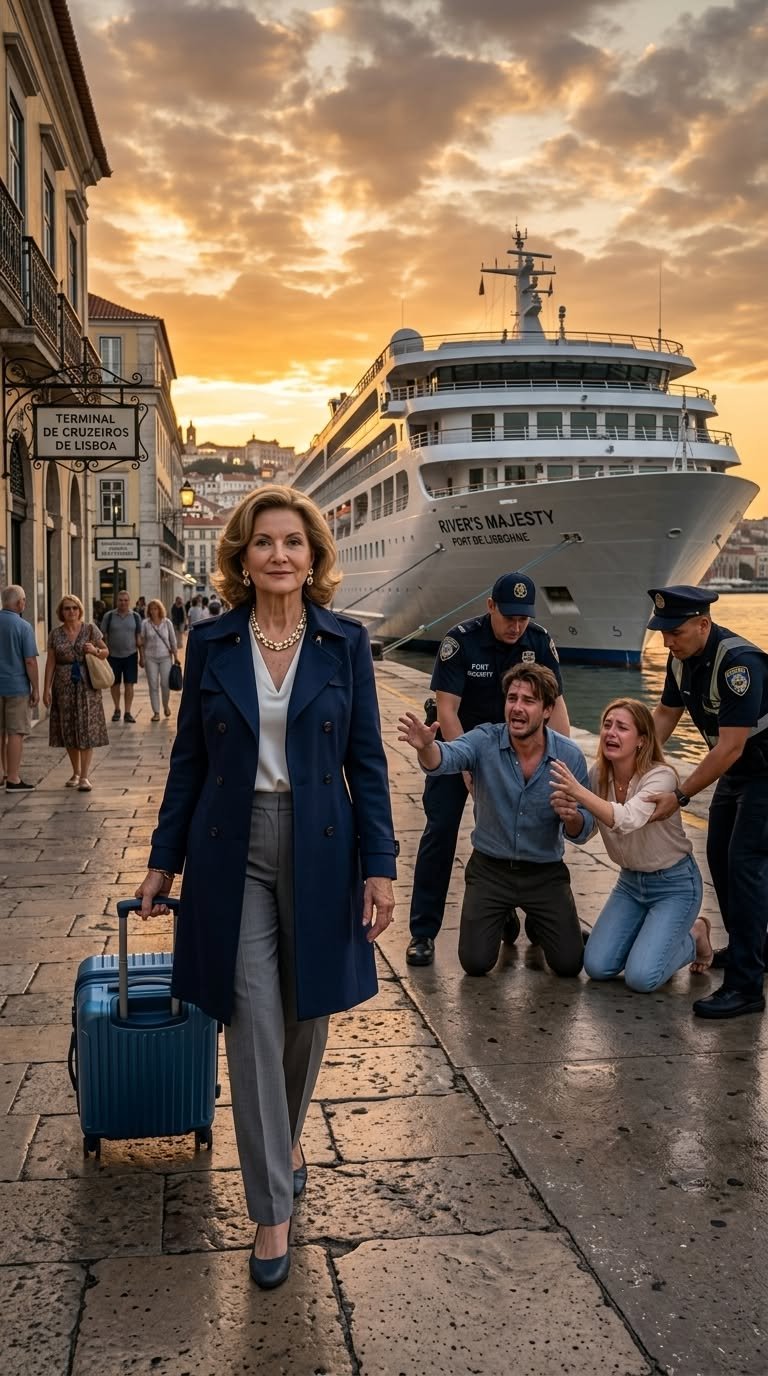
Ernest, my husband of forty years, died on a Tuesday that felt as cold and unforgiving as the marble slab they eventually laid him on. The sky over Miami that morning was a bruised, heavy purple, threatening a rain that never quite fell. I buried him in his best white linen shirt—the exact one he wore on that sweltering July afternoon when we signed the mortgage papers for our very first home. His hands, rough from decades of labor but gentle enough to braid our granddaughter’s hair, were clasped over his chest. I had meticulously wrapped his wooden rosary around his knuckles, and tucked a slightly faded, dog-eared photograph from our 1998 trip to Key West into his breast pocket. In that picture, he was leaning against a railing, laughing uproariously at a terrible joke I’d just whispered—a moment of pure, unguarded, spectacular joy.
For seven agonizing days after the funeral, I sat in the suffocating silence of our home. I felt less like a grieving widow and more like a ghost haunting the remnants of my own existence. The house smelled faintly of his aftershave and the heavy, cloying scent of the funeral lilies that were slowly rotting on the dining table. For forty years, I had not been just a woman; I had been an institution. I was the family nurse, the head chef, the unpaid therapist, the emergency chauffeur, and, most destructively, the bank of last resort.
When Ernest’s heart first began to fail and the insurance company sent a cold, bureaucratic letter denying coverage for his experimental medication, I didn’t weep. I walked to the pawnshop downtown and sold my diamond wedding earrings—his first anniversary gift to me. When our son, Austin, lost his corporate job because of “restructuring” (which I later learned was actually insubordination), I didn’t lecture him. I simply drained my personal savings—eighteen thousand, four hundred dollars—to keep his luxury SUV from being repossessed and his mortgage paid. When his wife, Chloe, gave birth to Maya, I spent four grueling months sleeping on their lumpy, spring-shot living room couch, waking up at all hours to warm bottles and change diapers so Chloe could “preserve her mental health.”
I had allowed myself to become an inexhaustible resource. A well that was expected to give water, even when it was dry.
And my reward? On the day of Ernest’s funeral, as the last of the mourners drifted away from the gravesite, leaving me standing alone over the fresh dirt, Austin did not step forward to hold my trembling hand. He didn’t put an arm around my shoulder. Instead, he stood three feet away, adjusting the cuffs of his expensive black suit, checked his Rolex, and sighed.
“Mom,” he said, his voice devoid of any warmth, “have you decided what you’re doing with the house yet? The market is peaking. It’s a lot of square footage for one person to maintain.”
I stared at him, the wind whipping my black veil against my cheek. There was fresh cemetery mud on my black pumps. I didn’t answer him. That was the first, terrifying crack in the foundation of my maternal martyrdom.
Nine days later, the crack shattered into a million pieces.
It was my 65th birthday. Weeks prior, Austin and Chloe had promised to come over, cook me dinner, and help me sort through Ernest’s study. I had spent the morning cleaning, baking my own small cake, and setting the table for three. At 4:00 PM, a sleek Uber pulled up to my driveway. But they hadn’t come to celebrate. They had come to colonize my space.
Chloe swept through the front door like a hurricane of entitlement, carrying three distinct, chaotic cages. She was followed by Austin, dragging two massive designer suitcases. The noise was instantaneous and unbearable. Two neon-green parrots were squawking violently in one cage; a shivering, terrified white rabbit thumped its foot in another; and a large, miserable Persian cat yowled from inside a urine-stained plastic carrier.
Without a word of greeting, Chloe hoisted the cages onto my dining table, pushing aside the birthday cake I had baked, and placing them directly over the candlelit memorial I’d built for Ernest.
“Change the water twice a day,” Chloe commanded, not even bothering to make eye contact as she typed furiously on her phone. “Don’t feed the rabbit lettuce, it’s bad for his digestive tract. Keep the cat in the carrier; we don’t want your old carpets smelling like dander. Oh, and use the special drops for the birds’ eyes.”
I stood frozen in the hallway, my hands clutching a dish towel. “Chloe… Austin… what is this?”
“We’re going to the Bahamas,” Austin said nonchalantly, checking his reflection in the hallway mirror. “It’s our anniversary trip. Ten days.”
“I buried my husband—your father—nine days ago,” I whispered, my voice trembling with a rage I didn’t yet know how to process. “And today is my birthday.”
Chloe let out a sharp, exaggerated sigh, rolling her eyes toward the ceiling. “Mrs. Theresa, everyone has problems. Honestly, you’re just sitting around in this dark house getting depressed. You’d only be bored here alone. This will give you something to do. It’s good for your mental health to have a task.”
Austin finally looked up from his phone, offering a patronizing half-smile. “Think of it as a favor to us, Mom. Besides, you’re practically retired now. You have the time.”
As they turned to leave, Chloe paused. Her eyes, sharp and calculating, snagged on my left hand. She pointed a perfectly manicured acrylic nail at my diamond solitaire ring—the very last piece of fine jewelry I owned, the ring Ernest had slipped onto my finger forty-two years ago.
“You know, Mom,” Chloe said, her tone dripping with faux-sweetness, “since you’re officially retiring from being the active matriarch, you really won’t need that ring anymore. It’s just going to sit in a jewelry box gathering dust. Austin and I are looking for a seed investment for a new boutique side business. It’s just lying there on your finger. Honestly, it’s a little selfish to keep assets tied up like that when the family needs capital.”
The room spun. I felt my blood go cold, ice water rushing through my veins, before it suddenly boiled into a blinding, white-hot fury. I gripped my left hand with my right, my knuckles turning bone-white to protect the diamond.
“It stays with me,” I said. My voice was no longer trembling. It was dangerously, terrifyingly steady. Low and guttural.
Austin scoffed, throwing his hands up in the air. “Fine. Be a martyr about a piece of carbon. We don’t have time for this drama, our flight boards in two hours. Just keep those cages clean. We expect the house in perfect condition when we get back. Happy birthday, by the way.”
The heavy oak front door clicked shut. The silence that followed was broken only by the frantic scratching of the cat and the squawking of the birds. But as I stood there in the entryway, the silence didn’t feel lonely anymore. It felt like a blank, expansive canvas.
I walked slowly into my bedroom, bypassing the framed family photos on the wall. I opened the heavy double doors of my closet and reached into the very back, pulling out a heavy, dusty blue suitcase. Ernest had bought it for me in 1998 for a two-week European vacation we ultimately canceled because Austin had qualified for a regional soccer tournament and I “needed” to be the team mom.
I set the suitcase on the bed. Then, I walked over to Ernest’s heavy oak bureau. I opened the bottom drawer, pushing aside his old wool sweaters that still smelled of cedar. Hidden beneath the false bottom we had built years ago was a small, leather-bound box. I had known it was there, but I had never opened it. Ernest had handed me the key three months before he passed, his breathing shallow, making me promise not to look until I felt I couldn’t breathe anymore.
I took a deep breath and turned the tiny brass key.
Inside was a stack of crisp hundred-dollar bills—more money than I had seen in one place in a decade. Beneath the cash was a letter, written in Ernest’s familiar, elegant script, dated and notarized.
“My fiercely loving Theresa,” he had written, the ink slightly smudged. “I have been a fool, and I have made you play the fool with me. In our desperation to give Austin the world, we raised a man who genuinely believes the world owes him a living. I see the way they look at you—not as a mother, but as a vault. If you are reading this, I am gone, and they are likely suffocating you. Do not let them bury you next to me while your heart is still beating. Take this money. It is an account I have fed in secret for ten years. Run away, my love. If they become too heavy, drop the weight. You have earned your life back. Leave them to the fire.”
He had included the account numbers, the routing information, and a VIP contact for a travel agency.
I looked up from the letter. I looked at the mirror. The weary, hollow-eyed woman staring back at me suddenly looked different. The grief that had been crushing my chest evaporated. I didn’t feel sadness. I felt an absolute, terrifying clarity.
I walked back out to the dining room. I looked at the three cages, the animals watching me with wide, panicked eyes amidst the ruins of my birthday cake. I picked up the landline—a phone I hadn’t used in years—and dialed a local, premium animal boarding facility. “Yes, I have three animals that require immediate, long-term pickup,” I said, my voice echoing in the empty house. “Send the bill to my son. And after you dispatch the driver, I need you to transfer me to a cab company. I need a ride to the Port of Miami. Now.”
The next six hours were a masterclass in detached, surgical efficiency. I moved through the house not as a grieving widow, but as a general preparing to abandon a compromised fortress.
By 2:00 a.m., the premium animal transport service had arrived. I handed the bewildered driver Austin’s credit card information—which I had on file from the last time I paid his overdue utility bills—and watched as the squawking birds, the trembling rabbit, and the miserable cat were loaded into a climate-controlled van.
“They’ll be well taken care of, ma’am,” the driver said gently, noticing my black mourning clothes.
“I know,” I replied coldly. “They deserve better than the people who own them.”
Once the house was empty of their chaotic energy, I went to work. I scrubbed the dining room table until it gleamed, throwing the ruined birthday cake into the garbage disposal. I vacuumed the faint traces of animal dander. I wanted to leave them nothing. No mess to complain about, no chore to use as a weapon against my memory.
Then, I packed the blue suitcase. I did not pack the sensible, frumpy beige slacks or the oversized floral blouses I usually wore to hide my aging figure. I packed three vibrant, elegant sundresses I hadn’t worn since my forties. I packed a pair of strappy leather sandals. I packed the expensive, heady French perfume Ernest had bought me in Paris, a scent I had deemed “too extravagant” for everyday use.
And finally, I packed a thick manila folder of legal documents that my attorney, Iris Delgado, had quietly drawn up for me weeks before Ernest’s death, anticipating this exact scenario.
At 4:30 a.m., I walked through the quiet house one last time. I touched the back of Ernest’s favorite reading chair. I whispered a quiet “thank you” into the dark room.
On the freshly polished dining table, exactly where they had dumped the animal cages, I left my house keys. Beside them, I placed a sealed, heavy envelope addressed to Austin. It did not contain a birthday thank-you note. It did not contain an apology for leaving. It did not contain a mother’s desperate plea for love.
It contained only one typed sentence:
“Austin, when you find this, do not call me to complain or demand answers. Call your lawyer. You will need one.”
At 5:30 a.m., the taxi honked in the driveway. The Florida air was thick and humid, but for the first time in decades, it didn’t feel oppressive. It felt like an embrace. I climbed into the back seat, wearing a wide-brimmed straw hat and a chic, lightweight trench coat, my blue suitcase securely in the trunk.
“Port of Miami, ma’am?” the driver asked, glancing at me in the rearview mirror.
“Terminal D,” I said smoothly. “And please, take the scenic route. I want to watch the sun come up.”
As the taxi merged onto the I-95, the sky began to bleed from black to a brilliant, fiery orange. Simultaneously, my phone began to chime with a relentless, frantic rhythm. The flight to the Bahamas must have landed, and they had likely checked their home security cameras, only to see the animal boarding service taking their pets away.
Incoming Call: Chloe.
Incoming Call: Austin.
Incoming Call: Chloe Cell.
Voicemail received.
I ignored the calls, but my curiosity got the better of me. I tapped the voicemail icon. Austin’s voice filled the quiet cab, thick with sleep and irritation.
“Mom, what the hell is going on? The ring camera app shows some guys taking the pets. Did you hire a service? Because we are NOT paying for that. You were supposed to watch them. Call me back immediately. This is ridiculous, Mom. You’re ruining our first day of vacation.”
I didn’t feel a pang of guilt. I felt a profound, overwhelming sense of pity for the boy I had raised. He was forty-one years old, yet he possessed the emotional intelligence of a toddler throwing a tantrum in a grocery store.
As the taxi pulled up to the massive, gleaming white hull of the cruise ship—a leviathan of luxury floating on the teal water—I pulled up my Facebook app. I had ninety-four friends. Mostly church acquaintances, extended family, and Chloe, who only followed me to monitor my whereabouts.
I asked the taxi driver to take a quick photo of me standing in front of the ship. I looked radiant. The morning light caught the diamond ring on my finger, sparkling defiantly.
I uploaded the photo with a single caption:
“Today, I begin living for the woman Ernest loved, not the mother you chose to exploit. I am trading my chains for an ocean view. See you in a year, or whenever I feel like coming back.”
I hit ‘Post’. Then, with a deliberate, deeply satisfying press of my thumb, I powered the phone completely off. I tossed it deep into the bottom of my designer handbag.
The salt air whipped my hair around my face. For the first time in forty years, I was not carrying anyone’s groceries. I was not carrying anyone’s medical charts. I was not carrying anyone’s emotional baggage.
I was carrying only my passport.
As I stepped onto the boarding ramp, the ship’s massive horn sounded, vibrating deep in my chest. Just before I crossed the threshold into my new life, my smartwatch—which I had forgotten to unpair from my phone—vibrated violently on my wrist. It was a text preview from Austin, bypassing the powered-down phone. It read: “MOM WHAT DID YOU DO? THERE IS A SHERIFF’S DEPUTY AT OUR APARTMENT DOOR SAYING WE ARE TRESPASSING. CALL ME NOW!!!” I unclasped the watch, dropped it into a nearby trash bin, and walked onto the ship.
Three weeks into my voyage, I was sitting on a sun-drenched balcony in Santorini, Greece, eating a delicate spanakopita and watching the Aegean Sea glitter like crushed sapphires. I had bought a cheap, prepaid European burner phone strictly to communicate with my attorney, Iris Delgado.
Iris was a shark wrapped in a tailored Chanel suit. When I had first come to her months ago, weeping over Austin’s financial demands, she had looked at me over her tortoiseshell glasses and asked one piercing question: “Theresa, do you want to punish your son, or do you want to force him to survive? Because I can write a document for either, but only one will let you sleep at night.”
I had chosen survival. And survival required a brutal, unyielding shock to the system.
The phone on my bistro table buzzed. It was Iris.
“The trap has been sprung, Theresa,” Iris said, her voice crackling slightly over the international line. “They’ve been served.”
The documents the sheriff’s deputy had handed Austin weren’t a standard eviction notice. They were a psychological and legal masterstroke. For eleven years, Austin and Chloe had lived in a beautiful, three-bedroom condo overlooking Biscayne Bay. They called it “their” home. They had renovated the kitchen without asking, picking out Italian marble countertops.
But the condo had never belonged to them. Ernest and I had bought it in cash under an LLC when they were newly married and their credit scores were destroyed. They had lived there rent-free for over a decade. No paperwork. Just a mother’s blind, foolish love.
The documents Iris delivered included a formal, legally binding, aggressively ironclad lease. The rent was set at $1,100 a month. It was barely half the market value of the property, but for a couple who spent their entire disposable income on designer clothes, Bahamas trips, and leasing luxury cars, it was a financial death sentence.
But the lease wasn’t the main event. Attached to it was a thick, professionally bound ledger titled: “THE ACCOUNTING OF SACRIFICE.”
Iris had meticulously itemized everything. Every property tax payment Ernest and I had made. Every HOA fee. Every emergency plumbing bill they had forwarded to me. Every month of estimated market rent they had absorbed for free.
The final total, printed in bold red ink at the bottom of the page, was $418,000.
End Part Here: Days after burying my husband, I had already booked a year-long cruise. My son dumped his pets in my house on my birthday