
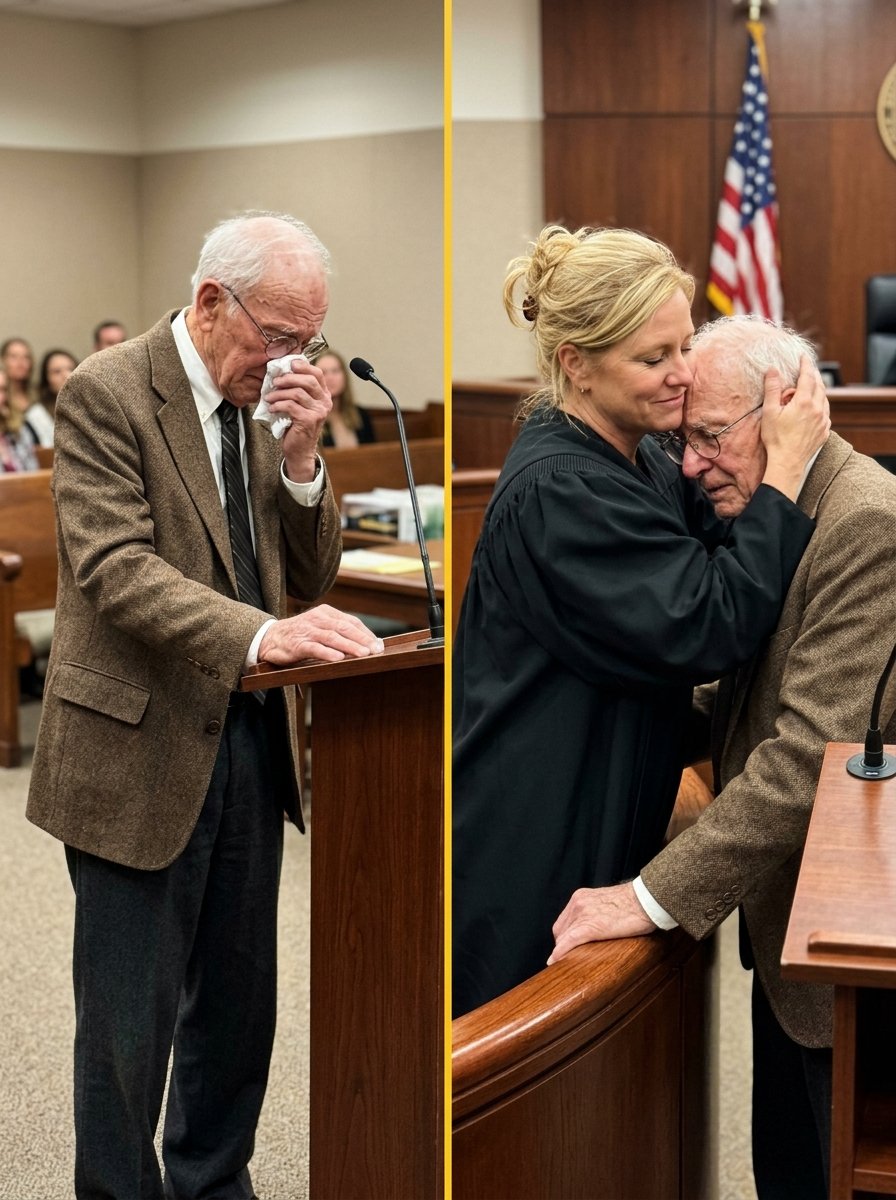
My 101-year-old neighbor was ready to go to jail for stealing over $2,000 worth of goods. He refused to explain why, even when the judge pressed him. But I knew what he was hiding, and the truth was more heartbreaking than anyone imagined.
“Mr. Walter, do you understand you could go to jail for this?” the judge asked.
“Yes, Your Honor.”
“Then why won’t you explain yourself?”
Walter gripped his cane with both hands.
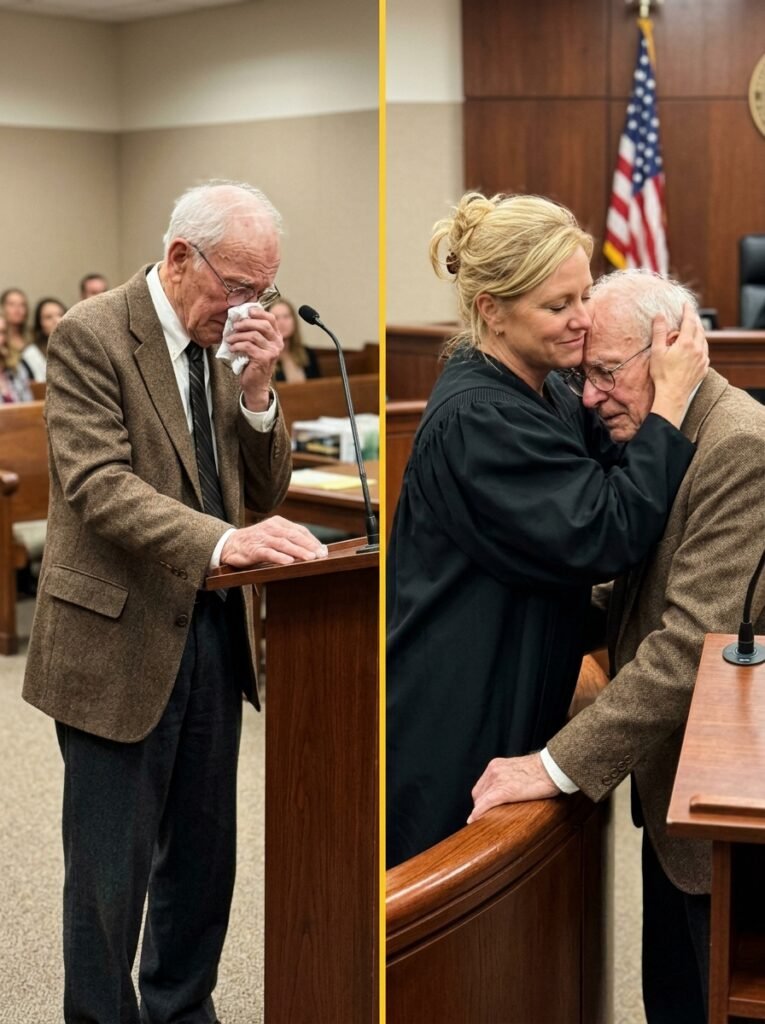
“I stole those things. I’m guilty.”
The judge studied my frail neighbor.
“At 101 years old, you should be sitting at home enjoying your retirement, not standing in my courtroom.”
Walter lowered his head.
“I’m sorry, sir.”
The judge glanced at the photographs spread across his desk.
“Baby clothes. Canned food. School supplies.”
He picked up another photograph.
“The employees let you off with warnings because of your age. But you kept going back, even after they told you they’d have to report you. Why?”
Walter said nothing.
“More than $2,000 worth of merchandise. Surely you understand why the store finally pressed charges.”
“Yes, sir.”
“Then give me one reason I shouldn’t send you to jail.”
Walter’s voice trembled.
“I don’t have one, Your Honor.”
I couldn’t stay silent any longer.
“Yes, he does!”
Walter turned sharply toward me.
“Margaret, sit down.”
I’d lived next door to Walter for 30 years.
And I’d never seen him look so frightened.
“Your Honor, he made me promise never to tell anyone. But I can’t let him go to prison without hearing the truth.”
I reached into my purse and pulled out a folded piece of paper.
“Please. There’s something you need to know.”
The judge allowed me to speak.
I pointed toward a young woman sitting in the back row with a little boy asleep against her shoulder.
“Her name is Sarah. She’s raising three children alone.”
Sarah looked up, confused.
“Her husband left two years ago,” I continued. “She cleans offices, but sometimes she barely earns enough to feed her children.”
Walter closed his eyes.
“Margaret, please.”
“Those things he stole weren’t for himself,” I said. “He was taking them to Sarah’s house.”
Sarah stared at me.
“What?”
“For months, he’s been leaving groceries, clothes, and school supplies at your door.”
Sarah shook her head.
“He told me he was buying those things with his pension.”
“And you believed him because he told you not to worry about the money.”
The judge looked at Walter.
“Is this true?”
“Yes, sir.”
“Why didn’t you tell the court?”
Walter glanced toward Sarah.
“She spent months making sure I didn’t go hungry. I wasn’t going to make her stand here and feel responsible for what I did.”
Sarah covered her mouth.
But I wasn’t finished.
“Your Honor, there’s something else. Sarah wasn’t the first person who needed help.”
I unfolded the paper.
“This is a note Sarah wrote to Walter last winter.”
Sarah recognized her handwriting.
I began reading.
“Dear Walter, please stop trying to pay me for dinner. My children love knowing someone is looking after you. You’re family to us now.”
The judge looked puzzled.
“Dinner?”
“Sarah was feeding him long before he started bringing groceries to her house.”
Walter had fallen ill the previous winter.
His wife had died years earlier, and he had no close family nearby.
Sarah noticed his curtains hadn’t been opened for two days.
When she knocked, she found him too weak to prepare a meal.
From then on, she brought him dinner almost every evening.
Sometimes, she invited him to eat with her children
Walter rarely accepted.
Walter assumed she was bringing him leftovers.
He thanked her for whatever her family had to spare.
He never imagined what those meals were costing her.
Walter tried giving her money, but Sarah always refused.
Then one evening, he noticed something strange.
As Walter later told me, Sarah had brought him chicken and potatoes.
But when he asked whether she’d eaten, she smiled.
“I’m not hungry tonight.”
A few days later, her oldest daughter came over with another container of food.
“Has your mother eaten?” Walter asked.
The girl shook her head.
“Mom says she’s not hungry again. She says we need the food because we’re still growing.”
I looked at the judge.
“Those weren’t leftovers. Sarah had been giving Walter her own dinner.”
I wiped my eyes.
“When he found out, he couldn’t sleep.”
Walter’s chin trembled.
“She was feeding me with food she couldn’t afford to eat herself.”
He told the judge how he’d started buying groceries for Sarah’s family.
When his savings dwindled, he sold his old watch and several belongings.
Eventually, he began stealing.
“Every time I thought about stopping, I’d remember those children,” he whispered.
I turned toward the judge.
“I found out when I saw him carrying bags home one afternoon. He finally admitted he’d been taking things from the store. He showed me Sarah’s note and begged me not to tell her.”
Sarah began crying.
“Walter, I never asked you to do any of this.”
“I know, sweetheart.”
“You should have told me.”
“You wouldn’t have let me help.”
“And now you might go to jail because of us.”
Walter looked toward her, his eyes filling with tears.
“No. I stole those things. That’s on me.”
For a moment, nobody spoke.
Then Sarah stood.
“Your Honor, there’s something he doesn’t know.”
Walter looked up.
“My children call him Grandpa Walter. Not to his face, because they’re afraid he’ll think they’re being silly.”
I saw a faint smile cross Walter’s face.
“But every evening, they set five places at our table. One for me, three for them, and one for him.”
“They call me Grandpa?”
Sarah nodded.
“My youngest asks every evening whether you’re coming home. He won’t let me put your plate away.”
Walter covered his mouth.
“I thought they only wanted me there because I brought them things.”
“Walter, they were saving you a chair before you ever brought us groceries.”
Sarah shook her head.
“We needed those groceries, Walter. I’m not going to pretend we didn’t. But my children need you more. They need their grandpa.”
The judge postponed sentencing to allow a restitution plan.
I promised to speak to our neighbors about helping cover the store’s losses and making sure both households had enough food.
But Walter barely seemed to hear any of it.
He kept looking at Sarah.
As if still not believing there had been a place waiting for him all along.
A few weeks later, I visited Sarah’s house and found Walter sitting at her kitchen table.
There were five plates.
Her youngest son climbed onto the chair beside him and took his hand.
“Grandpa Walter?”
“Yes, son?”
“You don’t have to bring us anything anymore.”
Walter swallowed.
“Then what should I bring?”
The little boy smiled.
“Just yourself.”
I watched Walter smile through his tears.
For years, he’d lived alone, convinced he had little left to offer anyone.
But now he had a family waiting for him at the dinner table.
And all they wanted was for him to come home.