They became silent when support required actual sacrifice.
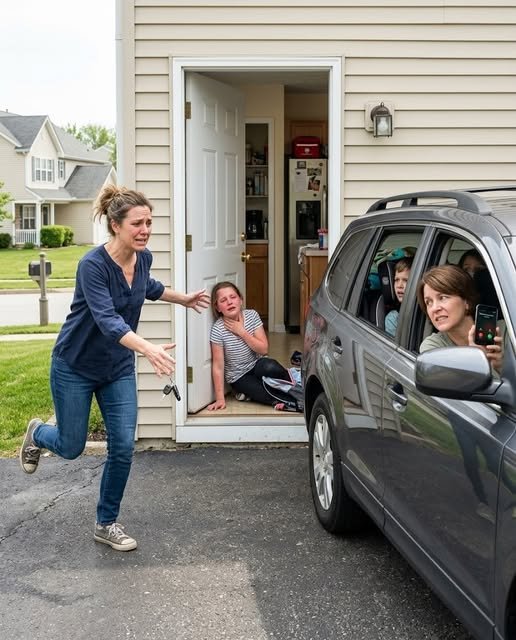
Rebecca returned my SUV only after the police contacted her. It came back with an empty fuel tank, food wrappers in the back, and a long scratch across one side.
I did not argue about it.
I had the keys reprogrammed, documented the damage, and removed her from my insurance.
Without my vehicle, my payments, and my free childcare arrangements, the life Rebecca had built on my help began collapsing almost immediately.
She accused me of punishing her children.
But Daniel stepped in.
He arranged transportation, groceries, and temporary care for Lily and her younger brother. The court granted him emergency custody while the investigation continued.
I made sure the children knew they were still welcome in my life.
They had not caused their mother’s actions.
Lily visited Emma several times after she came home from the hospital. During the first visit, Lily stood awkwardly in the doorway holding a stuffed rabbit.
“I’m sorry I got in the car,” she said.
Emma looked at her for a long moment.
“You’re a kid,” she finally answered. “You didn’t know what to do.”
Then she moved aside and let Lily sit beside her.
Watching them together broke my heart and repaired a small part of it at the same time.
The legal case took months.
Rebecca eventually accepted responsibility as part of a plea agreement. She received strict probation, mandatory counseling, parenting classes, community service, and restrictions on unsupervised contact with children while the family court reviewed her case.
My mother also faced consequences for her role. She was ordered to complete counseling and was prohibited from contacting Emma unless a court-approved professional determined that contact would be safe and beneficial.
Emma never asked to see her.
I did not pressure her.
Family relationships are not more important than a child’s safety.
Some relatives continued calling me vindictive. They said I had torn the family apart over a mistake.
I answered only once.
“A mistake is forgetting an appointment. A mistake is bringing the wrong lunch. Taking emergency medication from a child who is struggling to breathe and then leaving her alone is a choice.”
After that, I blocked them.
Six months later, Emma and I returned to the hospital for a follow-up appointment.
Her doctor said she was doing well physically. She had become more confident about carrying her medication and speaking up when something felt unsafe.
She had also started seeing a counselor who specialized in helping children recover from traumatic experiences.
On the drive home, Emma was quiet.
Then she looked out the window and said, “I used to think being good meant not causing problems.”
I glanced at her.
“What do you think now?”
She considered the question.
“I think being brave means telling someone when there is a problem, even if people get mad.”
I reached across the console and squeezed her hand.
“That sounds right to me.”
The following week, Emma spoke to her class about severe allergies. She showed them her emergency pouch, explained why children should never be ashamed of needing help, and told them that calling an adult during an emergency was not overreacting.
Her teacher later told me that another student quietly admitted she had been hiding her own medical symptoms because she was afraid of bothering people.
Emma’s story helped that child ask for help.
For the first time since that terrible morning, something good had grown from what happened.
My mother eventually moved into a small apartment across town. Rebecca found work within walking distance of where she lived. They told everyone I had destroyed their lives.
But the truth was simpler.
I had stopped protecting them from the consequences of their own choices.
I had spent years providing housing, money, transportation, childcare, and endless second chances because I believed that was what family did.
That morning taught me that family is not defined by shared blood, old photographs, or how often someone says they love you.
Family is defined by what people do when someone vulnerable needs them.
Rebecca and my mother had been given one simple responsibility: protect a frightened 10-year-old child.
Instead, they treated her survival as an inconvenience.
They believed I would forgive them because I always had before.
They believed my silence meant weakness.
They were wrong.
I never screamed.
I never threatened them.
I simply closed the doors they had been using, showed the truth to the people who needed to see it, and stood beside my daughter while the consequences arrived.
Three hours after they abandoned Emma, their comfortable lives began falling apart.
But that was never my revenge.
My victory was watching my daughter walk into school months later with her red emergency pouch clipped proudly to her backpack.
Before entering the building, she turned, waved at me, and smiled.
She was alive.
She felt safe.
And she finally understood that she was never a burden worth abandoning.
She was my daughter.
And choosing her was the easiest decision I had ever made.