
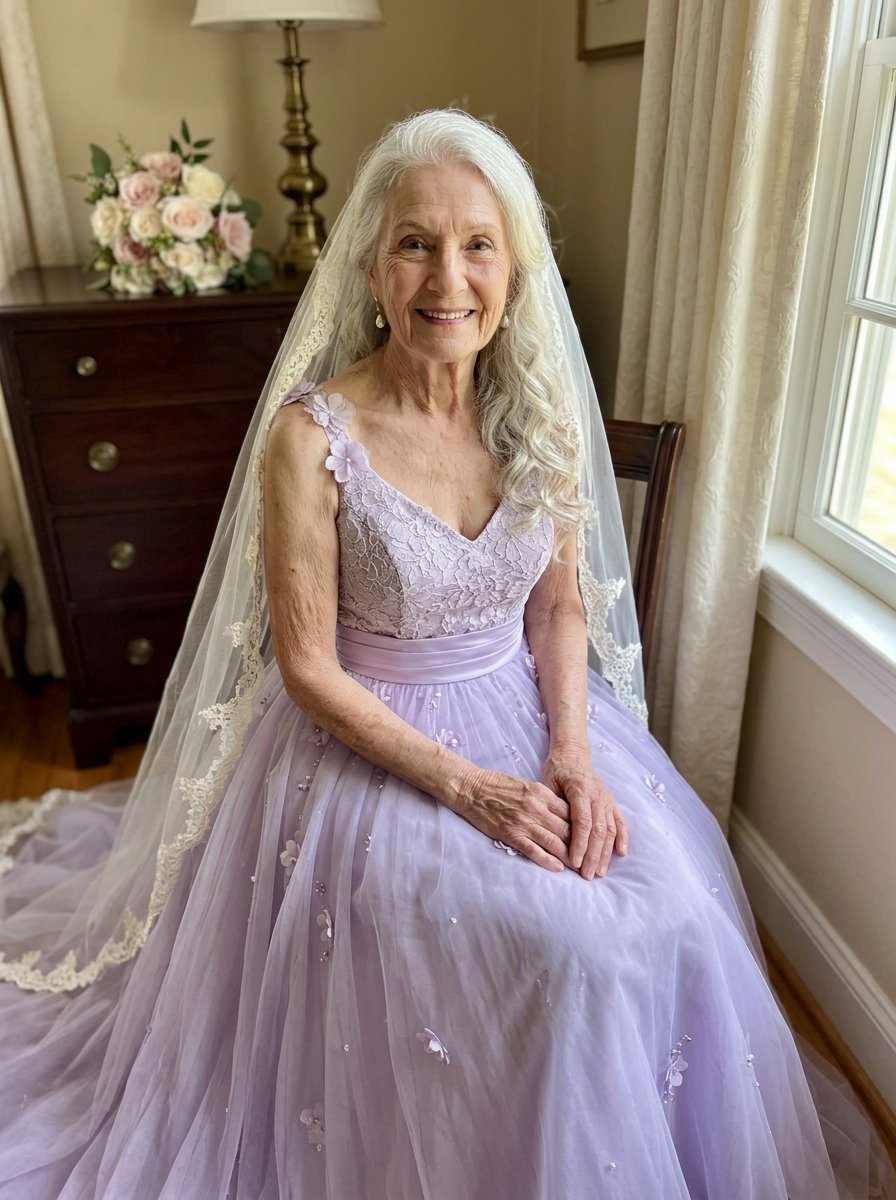
I MARRIED MY HIGH SCHOOL SWEETHEART AT 70—TWO WEEKS AFTER HIS CHILDREN THREW ME OUT, HIS LAWYER CAME TO MY TRAILER
I married my high school sweetheart at seventy.
Then he died.
Two weeks after his children threw me out of his house with nothing but the black dress I had worn to his funeral, a limousine pulled up outside my old trailer.
His lawyer stepped out carrying an envelope and said:
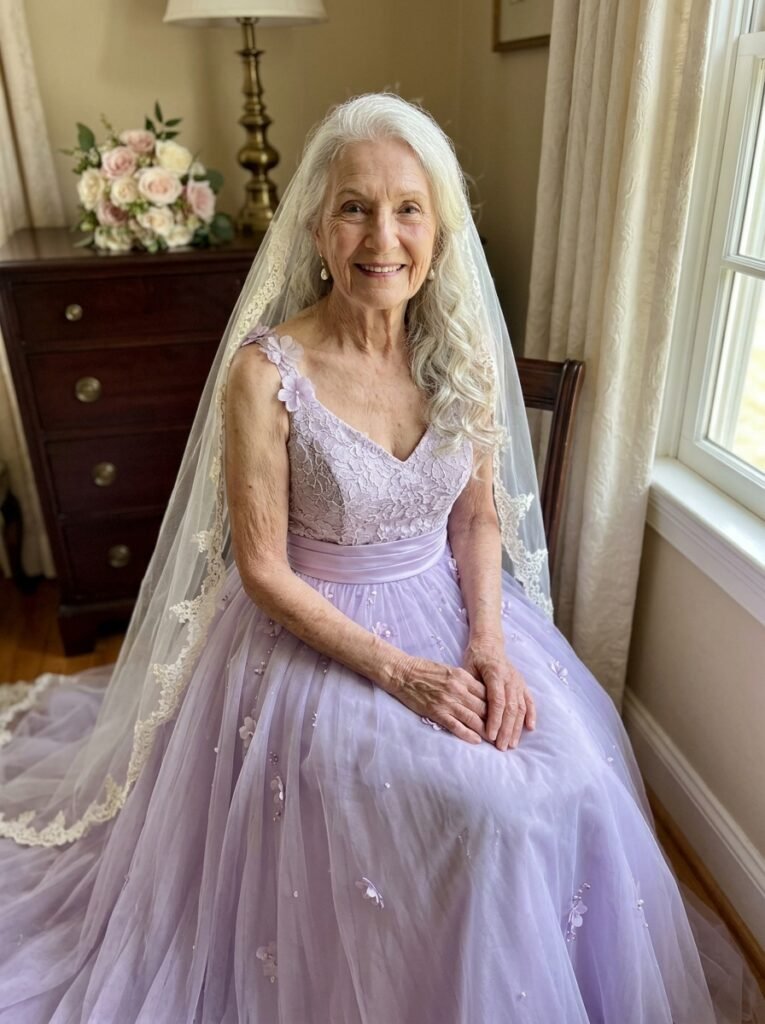
“Your husband made sure you got exactly what you deserved.”
For one terrible moment, I thought Thomas had discovered something before his death.
I thought perhaps his children had been right about me.
But what was inside that envelope would uncover more than fifty years of secrets.
And it would change everything I thought I knew about the life I had lived.
PART 1 — THE PROMISE HE MADE IN 1973
Thomas kissed me behind the school bleachers in 1973 and whispered:
“Margaret, someday I’ll buy you a diamond ring.”
We were seventeen.
Thomas had almost no money.
He did not own a car.
He rode a bicycle with a bent wheel.
But I believed him anyway.
Then life pulled us apart.
Thomas left for college.
I stayed home to care for my widowed mother.
Our letters slowly stopped.
Eventually, I married Robert, a good man who loved me faithfully.
Thomas married Evelyn, a good woman who built an entire life with him.
We raised our families.
We buried our spouses.
And somehow, more than fifty years passed without Thomas and me seeing each other again.
Then one afternoon, he found me at a church bake sale.
He stopped in front of my table and stared.
“You still wear your hair the same.”
I smiled.
“And you still talk too smoothly.”
It was ridiculous how quickly the years disappeared.
We began talking.
Then having coffee.
Then dinner.
Three months later, Thomas asked me to marry him.
I said yes.
Not because of his enormous house.
Not because of his money.
I barely knew how much he had.
I married him because somewhere inside the seventy-year-old man standing before me was still the boy who had once walked me two miles home in pouring rain without complaining once about his wet shoes.
Unfortunately, Thomas’s children never believed that.
Claire and Daniel loved their late mother deeply.
To them, my presence in their father’s life felt like an insult to Evelyn’s memory.
Then Thomas died suddenly of a heart attack.
At the funeral, Claire looked me directly in the eyes.
“Get out. You’ve embarrassed our mother’s memory long enough.”
Daniel placed my old suitcase at my feet.
I was too numb to fight them.
“Please,” I whispered. “At least let me take Thomas’s photograph.”
“No,” Claire said.
“Nothing in this house belongs to you.”
She even removed the simple gold wedding band Thomas had placed on my finger when we married.
She said it belonged to the family.
So I left.
In the dress I had worn to bury my husband.
I moved into my late sister’s old trailer beside the county road.
For days, I barely slept.
Then, two weeks later, while I was hanging laundry outside, I heard tires on the gravel.
A black limousine stopped in front of the trailer.
A man in a gray suit stepped out.
He carried a sealed envelope.
My name was written across the front.
Margaret.
“Margaret,” he said gently. “I’m Thomas’s attorney. My name is Mr. Bennett.”
My stomach tightened.
He extended the envelope.
“Thomas left strict instructions that I deliver this personally.”
“Why?”
Mr. Bennett hesitated.
“Because your husband wanted to make absolutely sure you got exactly what you deserved.”
My hands shook as I opened it.
The handwriting was Thomas’s.
Margaret, if Mr. Bennett is standing in front of you with this letter, then I have failed at the one thing I wanted most—to give you more time.
My knees weakened.
Mr. Bennett caught my arm.
I kept reading.
Thomas wrote that I had returned to his life without asking for anything.
Not his house.
Not his accounts.
Not his wealth.
I had asked whether he still liked burnt toast and whether his knees hurt before rain.
Then came the part about Claire and Daniel.
Thomas knew they resented me.
But even after what they had done, he did not condemn them.
Daniel and Claire loved their mother. They believe loving you somehow takes something away from loving her. It doesn’t. But grief is strange arithmetic. People convince themselves the heart has only so much room.
I had wanted to be angry at them.
Thomas was asking me to understand them.
Then I reached the next paragraph.
You once told me you wanted nothing I had not freely given. So I am giving you something freely now.
Not because I married him.
Not because I cared for him.
But because fifty-three years earlier, he had promised a seventeen-year-old girl something.
The diamond ring.
Mr. Bennett returned to the limousine and brought me a dark-blue box.
But Thomas instructed me to finish the letter first.
Then he wrote about the house.
The large white colonial Thomas and Evelyn had purchased in 1988.
Before Evelyn died, they had placed the property into a trust.
Thomas wrote:
There is something in that house that belongs to you, Margaret. It has belonged to you since 1974.
That made no sense.
In 1974, Thomas and I had already separated.
Then I unfolded the second page.
Only three sentences were written there.
I did come back.
Your mother told me you never wanted to see me again.
She gave me something that I kept for fifty-two years.
Below those words was an arrow.
Open the box.
I lifted the lid.
Inside were twenty-eight letters.
All addressed to me.
All written by Thomas.
All unopened.
Underneath them was a worn velvet jewelry box.
Inside sat a modest diamond ring.
The receipt underneath it was dated June 14, 1974.
Thomas had bought the ring fifty-two years before he finally married me.
“He came back,” I whispered.
Mr. Bennett nodded.
Then came another revelation.
Thomas had created a marital trust for my care using assets acquired independently after Evelyn’s death.
His children’s inheritance remained untouched.
And Claire and Daniel had never had the legal right to throw me out.
Under the trust created by Thomas and Evelyn, I had the right to live in the house for the rest of my life.
“Evelyn?” I whispered.
“She died before Thomas found me.”
Mr. Bennett nodded.
“That’s true.”
“Then how could she leave me anything?”
His expression softened.
“I never said Evelyn didn’t know who you were.”
He pulled out one final envelope.
Across the front, in Evelyn’s handwriting, were four words:
For Margaret, if ever.
PART 2 — THE LETTER FROM THE WOMAN I THOUGHT I HAD REPLACED
For three days, I did not open Evelyn’s letter.
I carried it from room to room.
As long as it remained sealed, she had neither condemned nor welcomed me.
Evelyn remained only Thomas’s first wife—a woman I knew through photographs, stories, recipes, and the habits she had left behind in him.
She was the reason he folded towels in thirds.
The reason he refused canned peaches.
The reason he knew every bird at the feeder.
Marriage leaves fingerprints.
Even after death.
On the fourth morning, I sat at my tiny kitchen table while rain tapped against the trailer roof.
Then I opened the letter.
Dear Margaret,
If you are reading this, then several unlikely things have happened. I am gone. Thomas found you. And somehow you became important enough to him again that he decided you should know I once knew your name.
I stopped reading.
Then continued.
Please do not mistake this letter for permission. Thomas never needed my permission to live after I was gone. Nor do you need permission to love someone who has already loved another person.
My eyes filled.
Evelyn explained that Thomas told her about me during the first year of their marriage.
Not because he still belonged to me.
He loved Evelyn.
Fully.
She made that very clear.
She learned about me because she found the old diamond ring.
Thomas told her he had loved a girl named Margaret at seventeen.
He told her I stopped answering his letters.
He told her he returned home intending to propose, only for my mother to tell him I had met another man and wanted nothing more to do with him.
My mother had even returned several of Thomas’s letters and made him promise not to contact me.
Evelyn had once asked Thomas:
“Do you still love her?”
His answer had been:
“Not the way I love you.”
For some reason, I needed to read that.
Thomas had not spent fifty years secretly waiting for me.
He and Evelyn had built a real marriage.
Just as Robert and I had.
Neither life was a placeholder.
Evelyn had even encouraged Thomas to keep the ring.
Over the years, she joked about “Margaret”—the girl behind the bleachers, the girl who hated raisins, the girl who had once broken Thomas’s nose with a volleyball.
Then Evelyn became sick.
Her handwriting grew smaller.
Near the end of her life, she began worrying about what would happen to Thomas after she was gone.
Their children would love him.
But children could not be his entire life.
So Evelyn told Thomas something extraordinary.
Find Margaret.
Not because she believed I had been waiting.
She assumed I had a husband and family of my own.
She simply wanted Thomas to answer the question he had carried since boyhood:
Was Margaret happy?
If I was, he could leave the past alone.
If I was not, life could decide the rest.
Then Evelyn explained the provision in the house trust.
She had been the one who suggested it.
She worried that if Thomas ever remarried, Claire and Daniel might view the new wife as someone replacing her.
She wrote:
Our children will misunderstand this if Thomas ever remarries. They are good people, Margaret. But grief can make good people territorial.
So she insisted that Thomas’s future wife could not simply be thrown from her home after his death.
Then came the final lines:
If that wife happens to be you, perhaps the world has a sense of humor.
Do not erase me.
But do not disappear for me, either.
There is room.
Evelyn.
I sat there for almost an hour.
Then someone knocked.
Claire stood outside beneath a black umbrella.
She had come because Mr. Bennett told her about my trust.
At first she accused me of knowing about Thomas’s money.
I told her I had known nothing.
Then she saw Evelyn’s letter on my table.
All the color disappeared from her face.
“That’s Mom’s handwriting.”
“Yes.”
“What does it say?”
I pushed it toward her.
“You should read it.”
Halfway through, Claire began to cry.
When she finished, she whispered:
“My mother knew about you.”
“Yes.”
“I thought you were replacing her.”
“I know.”
She finally explained what Thomas’s grief after Evelyn’s death had looked like.
Claire and Daniel had managed his bills, appointments, home—everything.
Then suddenly their father was attending church events again.
Buying new clothes.
Smiling at his phone.
Then he announced:
“I found Margaret.”
To them, I had appeared from nowhere.
I told Claire about losing Robert.
How I had kept his shoes beside the door for an entire year because moving them felt too much like accepting he would never return.
“When I married Thomas,” I said, “I never wanted Evelyn to disappear.”
Claire’s face changed.
Then she reached into her handbag.
My simple gold wedding band lay in her palm.
“I brought it back.”
I slipped it onto my finger.
“Thank you.”
Before we could say much more, Mr. Bennett arrived.
He brought more documents from Thomas and Evelyn’s trust.
And another surprise.
A photograph.
Three women stood outside an old diner.
One was my mother.
One was seventeen-year-old me.
And the third looked exactly like Evelyn.
On the back, in Evelyn’s handwriting, were the words:
The day I learned Margaret was never the one who stopped writing.
But there was a problem.
The photograph had been taken in 1973.
Evelyn did not meet Thomas until 1975.
PART 3 — THE WOMAN IN THE PHOTOGRAPH
Mr. Bennett finally explained.
The woman was not Evelyn.
It was her older sister, Judith.
Claire recognized her immediately.
“Aunt Judy.”
Judith had worked one summer at Miller’s Diner.
So had my mother.
That was the missing connection.
Claire called Daniel.
He arrived forty minutes later.
At first, he was defensive.
Then Claire showed him Evelyn’s letter and the photograph.
Daniel’s expression changed.
“I’ve seen that picture before.”
He admitted Thomas had shown it to him years earlier.
Thomas had discovered that Judith and my mother once worked together.
Then Daniel revealed something else.
“There was a notebook.”
Evelyn’s journal.
It was still at the house.
For the first time since Thomas’s funeral, I returned.
Walking through the front door hurt more than I expected.
Not because I remembered being thrown out.
Because I remembered being happy there.
Thomas singing badly in the kitchen.
Thomas sleeping beneath a newspaper.
Thomas looking at me on our wedding morning and saying I looked seventeen and seventy at the same time.
Claire stopped beside me.
“I’m sorry.”
“For what?”
“For making you leave.”
I nodded.
“I know.”
“That isn’t forgiveness.”
“No.”
“But maybe someday?”
“Maybe.”
In Thomas’s study, Daniel found Evelyn’s journal.
Halfway through it, my name appeared.
Judy called today. She asked whether Thomas ever spoke about a girl named Margaret Hayes.
Two days later:
Judy explained.
Judith had known my mother in 1973.
She knew Thomas used to meet me after school.
She also knew my mother disliked Thomas’s plans.
Not Thomas.
His plans.
College.
Travel.
A career outside our county.
My father had died when I was thirteen.
My older brother had moved away.
I was all my mother had.
And she was terrified I would leave too.
So after Thomas left for college, my mother began intercepting his letters.
Judith knew.
At first, she thought it was simply a strict mother protecting her daughter.
Then Thomas returned carrying the ring.
My mother panicked.
She told him I had met Robert.
That was partly true.
Robert and I had been introduced.
But we were not yet courting.
Then my mother gave Thomas letters I had written—letters she had taken before they were mailed.
Thomas believed I had rejected him.
Judith watched it happen.
And said nothing.
Years later, guilt drove her to Evelyn.
She told her everything.
The truth was devastatingly simple.
My mother had not hated Thomas.
She had been afraid of being left alone.
It did not excuse what she did.
But it made her human again.
I preferred that to a villain.
Evelyn’s journal contained another entry written shortly before she died.
She had asked Thomas whether he wanted to find me.
He said no.
At first, that hurt.
Then I read why.
If she is happy, I have no right to knock on her door carrying fifty years of confusion.
Evelyn disagreed.
She made him promise:
If life ever puts Margaret in front of you again, do not walk away.
And years later, at a church bake sale, life did exactly that.
Claire began crying.
“My mother sent him back to you.”
“No,” I said gently. “She gave him permission to recognize the opportunity.”
Nearby, Daniel found another photograph.
Thomas and me at the bake sale.
Someone had taken it without us noticing.
On the back, Thomas had written only three words:
There you are.
Then Daniel apologized.
He admitted he had treated me badly.
“I don’t know how to fix it.”
“You don’t fix it in one conversation.”
“What do I do?”
“Start with the next one.”
That afternoon, another discovery changed the house’s future.
The original trust required Claire, Daniel, and me to jointly decide what happened to the property.
Then we found architectural plans Thomas had commissioned six months before his death.
Across the top he had written:
Margaret’s idea—someday, maybe.
The plans converted the enormous house into temporary housing for older widows and widowers who suddenly found themselves alone after losing a spouse.
Years earlier, I had mentioned such an idea once during breakfast.
I had forgotten it.
Thomas had not.
PART 4 — THE HOUSE BECAME SOMETHING ELSE
I was angry with Thomas.
Claire seemed surprised.
“You’re angry?”
“Very.”
“Why?”
“Because he made plans involving me without asking.”
Daniel nodded.
“That definitely sounds like Dad.”
The idea itself was beautiful.
But I was seventy.
I had arthritis.
I did not intend to spend the rest of my life running a charity because Thomas had been inspired over scrambled eggs.
Then we found one of his notebooks labeled:
HOME
Inside was research about transitional housing for older people.
Not nursing homes.
Not permanent care.
Temporary security for people whose spouses had died before practical life had caught up with grief.
One line stopped me.
Margaret says the hardest part of grief is that practical problems arrive before the heart can catch up.
I remembered saying that after Robert died.
Claire noticed Thomas’s proposed name.
“Second Door.”
I frowned.
“Terrible.”
Daniel laughed.
“Sounds like a furniture store.”
Eventually, Claire suggested we work with an established nonprofit rather than manage everything ourselves.
A local organization called Harbor House already operated transitional apartments but had a long waiting list.
Its director, Anita Coleman, visited.
“This house could work,” she said. “But not cheaply.”
We scaled the plans down.
Six residents.
Four suites in the main house.
Two future rooms in the carriage house.
The study would become a library.
The dining room would remain.
And Evelyn’s garden would stay mostly intact.
That garden nearly started another family war.
Claire became defensive when I suggested accessible walkways through part of it.
“That’s how it starts,” she snapped.
“How what starts?”
“Everything getting replaced.”
There it was again.
The old fear.
Instead of arguing, I said:
“Show me which roses belonged to your mother.”
We walked outside.
Claire pointed to each plant.
The yellow rose planted after Daniel graduated.
The climbing rose from her grandmother.
The rose Evelyn bought after a trip to Savannah.
Each one had a story.
Then I understood.
Claire was not protecting flowers.
She was protecting coordinates.
Places where memory could still be found.
So we kept them.
We found another path for the walkway.
That was how our relationship developed.
Not through one dramatic reconciliation.
Through repetition.
Breakfast.
Phone calls.
Arguments about gardens.
And returning the next day.
Meanwhile, I began reading Thomas’s letters.
One every night.
I refused to consume fifty years of lost possibility in one afternoon.
The early letters were funny.
Margaret, dorm food has proven your meatloaf was not as bad as I claimed.
Then they became lonely.
Then worried.
Are you angry with me?
Then frightened.
Please write.
Then hurt.
Your mother says you’ve met someone.
The final letter had never been mailed.
I bought the ring. Probably foolish. Everything important I’ve ever done concerning you has felt a little foolish.
Then:
I hope he walks you home when it rains.
That one broke me.
Because Robert had.
Many times.
Different man.
Different love.
No betrayal in either.
I placed Thomas’s letter beside Robert’s photograph.
“Both of you were good to me,” I whispered.
Thomas was not the life I should have had.
Robert was not a detour.
They were both my life.
Eventually construction began.
I did not move back into the main house.
Instead, I chose the small apartment above the renovated carriage house.
Two rooms.
A kitchenette.
A balcony overlooking Evelyn’s roses.
Enough.
Then a contractor removing an old cabinet from Thomas’s study discovered another envelope.
It was not from Thomas.
Not from Evelyn.
It was from my mother.
Written in 1991.
Addressed to Thomas.
The first line read:
Thomas, I have owed you the truth for seventeen years.
My mother confessed everything.
The intercepted letters.
The lies.
Her fear that I would leave.
Her guilt.
But at the end, she begged Thomas for one mercy.
Margaret married a good man. They have two children. She is happy.
Do not tell her.
Why?
She loves her husband. If you tell her what I did, she will spend the rest of her life wondering whether she chose her life freely.
My eyes closed.
Thomas had known the truth since 1991.
He had known for decades.
And he had stayed away.
Because by then, Robert and I had been married seventeen years.
Our children were teenagers.
We were happy.
Thomas had decided that revealing the truth would benefit him more than it would benefit me.
So he let my life remain mine.
The day before Thomas proposed to me decades later, Daniel told me, Thomas visited Evelyn’s grave.
Daniel had driven him.
When Thomas returned to the car, he said:
“Your mother always did have the last word.”
Daniel showed me a photograph.
Thomas stood beside Evelyn’s grave.
His hand rested against the stone.
Tucked among the flowers was a little note.
Three words were visible.
I found her.
PART 5 — EXACTLY WHAT I DESERVED
The Garden House opened eleven months after Thomas died.
We did not call it Second Door.
Thankfully.
Our first resident was a seventy-six-year-old widow named Doris.
Her husband had died six weeks earlier.
Her rental home was being sold, and her new apartment would not be ready for three months.
She arrived with two suitcases, a sewing machine, and an enormous fern.
“I hope you don’t mind plants,” she said.
I looked toward Evelyn’s roses.
“You’ll fit in.”
Then came Samuel, a widower who could cook beautifully but could not understand online banking.
Then Marian.
Then Walter.
Nobody was being rescued.
That mattered.
These were adults crossing difficult spaces between one version of life and another.
The Garden House simply gave them somewhere solid to stand while they crossed.
My relationship with Claire and Daniel grew the same way.
Slowly.
Claire still annoyed me.
I annoyed her.
She made spreadsheets for everything.
I treated paperwork as a personal insult.
Daniel arrived almost every Saturday to repair things.
Usually things that were not broken.
One afternoon, he brought my old suitcase.
The same one he had dropped at my feet after Thomas’s funeral.
“I thought you might want this.”
I looked at it.
For months, I had treated that suitcase as a symbol of humiliation.
Now it was only a suitcase.
Brown.
Scuffed.
One wheel crooked.
“I don’t need it.”
Daniel’s face fell.
Then I added:
“But somebody might.”
We put it in the residents’ storage room.
Some objects should not become relics.
They should become useful again.
The house eventually stopped belonging to one person’s memory.
Evelyn’s roses remained.
Thomas’s books filled the library.
Robert’s old chess set sat on a table.
Claire donated a piano.
Daniel built shelves.
I added yellow curtains upstairs.
Memory did not require eviction.
One life did not have to disappear so another could enter.
On the first anniversary of Thomas’s death, Claire asked me to visit the cemetery with her.
Daniel joined us.
Thomas and Evelyn were buried side by side.
Thomas and I had discussed that before marrying.
He once worried I would find it strange.
I had told him:
“You spent fifty years with her. If I get jealous of the cemetery, we have bigger problems.”
Now I knelt beside his grave.
“Hello, trouble.”
Claire laughed behind me.
“I read all your letters,” I told him.
“I’m still angry about some things.”
Daniel said, “He’d expect that.”
I turned.
“Do not interrupt my conversation with your father.”
“Sorry.”
Then the three of us laughed.
At a cemetery.
On the anniversary of his death.
Not because grief was gone.
Because it had changed enough to share space with something else.
Several weeks later, Mr. Bennett arrived at the Garden House.
This time, no limousine.
Just a dusty silver sedan.
He carried another envelope.
I stared at him.
“No.”
He laughed.
“This really is the final one.”
“I don’t believe you.”
“Thomas ordered me to deliver it exactly one year after his death.”
Across the front, Thomas had written:
For Margaret, one year later.
I took it upstairs.
From my balcony, I could see residents in the garden.
Claire’s car was parked crookedly near the gate.
Daniel had left a ladder where I had told him not to.
Life was continuing at full volume.
Then I opened Thomas’s final letter.
Margaret,
If Bennett followed instructions, one year has passed.
You are probably annoyed that I scheduled a letter.
“Correct,” I said aloud.
You are also probably telling me so out loud.
“Correct again.”
Then came the first thing he wanted to say.
I am sorry.
Thomas apologized for not telling me the truth about my mother after he learned it in 1991.
He wrote:
I convinced myself silence was kindness. Perhaps it was. Perhaps it was cowardice. Most choices are mixtures.
He did not want me to look at Robert and wonder whether my life with him had been built upon someone else’s lie.
Then he answered the question I had been carrying.
It wasn’t.
Your mother’s lie may have changed the road you traveled, but it did not manufacture the love you found there.
I pressed my fingers against my lips.
Then Thomas wrote about what I deserved.
Mr. Bennett had warned him not to phrase it that way.
Apparently, Bennett thought it sounded ominous.
“He was right,” I muttered.
Thomas continued:
People spend too much time deciding what others deserve.
My children may decide you deserve nothing.
Some may decide you married me too quickly.
Others may decide we were destined for each other and turn fifty years of real marriages into an inconvenience in a romantic story.
They are all wrong.
Then came the words I needed most.
You deserved the life you had with Robert.
Evelyn deserved the life she had with me.
I deserved to love her.
I deserved to find you again.
And you deserved to be loved without being asked to erase any part of yourself.
The evening sunlight warmed the page.
Thomas continued:
The money is for security.
The ring is for the girl you were.
The letters are for the questions we never answered.
The house is whatever you decide it should become.
But none of those things are what I meant when I told Bennett to make sure you received exactly what you deserved.
I swallowed.
Then I read the answer.
What you deserve is the truth.
All of it.
Even when it hurts.
Especially when it heals.
And, because Thomas could never end anything without one last joke:
You once accused me of breaking my promise about the diamond ring. Technically, I bought it. So I maintain that I fulfilled the promise.
“Thomas,” I said to the empty room.
I can hear you arguing.
I laughed through my tears.
Then came his final words.
Fine. I was fifty-two years late.
But you always were impatient.
Do not spend whatever time you have left waiting for me.
I already found you.
Go live.
Love, Thomas.
I sat on the balcony until sunset.
The following morning, I placed Thomas’s letters in the Garden House library beside Evelyn’s journals.
I did not lock them away.
They were part of the story.
I loaned the old diamond ring to the county historical society for an exhibit about letters, courtship, and communication across generations.
Claire could not believe I did not want to wear it.
“That ring belonged to seventeen-year-old Margaret,” I explained.
She looked at the simple gold wedding band on my finger.
“And that one?”
“This is the ring Thomas gave the woman I became.”
Later, Claire stood beside me on the porch.
“Would seventeen-year-old Margaret have liked seventy-one-year-old Margaret?”
I considered the question.
“She’d be shocked by my knees.”
Claire laughed.
“And otherwise?”
I looked through the open front door.
A resident sat reading near a window.
Evelyn’s roses were blooming.
Robert’s chessboard sat in the library.
Thomas’s books filled the shelves.
Daniel was arguing with a cabinet hinge.
Claire stood beside me.
“I think she would be surprised.”
“By what?”
“That life wasn’t ruined because it didn’t happen the way she expected.”
That evening, rain began falling.
I stood beneath the porch roof and remembered 1973.
Thomas behind the school gym.
His hair dripping.
His clothes soaked.
“Margaret, someday I’ll buy you a diamond ring.”
“You don’t have any money.”
“I will.”
“You don’t even own a car.”
“I’ll get one.”
“You have a bicycle with a bent wheel.”
“That’s temporary.”
Then we walked two miles home together through the rain.
At seventy-one, I finally understood what mattered most about that memory.
It was not the promise.
Not the ring.
Not even Thomas.
It was the walking.
Two people moving through bad weather together without knowing where life would take them.
Without knowing how many times love could change shape.
Without knowing that more than half a century later, the promise would matter far less than the kindness that accompanied it.
Behind me, Daniel opened the porch door.
“Margaret?”
“Yes?”
“The carriage-house roof is leaking.”
I closed my eyes.
“Of course it is.”
Claire called from the kitchen:
“I told him to hire someone!”
“I can fix it,” Daniel shouted.
“You said that about the sink!”
“The sink is fine!”
“It flooded the pantry!”
“That was unrelated!”
I started laughing.
They both stopped.
“What?” Claire asked.
“Nothing.”
I stepped inside and closed the door against the rain.
That was the surprising thing about endings.
They rarely sound like orchestras.
Usually, they sound like a leaking roof.
Family arguing in a kitchen.
Coffee being made.
A door closing against bad weather.
Someone setting another place at the table.
For months, I had tried to understand Thomas’s final statement.
Exactly what you deserved.
At first, I thought he meant money.
Then the house.
Then the diamond.
Then the truth.
But what I ultimately received was something Thomas could never put into a trust or seal inside an envelope.
I received my past without allowing it to swallow my present.
I received the truth about my mother without losing the love I had for her.
I received Thomas’s letters without diminishing my marriage to Robert.
I received Evelyn’s kindness without pretending we had been friends.
I received Claire and Daniel not as replacements for my own children, but as two complicated adults I had chosen to keep knowing.
And eventually, I received the freedom to stop asking which life I should have lived.
This one.
The answer was this one.
With all its wrong turns.
Its missed letters.
Its marriages.
Its funerals.
Its rain.
Its second chances.
Its imperfect people.
Its doors opening late.
That night, before bed, I placed Thomas’s final letter in the drawer beside Robert’s photograph.
Then I turned off the lamp.
Outside, rain fell across Evelyn’s garden.
And for the first time since Thomas died, I did not dream about the boy who had once walked me home.
I dreamed about morning.