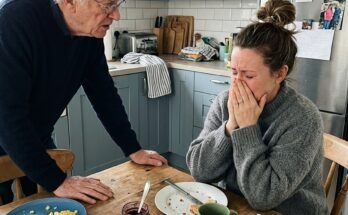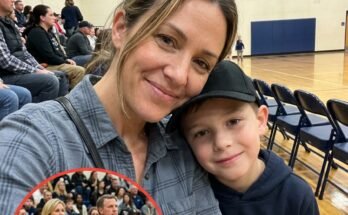
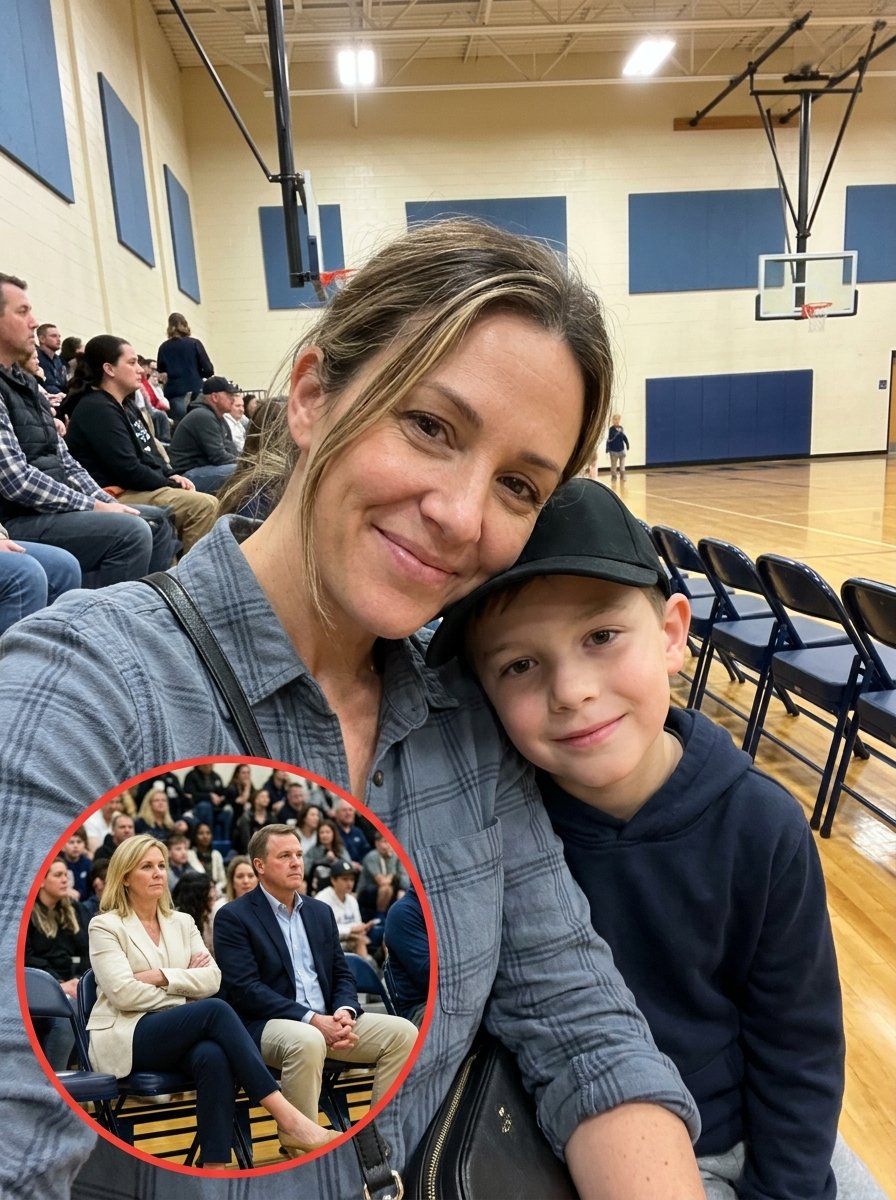
My son’s school organized a basketball fundraiser to help pay his medical bills. But when we arrived, a couple refused to leave his reserved seats and called us selfish. I was about to give up when the referee blew his whistle, stopped the game, and pointed at us.
My ten-year-old son had spent six weeks talking about a basketball game he was only strong enough to watch.
“Do you think Mr. Brooks will dunk?” Matthew asked while I buttoned his jacket.
“Mr. Brooks is forty-eight, sweetheart.”
“That doesn’t mean no.”
Matthew laughed, then leaned against the kitchen counter to catch his breath.
“You’re right. Maybe he’ll surprise us.”
Matthew laughed, then leaned against the kitchen counter to catch his breath.
I pretended to look for my keys.
A folded game flyer lay on the counter, its corners soft from being opened so often.
Since his diagnosis, I’d become good at pretending not to notice things: the way he counted stairs before climbing them, stopped midway through meals, and apologized whenever I needed to carry his bag.
I’d raised Matthew alone since he was two, when his father decided parenthood wasn’t for him.
“I’m okay, Mom,” he said.
“I know.”
“And you don’t have to keep checking.”
“I know that too.”
I’d raised Matthew alone since he was two, when his father decided parenthood wasn’t for him.
Until last spring, our biggest problem was making rent while keeping enough money aside for school trips.
I picked up extra shifts at the pharmacy. My sister watched Matthew when I worked late.
Then Matthew got sick.
There were tests, specialist visits, and treatments that left him too tired to play outside. Insurance covered some costs, but the statements arriving in our mailbox kept growing.
I picked up extra shifts at the pharmacy. My sister watched Matthew when I worked late.
I used what little savings I had, but the medical bills kept pushing us further into debt.
“Did I make us poor?”
One evening, he caught me sorting bills across the table.
“Are those because of me?”
“No. Those are grown-up problems.”
“Did I make us poor?”
I closed the folder.
“You made me a mom. That’s the best thing that’s ever happened to me.”
I hugged him until he stopped staring at the bills.
He didn’t smile.
“That’s not what I asked.”
I hugged him until he stopped staring at the bills.
He’d started asking what groceries cost. I wished I could give him back the careless certainty of childhood.
Two weeks later, his teacher, Mrs. Collins, called.
“I have an idea,” she said. “But you can tell me no.”
“The students want to cheer for Matthew.”
“If it involves another bake sale, I still have twenty cupcakes in my freezer.”
She laughed.
“A basketball fundraiser where we have staff versus parents. The students want to cheer for Matthew.”
I was silent.
“Laura? Is that too much?”
“No,” I said, wiping my cheek. “I just don’t know what to say.”
Matthew’s classmates had made signs during art class.
“Say you’ll bring him.”
She handled everything. Volunteers sold tickets, a restaurant donated snacks, and the school opened its gym on a Friday evening.
Matthew’s classmates had made signs during art class. One boy drew a crooked basketball beneath his name.
Mrs. Collins even called about the seating.
“I’ve reserved two chairs near the court, right beside the aisle,” she said. “Matthew can come and go without climbing bleachers.”
“He’s going to love that.”
“Could I wear my team jersey?”
“Please tell him he’s our guest of honor.”
Matthew disliked that title.
“Guests of honor have to wave,” he complained.
“Only if they want to.”
“Could I wear my team jersey?”
“Of course.”
Before we left, he studied himself in the hallway mirror.
He chose the blue one his grandfather had given him, although it hung loose now.
Before we left, he studied himself in the hallway mirror.
“I look normal,” he said quietly.
“You look like Matthew.”
He nodded, satisfied.
The school parking lot was full when we arrived.
He stopped to read it.
Families streamed toward the entrance carrying signs and bags of popcorn. Someone had hung a banner above the doors: TEAM MATTHEW.
He stopped to read it.
“That’s my name.”
“It sure is.”
He read it again, quietly this time, as if he was checking it really belonged to him.
He looked embarrassed and delighted at once.
“Do they all know me?”
“Some do.”
He looked embarrassed and delighted at once.
Inside, music played while the teams warmed up. Students waved from the bleachers. Mr. Brooks attempted a layup and missed, earning a loud chorus of boos.
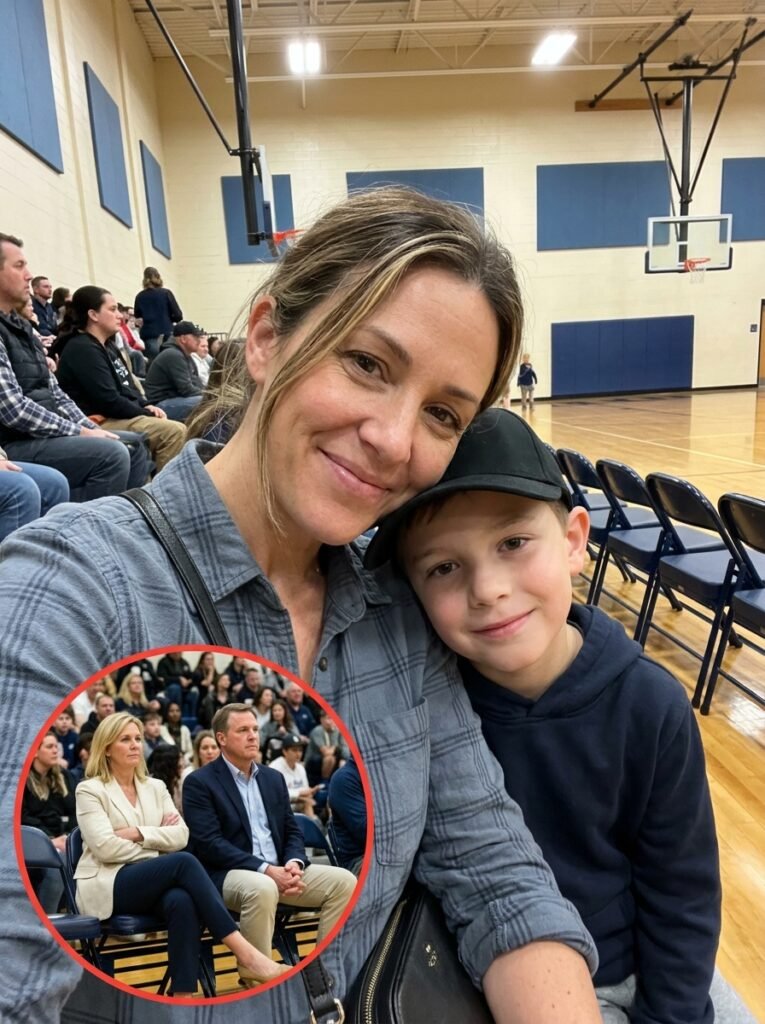
Matthew laughed so hard he started coughing.
At the ticket table, a volunteer named Denise handed us wristbands.
“Easy,” I said.
“I’m fine. He missed everything!”
At the ticket table, a volunteer named Denise handed us wristbands.
“Mrs. Collins saved you seats,” she said. “Front section, by the scorer’s table.”
“Thank you.”
“Can I get Matthew some water?”
Two people were sitting in the seats marked on our tickets.
He accepted a bottle and thanked her.
I had packed snacks, an extra layer, and everything he might need, hoping most of it stayed untouched.
The gym was hotter than I’d expected. I hoped we’d find our chairs quickly.
We followed the aisle toward the court.
Two people were sitting in the seats marked on our tickets.
The woman wore a cream blazer and held a large designer handbag on her lap. Her husband was scrolling through his phone.
She looked Matthew up and down, then rolled her eyes.
I double-checked our tickets.
“Excuse me,” I said. “I think these chairs were reserved for us.”
The woman looked up.
“For you?”
“My son. He’s supposed to sit here tonight.”
She looked Matthew up and down, then rolled her eyes.
“They organized an entire game for you, and now you’re bothering people over two seats?”
“There’s an entire gym full of seating.”
“I know. These are near the aisle so he won’t have to climb.”
She sighed loudly.
“They organized an entire game for you, and now you’re bothering people over two seats?”
I felt my face heat.
“I’m not complaining. We were told to sit here.”
“Mom, we can sit somewhere else.”
Matthew tugged my sleeve.
“Mom, we can sit somewhere else.”
The woman heard him.
“See? Even he understands.”
He lowered his eyes. I recognized that look from the kitchen table, when he’d asked whether the bills were his fault.
Her husband chuckled without looking up.
“He’s not able to stand for long. Could you please let us through?”
I kept my voice calm.
“He’s not able to stand for long. Could you please let us through?”
“Well, maybe I’m sick too and want to enjoy the game. Don’t be so selfish.”
“If you need accessible seating, we can ask someone to help you. But these chairs were assigned to Matthew.”
“Don’t make a scene.”
People in the row behind us started watching.
She was standing beside the referee, speaking urgently and pointing toward our section.
Matthew leaned harder against my arm.
I could have shouted. Instead, I looked toward the scorer’s table, hoping to find Mrs. Collins.
She was standing beside the referee, speaking urgently and pointing toward our section.
Mr. Alvarez glanced at the clock, then toward our seats. He nodded and stepped onto the court carrying a basketball.
The game was about to begin, and Mrs. Collins had clearly asked him to delay it.
He blew his whistle.
The whole gym went quiet.
The players stopped warming up, and conversations died away.
He blew it again.
The whole gym went quiet.
Mr. Alvarez set the ball down near the scorer’s table, picked up the microphone, and pointed straight toward us.
“Before we start, there’s something we need to take care of,” he announced.
I felt hundreds of eyes turn in our direction.
For a moment, nobody moved.
Matthew was staring at the court instead of the couple, as though ignoring the argument might make it disappear.
“Those two seats were reserved for Matthew, the young man we’re all here to support. We’re not starting until he can take his place.”
For a moment, nobody moved.
Then Mr. Alvarez lowered the microphone and approached us with Mrs. Collins.
She noticed Matthew leaning against me.
“Let me get him somewhere to sit while we sort this out.”
Then Mrs. Collins turned toward the couple.
She pulled a spare chair from the scorer’s table and placed it off the aisle, close to our reserved seats. I helped Matthew sit down. He rested his water bottle on his lap.
I rubbed his shoulder. He shifted closer, relieved to be sitting, but he wouldn’t look at the people around us.
Then Mrs. Collins turned toward the couple.
“Patricia, I already asked you to move. These seats are reserved, so I went to get help since you refused.”
Patricia sat straighter.
“You don’t get to decide where everyone sits.”
“And I told you I wasn’t happy about it.”
“I understand that, but you refused to move.”
“You don’t get to decide where everyone sits.”
“The seating arrangement was approved by the school.”
Patricia looked away.
“Then why weren’t there any signs?”
“Where are the signs now?”
Mrs. Collins glanced at the chair backs.
“There were.”
Mr. Alvarez looked at the chairs.
“Where are the signs now?”
“There weren’t any,” Patricia insisted.
Her husband shifted in his seat.
RESERVED FOR MATTHEW AND LAURA.
Mr. Alvarez noticed something beneath his chair. He bent down and pulled out two folded signs.
RESERVED FOR MATTHEW AND LAURA.
For a moment, nobody spoke.
A strip of tape clung to one corner. Patricia looked at it, then quickly turned away.
“We moved some papers,” Patricia’s husband said. “We didn’t realize they mattered.”
“They were attached to the chairs,” Mrs. Collins replied.
“I saw you take the signs off the chairs earlier.”
Denise approached from the scorer’s table.
“I saw you take the signs off the chairs earlier,” she told the couple. “I told Mrs. Collins as soon as I saw it.”
Patricia folded her arms.
“And I said we’d move if someone needed the space.”
I looked at Matthew, who was staring at his shoes.
“Then please move now,” I said.
“This is exactly the attitude I complained about.”
Instead, Patricia turned toward Mrs. Collins.
“This is exactly the attitude I complained about.”
Mrs. Collins stopped.
“What complaint?”
“The one I filed this afternoon. I saw the seating plan your school sent out. You treat certain families like royalty while everybody else pays for things.”
“This teacher has been harassing us.”
Mr. Alvarez glanced toward Principal Harris, who was standing near the scorer’s table.
“Could you come over for a moment?” he called.
Mr. Harris approached.
“What’s happening?”
Patricia spoke first.
“This teacher has been harassing us. She embarrassed us in front of everyone.”
“I received your email this afternoon.”
Mrs. Collins took a breath.
“I asked them to move from seats reserved for Matthew.”
“Preferential treatment,” Patricia snapped. “Exactly what my complaint said.”
Mr. Harris looked at her.
“I received your email this afternoon. We can address it separately, but first we need to resolve the seating issue.”
“Then remove her from the event,” Patricia demanded.
“They arrived early, removed the signs, and refused to move.”
“Mrs. Collins followed the seating plan I approved on Tuesday,” he replied.
Denise stepped forward.
“They arrived early, removed the signs, and refused to move when Mrs. Collins explained.”
A parent sitting behind Patricia spoke up.
“I heard it too. She said the boy wasn’t here yet, so the chairs were fair game.”
Patricia turned around.
“Can we go home?”
“Mind your business.”
“His comfort is our business tonight,” the parent replied.
My son squeezed my hand.
“Can we go home?” he whispered.
That was when my anger changed.
“Only if nobody fights anymore.”
He’d spent the week worrying whether he’d last through the first half. He’d asked whether leaving at halftime would disappoint anyone. He only wanted an evening that felt normal.
Now he wanted to leave before the opening whistle of the game because adults couldn’t surrender two chairs.
I knelt beside him.
“Do you want to stay?”
He hesitated.
Principal Harris addressed the couple.
“Only if nobody fights anymore.”
I kissed his forehead.
“Then we won’t.”
Principal Harris addressed the couple.
“These seats were assigned for an accessibility need. If you need accessible seating as well, we’ll help you find it. Otherwise, Denise can show you to other available seats.”
“Remove her from this event first.”
Patricia pointed at Mrs. Collins.
“Remove her from this event first.”
“No,” he said.
“Excuse me?”
“She followed the approved plan. I’m not removing her for that.”
Her husband stood, annoyed.
“Take another seat and let the event continue, or leave.”
“Come on, Pat.”
“I’m not leaving until someone apologizes.”
Mr. Harris motioned to the school security officer waiting near the doors.
“You have a choice. Take another seat and let the event continue, or leave.”
Patricia grabbed her bag.
“This school will hear from me.”
Denise returned the reserved signs to the chair backs.
“I’m sure we will,” he replied.
The officer accompanied them toward the exit after Patricia refused the alternative seats.
Denise returned the reserved signs to the chair backs.
Mr. Alvarez hurried back toward the court and lifted his microphone.
“Everybody ready for basketball?” he called.
I couldn’t tell whether they were applauding the referee or simply relieved.
The crowd applauded.
I couldn’t tell whether they were applauding the referee or simply relieved.
Matthew moved from the temporary chair to his reserved seat and opened his water bottle.
“Mom?”
“Yes?”
Mr. Brooks took the first shot and missed the basket completely.
“Did Mr. Brooks practice?”
“I hope so.”
Mr. Brooks took the first shot and missed the basket completely.
Matthew laughed.
That sound was worth more to me than every word I’d wanted to say to Patricia.
During halftime, Mrs. Collins came over with a paper cup of lemonade.
Across the court, Mrs. Collins caught my eye and smiled. I lifted a hand in thanks before she returned to cheering.
During halftime, Mrs. Collins came over with a paper cup of lemonade.
“I’m sorry you had to deal with that,” she said.
“You didn’t cause it.”
“I should have checked the section again.”
“You checked, and you spoke up. Thank you.”
“Don’t tell him I said so, but you’re right.”
She looked at Matthew.
“Enjoying yourself?”
“Mr. Brooks is terrible,” he reported.
“Don’t tell him I said so, but you’re right.”
The fundraiser raised enough to cover several outstanding bills and upcoming treatment expenses. I cried when the school told me the total.
Matthew attended his first full school assembly since treatment began.
The following week, Principal Harris confirmed that Patricia’s complaint had not been upheld. Mrs. Collins had the school’s full support, and the school was improving how reserved seating would be secured.
A month later, Matthew attended his first full school assembly since treatment began.
He carried a homemade card in both hands.
“Are you nervous?” I asked.
“A little.”
After the assembly, Mrs. Collins approached us.
“Want me to give it to her?”
“No. I can.”
After the assembly, Mrs. Collins approached us.
“Thank you for the basketball game,” Matthew said.
She crouched beside him.
“Thank you for making sure there was a place for me.”
“You’re very welcome.”
He handed her the card and waited while she opened it.
Inside, beneath a crooked drawing of a basketball court, he’d written one sentence.
“Thank you for making sure there was a place for me.”