
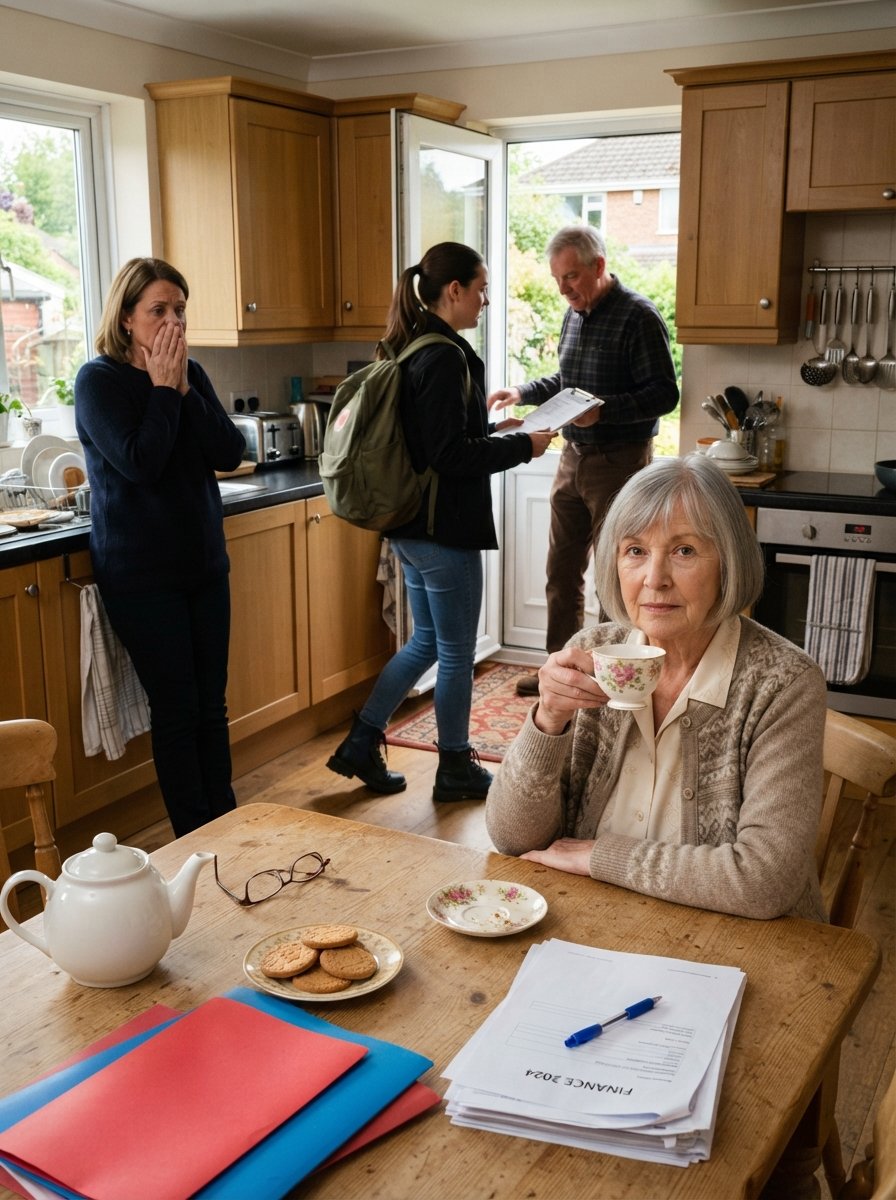
I sold my house six months ago.
My son didn’t know.
Yesterday, he placed my suitcase beside the front door and said, “A nursing home has a bed for you, Mom. Sign this house over and leave by Friday.”
I took a slow sip of tea.
Then I said, “Before I sign anything, you should ask the person who owns this house.”
Greg laughed.
“The only man who ever owned this house has been dead for two years.”
He meant his father.
Walter.
My husband of fifty-four years.
The man who built this house with his own hands in 1974.
Every board.
Every window.
Every brick around the fireplace.
Walter had poured himself into this place.
And when he died two years ago, he left it to me.
Three days after the funeral, Greg and his wife, Dana, arrived with a moving truck.
“You shouldn’t be alone, Mom,” Greg told me.
I was grieving.
I was exhausted.
And he was my only son.
So I let them move in.
At first, I told myself it would be temporary.
By the end of the first month, Greg and Dana were sleeping in my bedroom while I slept on a folding bed in the sewing room.
Dana started calling it “our house” around Thanksgiving.
Greg began taking three hundred dollars from my pension every month.
“Everybody pays their share, Mom,” he said.
Meanwhile, his brand-new truck sat shining in my driveway.
I bought most of my own groceries.
I paid the property taxes.
I paid the insurance.
When the roof needed repairs, I paid for that too.
Still, Greg took three hundred dollars every month.
I let him.
Not because I was weak.
Because I was watching.
Then one night in March, everything changed.
I got out of bed to get a glass of water.
As I passed the kitchen, I heard Greg talking on the phone.
“She’s eighty-one,” he said.
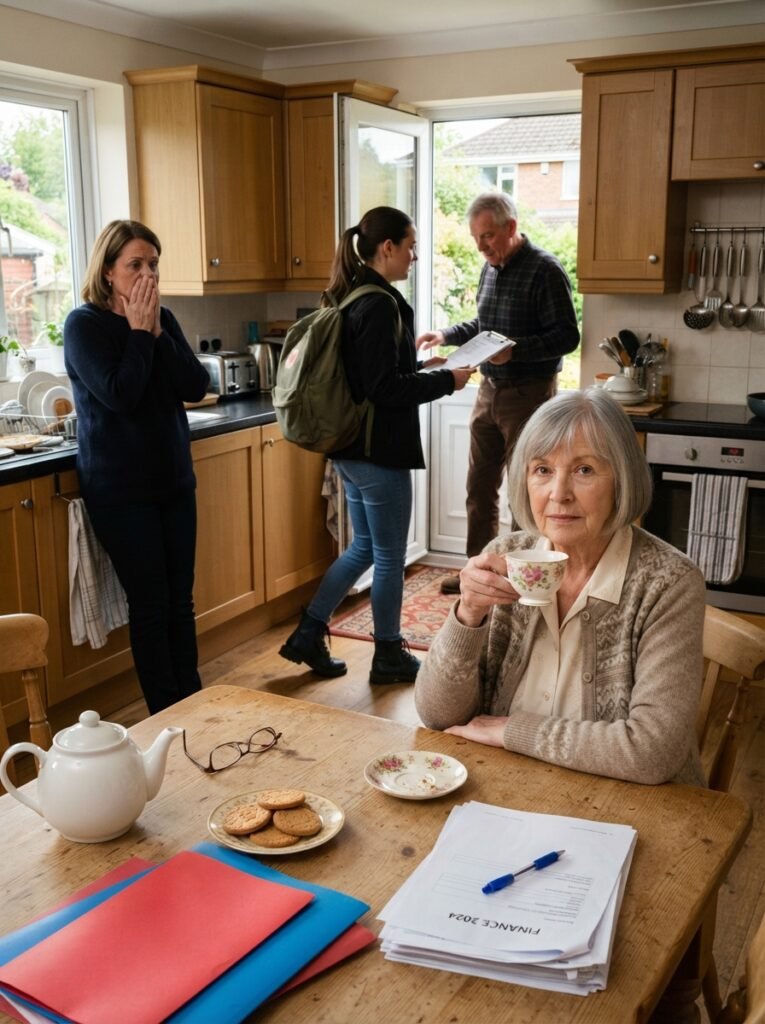
I stopped.
“The house is worth four hundred thousand, easy. We list it the day she’s out.”
Then he laughed.
That laugh hurt more than the words.
I stood in the dark hallway and listened to my own son discuss my disappearance as though it were a business opportunity.
I didn’t confront him.
I didn’t cry.
I went back to my folding bed and stared at the ceiling until morning.
By sunrise, I knew exactly what I was going to do.
That week, while Greg was at work and Dana was visiting her sister, I opened Walter’s old leather folder.
Inside was the deed.
I took it, my checkbook, and my identification.
Then I called a taxi.
I was gone for four hours.
When I returned, Dana barely looked up from her phone.
“Where were you?”
“The church had a luncheon.”
She rolled her eyes.
“Nobody misses you here anyway.”
I smiled.
She had no idea I had sold the house that afternoon.
Everything was legal.
Signed.
Witnessed.
Recorded at the county office.
My lawyer also prepared a lifetime lease.
It gave me the right to live in the house until the day I died.
My rent?
One dollar a year.
The new owner signed both documents.
Then she hugged me so tightly that even my lawyer looked away.
I hid my copy of the deed inside the flour tin.
I knew Greg and Dana would never find it.
Neither of them had cooked a single meal in my kitchen.
For the next six months, I watched them prepare to sell a house they did not own.
Dana picked paint colors “for the buyers.”
Greg invited a realtor named Chuck into my living room.
They walked from room to room discussing value.
“The old lady comes with the house for now,” Greg joked, “but not for long.”
Chuck laughed.
I refilled their coffee.
And said nothing.
Then came the suitcase.
Greg placed it beside the front door.
On top sat a nursing home form with a bed number circled in red.
The next morning, he pushed a transfer document across the kitchen table.
“Sign this house over and leave by Friday.”
I looked at the papers.
Then at him.
“First ask the person who owns this house.”
Dana slammed down her coffee cup.
“Walter is dead, you crazy old woman.”
Coffee splashed across the table.
She leaned toward me.
“Keep talking like that and we’ll tell a judge you’re confused. Confused old women get locked rooms, not sewing rooms.”
Greg pushed a pen toward me.
“Friday, Mom. The realtor comes at ten. The van comes at noon. Sign before then, and this stays friendly.”
I looked at my son.
For a moment, I wondered what Walter would have said if he had lived long enough to see this.
Then I folded my hands.
“Friday it is.”
Friday Morning
Greg wore his best shirt.
Dana arranged cookies on my mother’s china plate.
The unsigned transfer document waited on the kitchen table.
My suitcase still stood by the door.
At exactly ten o’clock, the doorbell rang.
Greg smiled.
“That’ll be Chuck.”
He straightened his shirt and opened the door.
But it wasn’t the realtor.
A young woman stood on the porch holding a blue folder and a ring of keys.
Greg’s face went white.
“You.”
She smiled faintly.
“Hello, Dad.”
Dana looked between them.
“Greg, who is this?”
“Nobody,” he said quickly. “She’s nobody, and she isn’t coming into this house.”
The young woman stepped past him into the hallway.
“That’s strange.”
She lifted the keys.
“Because I have the keys to it.”
Her name was Emily.
My granddaughter.
Greg’s daughter from his first marriage.
The daughter he stopped calling after he married Dana.
The daughter he told everyone had gone wild and disappeared.
Emily had never disappeared.
She sent me a birthday card every year.
She sat beside me in the back row at Walter’s funeral because Greg told her she wasn’t welcome near the family.
And in March, when I called her from my lawyer’s office and asked whether she wanted to buy her grandfather’s house, she cried before saying yes.
Greg snatched the blue folder from her hands.
He opened it.
His eyes raced across the page.
Then stopped at the owner’s name.
He read it once.
Then again.
“That’s impossible,” he whispered.
Emily held out her hand.
“Read the name out loud, Dad.”
He didn’t move.
“Read it to your wife.”
Emily took the deed from him and placed it on the kitchen table.
Then she turned it toward Dana.
The owner line read:
EMILY CARTER.
Dana’s mouth opened.
No sound came out.
“I bought this house six months ago,” Emily said. “Grandma sold it legally, and the deed was recorded that same day.”
Greg stared at me.
“You sold Dad’s house behind my back?”
“It was my house.”
My voice stayed calm.
“Walter left it to me. You moved in because I trusted you.”
Dana grabbed the transfer paper.
“Then she can sign it back. She’s confused. We’ll challenge this.”
Emily picked up the nursing home form.
“You arranged this without Grandma’s consent?”
“We were helping her,” Greg snapped.
Emily looked toward my suitcase.
Then toward the sewing room.
My folding bed was visible through the open door.
“No,” she said quietly.
“You were clearing the house for a sale you had no right to make.”
Greg tried to laugh.
It came out weak.
“So what happens now?”
Emily closed the folder.
“First, Dad, we talk about where you and Dana are going to live.”
Dana stiffened.
“What?”
“Then we talk about the three hundred dollars you’ve been taking from Grandma’s pension every month.”
Greg turned toward me.
“You told her that?”
“I didn’t have to,” Emily replied. “Grandma’s lawyer reviewed her finances during the sale.”
Greg frowned.
“That money was for household expenses.”
I almost smiled.
“Household expenses?”
“Yes. Food. Electricity. Maintenance.”
“Greg, I bought my own groceries.”
Dana crossed her arms.
“You lived here. Of course you had to contribute.”
Emily looked at her.
“She owned the house.”
Dana fell silent.
“She paid the taxes,” Emily continued. “She paid the insurance. She paid for the roof repairs. And you charged her three hundred dollars a month to sleep on a folding bed.”
Greg looked away.
For the first time, I think he heard how ugly it sounded.
Then the doorbell rang again.
Greg’s head snapped toward the hallway.
“This time it’s Chuck.”
He almost sounded relieved.
He opened the door.
Chuck stood outside carrying a leather portfolio.
Behind him was a middle-aged couple.
Potential buyers.
“Morning, Greg,” Chuck said. “The Harrisons are excited to see the place.”
Greg blocked the doorway.
“This isn’t a good time.”
Dana rushed forward.
“No, it’s fine. We can still fix this.”
Emily stepped into view.
Chuck noticed her.
Then he noticed me.
Then the blue folder.
“What’s happening?”
Emily answered.
“This house is not for sale.”
Chuck frowned.
“I’m sorry?”
“I’m the legal owner.”
She handed him a copy of the deed.
Chuck read it.
His smile disappeared.
Then he turned toward Greg.
“You told me you owned this property.”
Greg’s voice sharpened.
“It’s a family issue.”
“No,” Emily replied. “It’s an ownership issue.”
Chuck looked back at Greg.
“You signed a listing agreement stating you had authority to sell.”
Dana interrupted.
“Technically, he was going to inherit it.”
Chuck stared at her.
“That is not the same thing.”
The potential buyers exchanged uncomfortable glances.
The husband cleared his throat.
“I think we should leave.”
Chuck nodded.
“I agree.”
Before walking out, he looked at Greg.
“Call my office before you contact me again.”
Then they left.
Greg slammed the door.
“You humiliated me.”
I looked at him.
“No, Greg.”
I paused.
“You did that yourself.”
His face turned red.
“I was planning for this family.”
“By selling property you didn’t own?”
“For when you’re gone!”
The words exploded out of him.
Then silence filled the room.
Even Dana stared at him.
Greg realized what he had said.
But it was too late.
I sat at the kitchen table.
“Thank you.”
He blinked.
“For what?”
“For finally saying it clearly.”
“Mom—”
“You weren’t worried about me.”
I pointed toward the nursing home form.
“You were waiting for me to disappear so you could sell the house.”
“That’s not fair.”
“Was there actually a bed reserved for me?”
Greg hesitated.
Emily answered instead.
“No.”
He turned toward her.
“What?”
“I called the nursing home this morning.”
She held up the paper.
“You requested information. There was never a reserved bed.”
I looked at my son.
“So you lied about that too.”
His shoulders dropped.
“I thought if you believed everything was ready, you’d stop fighting.”
And there it was.
Not love.
Not concern.
Control.
Dana pushed away from the table.
“I’m done with this.”
Greg stared at her.
“What does that mean?”
“It means I’m not losing everything because your mother decided to play some game.”
Emily’s expression hardened.
“My grandmother protected herself.”
Dana laughed.
“From family?”
“Yes.”
Emily’s voice remained calm.
“Exactly.”
Dana grabbed her purse.
“I’m going upstairs.”
“For what?” Greg asked.
“To pack.”
His face changed.
“You’re leaving?”
“You told me this house would be ours.”
“It still could be.”
Emily shook her head.
“No.”
Greg turned desperate.
“We’ll challenge the deed. We’ll say Mom wasn’t competent.”
I slowly stood.
“You want to tell a judge I’m incompetent?”
He didn’t answer.
I walked toward the kitchen counter.
Then I reached for the flour tin.
I removed my copy of the deed.
Greg’s expression changed.
“I signed this in front of my lawyer and two witnesses.”
I placed the document on the table.
“And my attorney arranged a medical competency evaluation the same morning.”
His face went pale.
Emily looked at me.
I hadn’t even told her that.
“I knew exactly what argument you would make,” I said.
Greg sat down.
For the first time since he had moved into my house, he looked small.
Not because I shouted.
I never did.
He looked small because he had run out of lies.
Emily took a breath.
“Dad, you have thirty days.”
He looked up.
“For what?”
“To move out.”
Dana stopped halfway up the stairs.
Emily continued.
“The house belongs to me. Grandma has lifetime residency rights.”
She looked at both of them.
“You don’t.”
Greg stared at his daughter.
“You’re evicting your own father?”
Pain crossed Emily’s face.
“No.”
She shook her head.
“I’m protecting my grandmother from the man who tried to throw her away.”
Greg said nothing.
The Thirty Days
The first week, Greg pretended none of it would last.
He called attorneys.
He told relatives I had been manipulated.
He complained about Emily.
He complained about me.
He even called my sister in Arizona.
The next afternoon, she called me.
I let her talk for several minutes.
Then I asked:
“Did Greg tell you I sold the house before he tried to send me away?”
Silence.
“No.”
“Did he tell you he invited a realtor to sell property he didn’t own?”
Another silence.
“No.”
“Did he tell you I slept on a folding bed while he and Dana used my bedroom?”
She stopped defending him after that.
By the second week, Greg’s anger turned into pleading.
One evening, he came to the sewing room while I was reading.
“Mom.”
I looked up.
For a moment, I could still see the little boy he once was.
The child who picked dandelions for me.
The boy who cried whenever Walter left on long work trips.
“I messed up,” Greg said.
“Yes.”
He winced.
“I thought you’d say it wasn’t entirely my fault.”
“Whose fault was it?”
He glanced toward the hallway.
“Dana pushed me into a lot of this.”
I shook my head.
“No.”
“She encouraged you. That is different.”
“You don’t know what she was like.”
“I know what you were like.”
That hurt him.
I could see it.
But I had softened the truth for him too many times already.
“You took money from my pension.”
“I thought it was fair.”
“You took my bedroom.”
“You said you didn’t mind.”
“I said that because you told me you needed more space.”
He looked down.
“You arranged a nursing home without asking me.”
“I thought you needed care.”
“You asked me to sign over the house first.”
He had no answer.
“And you planned to sell this house while I was still alive.”
“Mom…”
“No.”
My voice remained calm.
“That is the part you still don’t understand.”
He sat down across from me.
“What part?”
“You keep thinking this is about the house.”
He frowned.
“It isn’t?”
“No.”
I looked directly at my son.
“This is about the fact that you decided I had less value because you thought I had less money.”
His eyes filled with tears.
“I’m sorry.”
I believed he was sorry.
But being sorry and changing are not the same thing.
Three weeks later, Dana left.
She packed while Greg was at work.
She left a note on the kitchen counter.
It said:
I did not sign up to start over at fifty-two.
Greg read it twice.
Then he sat at the table for almost an hour.
Finally, he looked at me.
“She never loved me.”
I took a sip of tea.
“I can’t answer that.”
“She only cared about the house.”
I said nothing.
After a long silence, he laughed bitterly.
“I guess that makes two of us.”
That was the first truly honest thing he had said in weeks.
On the thirtieth day, Greg loaded his last box into a rented SUV.
Emily stood beside me on the porch.
He walked back toward us.
For several seconds, no one spoke.
Then Greg looked at Emily.
“I was a terrible father.”
She paused.
“Yes.”
His face tightened.
“I thought you’d say something nicer.”
“I’m not trying to hurt you.”
Her voice was steady.
“I’m just not going to lie so you can feel better.”
Greg nodded.
Then he turned to me.
“What happens now?”
“You move.”
“I mean with us.”
I understood.
“You start by living without anything you think I owe you.”
He swallowed.
“No money?”
“No.”
“No house?”
“No.”
“No inheritance?”
“I’m not discussing my estate.”
His eyes filled again.
“So this is the end?”
“No.”
I shook my head.
“This is the beginning.”
He stared at me.
“If you want a relationship with me, build one.”
“How?”
“Call because you want to know how I’m doing.”
I paused.
“Visit without asking for anything.”
Then I looked at Emily.
“And apologize to your daughter without demanding that she forgive you immediately.”
Emily crossed her arms.
“Show us who you are when there is nothing to gain.”
Greg understood.
Those words were the same question I had been asking since Walter died.
Would my son still love me if there was nothing left to inherit?
Now he finally had the chance to answer it.
Greg left that afternoon.
For the first time in three years, the house became quiet.
That evening, Emily brought groceries.
Real groceries.
Not cookies for buyers.
Not coffee for a realtor.
She made Walter’s favorite chicken soup.
At one point, she opened the flour tin.
She froze.
“Grandma?”
I looked over.
She held up the empty folder where I had hidden the deed.
“You really kept legal papers in here?”
I smiled.
“You never looked there either.”
She laughed.
Her laugh filled the kitchen.
It sounded nothing like Greg’s laugh that night in March.
His laugh had made me feel old.
Invisible.
Disposable.
Emily’s laugh made the house feel like home again.
One Year Later
Greg started calling every two weeks.
At first, our conversations lasted three minutes.
Then five.
Then ten.
He never asked about the house.
He never mentioned money.
One Sunday, he told me he had started counseling.
Another time, he told me he had written Emily an apology.
She didn’t respond immediately.
I told him not to pressure her.
“I know,” he said.
That was new.
A year after he moved out, Greg came for my birthday.
He brought yellow daisies from the grocery store.
Nothing expensive.
Walter used to buy the same flowers.
Greg stood awkwardly on the porch.
“I didn’t know whether I should come.”
“You called first.”
He nodded.
“I’m learning.”
Emily arrived an hour later.
The room became uncomfortable immediately.
Greg did not ask for a hug.
He didn’t ask her to forgive him.
He only said:
“I’m glad you came.”
Emily looked at him.
Then nodded.
It wasn’t reconciliation.
Not yet.
But it was something.
Two Years Later
Emily and I sat on the back porch watching the sunset.
Legally, the house belonged to her.
But my lifetime lease remained safely inside the blue folder.
One dollar a year.
Emily handed me an envelope.
“What’s this?”
“Your annual rent notice.”
I laughed.
Inside was a handwritten invoice.
Amount Due: $1.00
I opened my purse and gave her a dollar bill.
She accepted it seriously.
“Thank you. Rent paid in full.”
Then she kissed my cheek.
I looked across the yard.
Walter’s old maple tree had grown enormous.
The windows caught the evening light exactly as they had when he finished the house in 1974.
For years, I believed the house was Walter’s greatest legacy.
I had been wrong.
The house was only wood, brick, glass, and memory.
His real legacy was something he used to tell me:
“Never confuse being kind with giving people permission to use you.”
I understood those words late.
But not too late.
Greg once believed getting me out of the house would give him everything.
Instead, losing the house forced him to confront who he had become.
Emily believed she was buying her grandfather’s home.
In truth, she gave me something much more valuable.
Safety.
Dignity.
And proof that family is not always the person who demands the most from you.
Sometimes family is the person who quietly arrives with a blue folder and says:
“Read the name out loud.”
I sold my house six months before my son tried to take it from me.
He thought that meant I had lost everything.
I hadn’t.
I had simply placed my home in the hands of someone who understood what home was supposed to mean.
And for the first time since Walter died, I no longer felt like an old woman waiting to be removed from someone else’s life.
I felt safe.
I felt respected.
And most importantly—
I felt exactly where I belonged.
THE END