
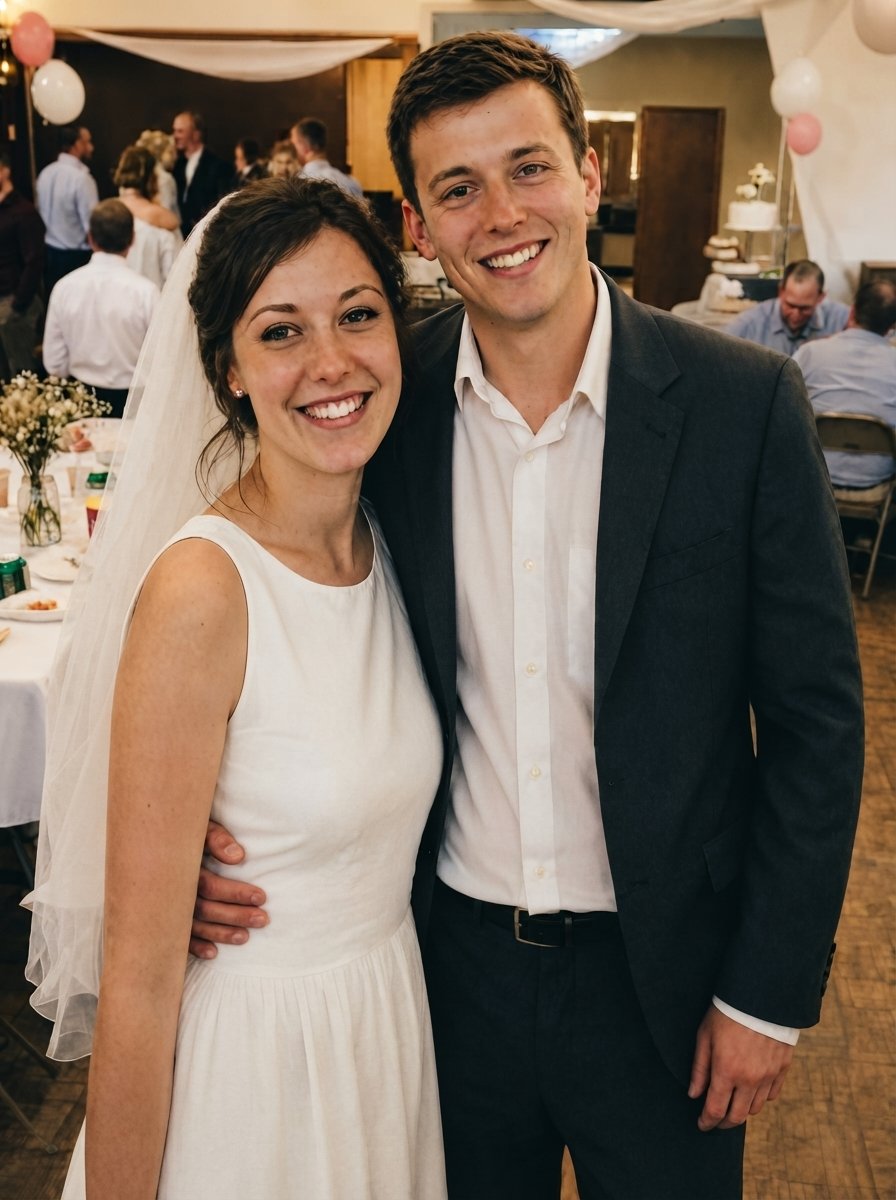
For eight months, I tried to make peace with the family I’d lost and focus on the life I’d chosen with my husband. Then my father appeared at our door, and within minutes, everything I thought I knew about my husband suddenly felt uncertain.
I froze in the doorway with my hand still on the knob because my dad hadn’t appeared on my porch in eight months. And he wasn’t smiling.
“Dad?”
“Natalie.”
That was all he said, just my name, as if he were reading it off a court document.
I froze in the doorway with my hand still on the knob.
Growing up in my parents’ house, love came with a receipt and conditions. My parents had always cared too much about status.
My dad, Roman, built his business from nothing and never let me forget it. My mom, Vivienne, came from money and never let anyone forget that, either.
Straight A’s got a nod. A scholarship got a dinner out. A B+ got a lecture about “wasted potential” that lasted longer than the drive home.
Love came with a receipt.
“You’ll marry someone with an impressive career,” Mom used to say, arranging tulips as if she were arranging my future. “A doctor. A lawyer. Someone with a name.”
“Someone with a spine,” Dad would add. “And a sizable portfolio.”
I nodded along for 22 years. Then I met Andrew during my last year of university.
“You’ll marry someone with an impressive career.”
Andrew was a student like me, except he worked evenings waiting tables at a little place near campus to support himself. The restaurant had sticky menus and the best tiramisu in the city. He had holes in one pair of shoes and the kindest eyes I had ever seen.
Andrew didn’t have much money, but I never cared.
Our first date was coffee because that was all he could afford.
He had holes in one pair of shoes.
Our second date was a walk because it was free. By our third date, I didn’t care what anything cost because Andrew was hardworking and treated me better than anyone I’d ever dated.
“You’re staring,” my boyfriend told me once across a plate of shared fries.
“I’m evaluating.”
“And?”
“You’ll do.”
He laughed like I’d said the funniest thing in the world! Nobody had ever laughed at my jokes the way he did.
I didn’t care what anything cost.
For three years, Andrew treated me as if I were already enough: no report card, no résumé, just me.
On our first anniversary, he tried to cook. I walked into a kitchen full of smoke and a pot of pasta that had fused into one solid, tragic brick.
“I’ve made you a sculpture,” he announced, holding up the pan.
“That’s carbon.”
“That’s art, Natalie.”
I couldn’t help but laugh!
I walked into a kitchen full of smoke.
Instead, we ate cereal on the floor, and I remember thinking, “So this is what people mean. This warm, dumb, easy thing. This is what I was never told love could be.”
I didn’t tell my parents much about him. I knew what my dad would say the second he heard the word “waiter.” I knew Mom would go quiet, which was always worse.
So I kept Andrew mostly to myself, and I told myself that was fine.
I didn’t tell my parents much about him.
We were incredibly happy together, and after three wonderful years, on a Thursday in October, Andrew took me to the little bench outside the restaurant where we’d had our first bad coffee. He suddenly got down on one knee!
“I don’t have much,” my boyfriend said. “I just have me. But will you marry me, anyway?”
“Yes!”
I said it before he even finished the sentence!
He suddenly got down on one knee!
I said it knowing exactly what my parents would do, exactly how the dinner table would go cold, and exactly which chairs would sit empty at the wedding. I said yes because, for the first time in my life, I wasn’t waiting for anyone’s approval.
I didn’t hesitate or second-guess my decision.
But I also knew all hell was about to break loose, although I had no idea how severe it would be.
I said it knowing exactly what my parents would do.
A few days after Andrew’s proposal, I sat across from my parents at their dining table. My engagement ring felt heavier than it should have. My dad set down his fork with a slow, deliberate care that told me everything about what was about to happen before I’d said a word.
“So,” I began, “Andrew asked me to marry him. I said yes.”
My parents reacted exactly as I’d feared.
My engagement ring felt heavier than it should have.
My mom didn’t move. She just looked at her plate as if it had personally offended her.
“You’re throwing your life away on a waiter,” my dad said. “You’ll regret this.”
“Andrew is a student, Dad. Same as me. Yes, he waits tables, but it’s so he doesn’t have to ask anyone for anything. It doesn’t define who he is as a person.”
“That’s supposed to impress me?”
“It should,” I said, trying to be brave. “It impresses me every single day.”
“You’ll regret this.”
Mom finally spoke, quietly and coldly. “We raised you to make better choices, Natalie.”
That statement hurt worse than what my dad had said. Mom didn’t raise her voice. She never had to.
“Please tell me you’ll come to the wedding,” I said. “Just be there. That’s all I’m asking.”
Dad shook his head. “I won’t stand in a room and pretend I approve.”
“I’m not asking you to approve. I’m asking you to show up,” I pleaded.
“Please tell me you’ll come to the wedding.”
Neither of them answered. I left before dessert.
It broke my heart, but I wasn’t willing to give up the man I loved just to satisfy them. I was done being a pushover.
The wedding was small, but we were surrounded by people who genuinely supported us. Andrew’s parents cried through the whole ceremony, which was sweet until his dad started hiccuping and couldn’t stop, and then it was just funny!
I left before dessert.
My friend Genevieve walked me down a short aisle in a garden that smelled of cut grass and someone’s overambitious lavender bush. Two chairs sat empty in the front row where my parents were supposed to be.
I didn’t look at them. Not once.
Andrew squeezed my hand at the altar and whispered, “You’re stuck with me now.”
“Good,” I whispered back.
I didn’t look at them.
Later, during the toasts, my new husband tried to open a champagne bottle and sprayed half of it on his own shirt! Everyone lost it! Even I did!
It was, empty chairs and all, one of the happiest days of my life.
The eight months after that were quieter than I expected. My mom texted once about a cousin’s baby. My dad didn’t text at all.
I told Andrew that I was fine. I told myself I was fine. I wasn’t really fine, but I was building something that mattered more than being fine.
Everyone lost it!
However, losing that relationship hurt more than I admitted, but they’d made their choice, and I knew I couldn’t change it.
Then, one Friday evening, someone knocked on our door.
I opened it. I was shocked! My dad was standing there in his good coat, his shoulders set the way they always were before a difficult meeting.
“Dad?”
I hadn’t seen him since before the wedding, and his serious expression immediately worried me.
I knew I couldn’t change it.
Dad didn’t smile. He didn’t even say hello, just said my name as if I was someone else and not his daughter.
“Can I come in?”
Before I could answer or even ask why he’d come, Andrew stepped out of the kitchen into the hallway, a dishtowel over his shoulder and a spoon still in his hand. He stopped when he saw who it was.
Dad looked at my husband. Not for a second, not for two. For long enough that my throat started to close.
“Can I come in?”
Then my dad’s expression hardened into something I hadn’t seen since the night I told them about the ring.
“Roman,” Andrew said carefully. “Hello.”
My dad didn’t answer him. He turned to me instead, and the words came out flat and terrible.
“Does my daughter know what you did to that family?”
For a moment, I couldn’t hear anything except the quiet hum in my ears.
The words came out flat and terrible.
“What?” I managed to squeak out.
“Ask him,” my dad said. “Ask your husband about Isaac and Amira.”
Andrew’s face went still in a way I’d never seen before. Not guilty. Something else. Something I couldn’t read.
And for the first time since I’d said “yes” to him, my stomach turned cold.
I quickly pulled my dad inside and shut the door harder than I meant to.
“Ask your husband about Isaac and Amira.”
“Start talking. Right now.”
With a satisfied flourish, Dad set a folder on our living room table as if it were evidence in a courtroom.
“I hired someone. Months ago. Right after the wedding.”
“You did what?!” I responded without thinking.
“I needed to know who my daughter married,” he said. “And I found something.”
Andrew stood very still in the hallway, arms loose at his sides. He didn’t look guilty. He looked tired.
“I hired someone.”
“There’s an elderly couple,” Dad went on. “Isaac and Amira. They are longtime customers at that restaurant where your husband works. Andrew has been financially involved with them for years, Natalie. There’s a trust they created, and his name is on it. Your husband isn’t a poor waiter; he’s managed to con an old couple out of their money.”
My throat went dry.
“Andrew?” I said, turning to him for confirmation.
“I know them,” my husband said quietly and without hesitation. “I know them very well. But your dad has the story completely backward.”
“Andrew has been financially involved with them for years.”
Feeling challenged, Dad slid a printout across the table.
“Backward, you say? These are public trust filings. Andrew’s name is right here as a beneficiary.”
I looked down at the paper. Then at my husband. Then at the paper again.
Something old and small inside me whispered, “What if they were right all along?”
I hated that voice. I’d spent years silencing it.
“Andrew’s name is right here as a beneficiary.”
“Why didn’t you ever mention them?” I asked, feeling as though the rug had just been pulled out from under me. My voice came out sharper than I wanted. “In all these years we’ve been together, Andrew. Not once.”
My husband’s face fell in a way I felt in my ribs.
“Because it wasn’t a story I told. It was just a part of my life.”
“That’s convenient,” my dad said.
“Dad, stop.”
“Natalie, look at the filings.”
“I said stop!”
“Why didn’t you ever mention them?”
Andrew took a slow breath.
“Come with me. Right now. Both of you, if you want. Let them tell you everything themselves.”
“It’s a manipulation,” Dad said instantly. “He’ll have coached them!”
“They’re in their 70s. I didn’t coach anyone.”
“We don’t know that.”
Dad was right; we didn’t. That was the awful part.
“Come with me.”
I stood there in my own living room, wedding ring warm on my finger, and I hesitated. Just for a second. Long enough to hate myself for it.
Andrew saw it. But my husband didn’t flinch. He just waited, the way he’d waited for me to say “yes” when he proposed.
“Okay,” I said. “We’ll only know the truth if we talk to them. So, let’s go.”
My dad looked annoyed, but he grabbed the documents he’d come with and said, “I’m coming.”
“Of course you are.”
Long enough to hate myself for it.
That drive was the longest 15 minutes of my life. Andrew kept both hands on the wheel. My dad sat in the back seat, clutching his folder as if it were a life raft.
Nobody spoke until we hit a red light.
“For the record,” my husband said mildly, “if I were secretly a criminal mastermind, I’d probably own more than two forks.”
I laughed! I couldn’t help it. It came out cracked and half-hysterical.
Nobody spoke until we hit a red light.
Dad didn’t join in. But I saw his eyes flick to Andrew in the mirror, uncertain for the first time all night.
We pulled up to a modest little house with a crooked porch light and a garden that had clearly been loved for decades. It wasn’t some slick address; it was a simple home.
My husband got out first. I followed. Dad trailed behind, folder still tucked under his arm, suddenly looking less like a prosecutor and more like a man who might have miscalculated.
Dad didn’t join in.
Andrew confidently walked up to the porch and knocked twice, gently.
The door opened.
An old man with white hair and glasses too big for his face broke into a smile the second he saw my husband. He didn’t say hello. He didn’t ask who we were.
The man just pulled Andrew into a hug and held on as a father would.
Behind me, I heard my own dad shift awkwardly before going very, very still.
He didn’t ask who we were.
Inside, the little living room smelled of lemon tea and old books. The man, whom I assumed was Isaac, guided me to a worn armchair while his wife, Amira, patted the seat beside her.
“Andrew sat with us every Friday,” Amira said after introductions, smiling at my husband. “On his break. When nobody else did.”
“I liked the company,” Andrew said quietly.
Isaac shook his head. “This young man even drove my groceries here. Fixed our leaking sink. And he wouldn’t take a dollar.”
“I liked the company.”
I looked at Andrew. He wouldn’t meet my eyes, embarrassed.
“And how did the trust come about?” I asked.
“Oh, that was our idea,” Isaac said firmly. “You see, we have no children of our own. He refused for a year. Only agreed if he never had to touch it while we were still alive.”
Dad stood in the doorway. I hadn’t heard him follow us in.
“He wouldn’t meet my eyes.”
Amira turned toward my dad, calm as still water.
“Andrew is the reason we’ve managed all these years,” she said. “The reason my husband still has his garden, and I still have him beside me.”
There was no doubt that the couple was telling the truth. Dad’s face crumpled.
He looked older than I’d ever seen him.
Dad’s face crumpled.
When the visit ended, we filed back into the car. Dad hadn’t said a word.
“I’m sorry,” Dad suddenly said, first to Andrew, then to me. “I investigated your husband because I was terrified. Terrified, I couldn’t protect you from a stranger. Terrified he’d take you away from us.”
“You were wrong, Dad.”
“I know that now.”
I nodded.
“Love isn’t a resume, Dad. It’s going to take me a while to trust that you understand that.”
He nodded, unable to speak.
“I know that now.”
Months later, after slowly rebuilding our relationship, my parents finally came for dinner at our small apartment. Andrew, still not a chef, presented the roast with the ceremony of a man unveiling a masterpiece.
“It’s a little burnt,” I warned.
Mom took a careful bite. “It’s perfect, darling.”
“Mom. It’s practically charcoal.”
“It’s characterful charcoal,” she corrected, and Dad actually laughed, a real one, into his napkin.
My parents finally came for dinner.
Andrew topped up everyone’s glass, catching my eye across the table.
I looked around at my mom buttering bread beside my husband, at my dad asking if Isaac and Amira could come over the following Sunday, and I understood something quiet and enormous.
I hadn’t lost my family by choosing Andrew.
I’d finally taught them what family meant.