I looked through the glass toward Violet’s room.
That sentence saved three lives.
Possibly mine.
I sat.
“Find Kelsey.”
“We will.”
They found her the following morning.
Alive.
A bus driver recognized her from an alert at a rest stop forty miles outside the city.
She had spent the night hiding in the rear of an abandoned delivery trailer before walking to the highway.
She was dehydrated, bruised, terrified and convinced Tyler would kill her.
When police interviewed her with her mother and an attorney present, she told them what happened.
Tyler ordered her to message Violet.
He and Logan followed her to the house.
Kelsey planned to enter first and warn Violet.
Tyler slipped through before she could close the door.
Violet immediately understood.
She tried to reach the alarm panic button.
Logan grabbed her.
Tyler demanded her laptop and phone.
Violet refused.
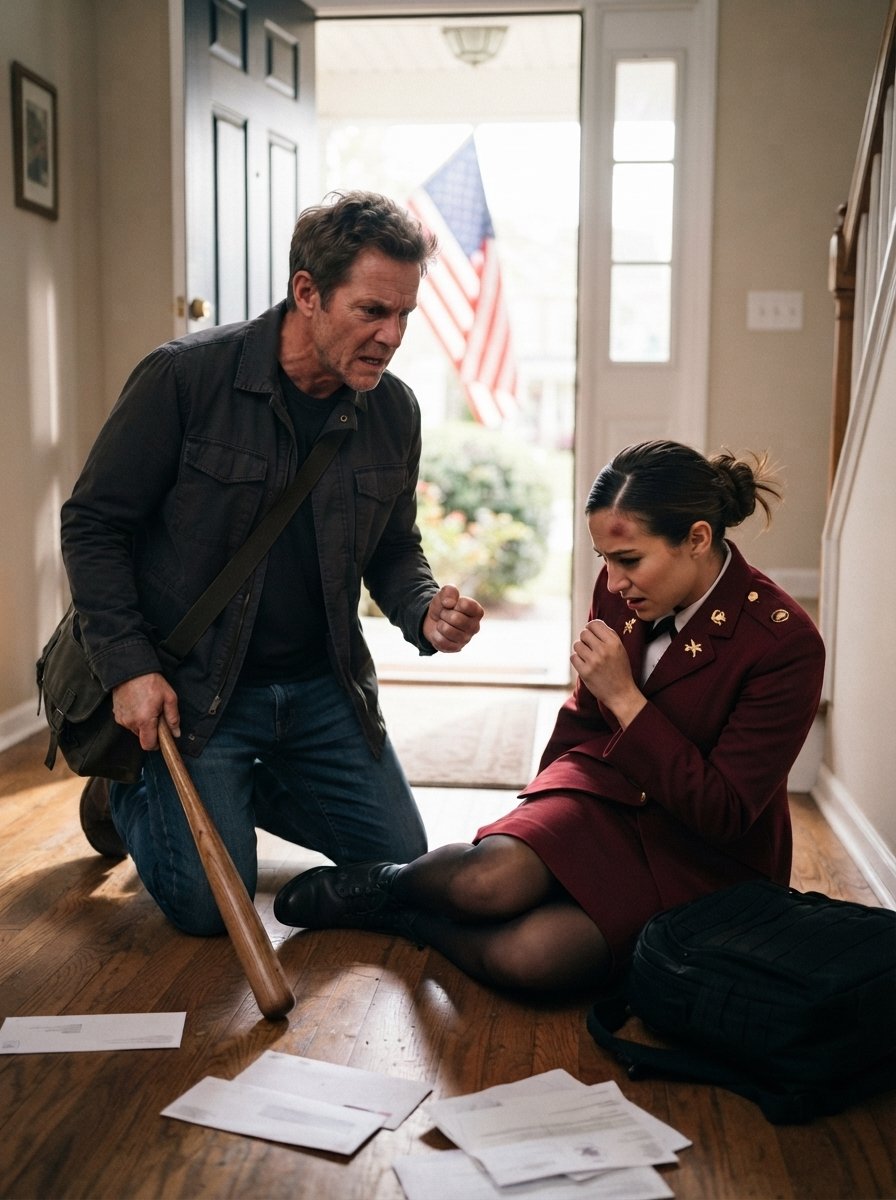
He struck her.
Kelsey screamed at him to stop.
He kept going.
Then Violet managed to kick Logan, grabbed her backpack and tried to run toward the kitchen.
Tyler hit her again.
And again.
Kelsey tried pulling him away.
He shoved her into the wall.
When Violet finally stopped moving, all three froze.
Logan wanted to call an ambulance.
Tyler refused.
That detail would matter later.
He searched the house for the evidence, found Violet’s laptop, grabbed her backpack, dumped it and left when he couldn’t find what he wanted.
Then his father called.
Kelsey heard the conversation.
That was the piece that changed everything.
Ortiz came to the hospital personally to tell me.
“Tyler called Aaron from the driveway.”
“What did he say?”
“Kelsey only heard Tyler’s side at first. He said, ‘Dad, I messed up.’ Then Aaron apparently asked what happened.”
“And?”
“Tyler told him Violet was hurt.”
My hands curled.
“What did his father do?”
“He came to the house.”
The world went quiet.
“What?”
“Approximately twelve minutes after they left.”
I stared at her.
“He was inside my house?”
“We have traffic-camera data placing Grant’s vehicle on Maple Drive.”
My pulse thudded.
“Before I arrived?”
“About twenty minutes before.”
Everything suddenly fit.
The door cracked open.
The alarm rearmed.
Violet’s phone beneath the couch.
The robbery narrative prepared before Grant ever walked into the hospital.
“What did he do inside?”
“We believe he checked Violet.”
“Was she alive?”
“Yes.”
My throat closed.
“He left her there.”
Ortiz did not answer.
She did not need to.
A police officer.
A father.
A man trained to save lives.
He found a beaten sixteen-year-old girl breathing on the floor.
And he left.
Because calling an ambulance would expose his son.
I stood so quickly the chair slid backward.
“Mason.”
I walked to the wall.
Pressed both hands against it.
Breathed.
Once.
Twice.
Three times.
My mind offered images I will not describe.
Things I knew how to do.
Things I had once done to men carrying rifles in places without street names.
Then I heard the creak of Violet’s hospital bed behind me as a nurse adjusted her position.
My daughter needs a father, not a defendant.
I turned around.
“Keep going.”
Ortiz watched me carefully.
“Aaron apparently moved Violet’s phone and attempted to wipe parts of the home security history through the installer portal.”
“How did he have access?”
“He didn’t.”
I stared.
“Then who did?”
“Your system was installed by Sentinel Residential Security.”
“Yes.”
“Grant’s brother-in-law works there.”
There it was.
Another traitor.
Not someone I loved.
But someone who had entered my home.
Mitch Keller.
I remembered him.
Forty.
Soft handshake.
Talked too much about guns when he learned my background.
He had configured our cameras two years earlier.
Grant called Keller from the house.
Keller remotely disabled cloud camera access and attempted to delete logs.
But the alarm company stored redundant server records he could not alter.
Grant then left Violet on the floor and told Tyler to go home, change clothes and say nothing.
He used his badge to shape the initial response once my 911 call exposed that Violet had survived.
The robbery story was not incompetence.
It was a rescue operation.
For his son.
Ortiz said, “Grant was arrested forty minutes ago.”
I closed my eyes.
“Keller?”
“Also in custody.”
“Tyler?”
“Charged.”
“Logan?”
“Charged.”
“Kelsey?”
“No charges at this time. Prosecutors are reviewing coercion and her cooperation.”
Harper sat beside Violet.
“What happens now?”
Ortiz exhaled.
“Now it gets slow.”
She was right.
Justice in real life rarely kicks down a door.
It sends forms.
Schedules hearings.
Argues over admissibility.
Waits for lab reports.
Negotiates.
Postpones.
And asks victims to repeat the worst day of their lives under fluorescent lights.
Violet spent eleven days in the hospital.
The first time she saw herself in a mirror, she did not cry.
That scared me more than tears would have.
She stared.
Touched the bruising near her cheek.
Then asked, “Do I look horrible?”
I sat behind her.
“You look alive.”
She looked at my reflection.
“That was cheesy.”
“I’m a father. It’s allowed.”
Her mouth twitched.
Then she cried.
I held her carefully because of her ribs.
“I thought I was going to die.”
“I know.”
“Tyler kept hitting me.”
“I know.”
“Kelsey brought him.”
“I know.”
“She didn’t mean to.”
I looked at her.
“You know that?”
“She kept saying sorry.”
“That’s not the same as innocent.”
Violet looked down.
“She was scared.”
“So were you.”
“I know.”
“She made a choice that put you in danger.”
“So did I.”
“What choice?”
“I didn’t tell you.”
I shook my head.
“No.”
“Dad—”
“No. We’re not doing that.”
“I thought I could get enough evidence first.”
“You were sixteen.”
“Fifteen.”
“Not helping.”
That earned another tiny smile.
Then she became serious.
“You tell people not to move before they understand the whole situation.”
“I also tell them not to investigate dangerous people alone.”
“I wasn’t alone.”
“You mailed evidence to a man in another country.”
She looked guilty.
“Technically.”
“Violet.”
“Okay.”
I took her hand.
“You do not have to prove you are brave by being unsafe.”
She looked at me.
That sentence hit both of us.
Because I had spent most of her childhood doing exactly that.
Leaving.
Deploying.
Hunting people who hurt children while my own daughter learned to handle things without me.
“I’m sorry,” I said.
“For what?”
“For making you think Dad was someone you sent evidence to instead of someone you could call.”
Her face crumpled.
“You were working.”
“I was your father first.”
“You couldn’t just come home every time something happened.”
“No.”
I swallowed.
“But I could’ve made it easier for you to tell me.”
She squeezed my fingers.
“You’re here now.”
Those three words almost broke me again.
Harper and I had harder conversations.
She blamed herself for trusting Grant.
I blamed her too, at first.
Then I realized what I was doing.
Grant had relied on normal decency.
He was a police detective and a father telling another parent he would handle his son’s behavior.
Most people would have believed him.
The person responsible for Grant’s corruption was Grant.
The person responsible for Tyler’s violence was Tyler.
Harper’s mistake was silence.
Mine was absence.
Neither of those put our fists into Violet’s face.
We learned to separate regret from guilt.
Kelsey visited three weeks after Violet came home.
I did not want her in the house.
Violet insisted.
So we met in the backyard.
Kelsey looked twenty pounds smaller.
Maybe she wasn’t.
Fear made her look smaller.
Her mother sat nearby.
I stayed on the porch.
Violet and Kelsey sat beneath the maple tree.
For several minutes neither spoke.
Then Kelsey said, “I’m sorry.”
Violet looked at her.
“I know.”
“I thought he was just going to scare you.”
“You lied to me.”
“I know.”
“You knew Tyler was there.”
“Yes.”
“You could’ve screamed before I opened the door.”
“I know.”
Violet started crying.
“So why didn’t you?”
Kelsey cried too.
“Because he said he’d send everything about Noah to everyone at school, and I thought if I could just get inside first—”
“You almost got me killed.”
“I know.”
The silence afterward was brutal.
Finally Violet said, “I don’t forgive you.”
Kelsey nodded.
“I understand.”
“Maybe someday.”
“Okay.”
“But not because everyone says you were scared.”
“Okay.”
“And not because I feel bad for you.”
“Okay.”
Violet wiped her face.
“I just don’t hate you.”
Kelsey broke completely.
I looked away.
Forgiveness is often described by people who have never needed it as if it were one noble decision.
It is not.
Sometimes it begins with I don’t hate you and takes years to move another inch.
The criminal cases unfolded over the following year.
Logan cooperated first.
He admitted participating in the attack and the coercion scheme.
His testimony confirmed Tyler had planned to seize Violet’s devices and intimidate her into silence.
He claimed no one intended to kill her.
I believed him.
That did not comfort me.
People imagine attempted murder requires some dramatic declaration.
Sometimes it is simply a violent person refusing to stop.
Tyler’s attorneys tried to characterize the beating as a fight that escalated.
Then prosecutors played the smartwatch audio.
Stop hitting her.
My daughter crying.
Tyler demanding the evidence.
The defense changed strategies.
Aaron Grant faced separate charges involving obstruction, evidence tampering, official misconduct and failure to render aid, among others.
The most damaging evidence came from his own patrol communications.
At 3:39 that afternoon, while Violet was still alive on our floor, Grant radioed that he was taking an early meal break.
He spent seventeen minutes inside my house.
Then drove away.
For me, those seventeen minutes were worse than the attack.
Tyler was eighteen, violent, panicked and cruel.
Aaron was a trained adult.
He looked at a dying child and performed a calculation.
My son’s future.
Her life.
He chose his son.
When asked in court why he left, Grant claimed he believed Violet was already dead.
The prosecutor displayed her medical records.
Then Kelsey’s testimony.
Then Grant’s internet search made four minutes after leaving my house.
How long can unconscious person survive head injury without medical treatment.
I watched the jury read it.
Grant lowered his head.
That was the moment his defense died.
Not with shouting.
With a search box.
Mitch Keller pleaded guilty.
His role had been narrower but essential.
He remotely interfered with the security system because Grant told him there had been “an incident involving Tyler” and asked for help buying time.
Keller insisted he never knew Violet was dying.
Maybe that was true.
It did not make deleting evidence legal.
Violet testified once.
I hated every second.
She wore a dark blue dress Harper bought her.
The scar near her eyebrow had faded but remained visible.
When Tyler’s attorney asked whether she had hated Tyler after their breakup, Violet answered:
“I was afraid of him.”
“That’s not what I asked.”
“I know.”
“Did you hate him?”
“No.”
“Were you angry?”
“Yes.”
“So you collected information to hurt him.”
Violet looked toward the jury.
“No.”
“Then why collect it?”
“Because nobody believed girls until they had screenshots.”
The courtroom became very quiet.
The attorney paused.
I saw something change in the jury.
He saw it too.
He changed subjects.
Afterward, Violet threw up in the courthouse bathroom.
Bravery rarely looks impressive once the audience leaves.
Sometimes it is a sixteen-year-old leaning over a sink while her mother holds her hair.
Tyler eventually accepted a plea before the final stage of trial.
The sentence was substantial.
Not enough for me.
Probably nothing would have been.
Aaron Grant went to trial and was convicted on several counts.
When the judge asked if he wanted to speak before sentencing, he turned toward us.
His eyes found Violet.
“I made an unforgivable decision.”
I felt my hands tighten.
Violet sat still.
Grant continued.
“I saw my son’s life collapsing, and I chose him.”
He swallowed.
“I told myself you were beyond saving.”
Violet’s face changed.
The judge interrupted.
“Mr. Grant, be careful.”
Grant nodded.
“I know now that what I was really doing was choosing the version of reality that protected me.”
That sentence stayed with me.
Because it was true far beyond him.
Harper chose to believe Tyler’s mailbox incident had been handled because the alternative required admitting our daughter might be unsafe.
Kelsey chose to believe she could control an ambush because the alternative meant facing Tyler’s threats.
Logan chose to believe they were only retrieving a laptop.
I chose to believe my family understood my absences because admitting what those absences cost was harder.
People rarely lie to themselves because the falsehood is convincing.
They lie because the truth demands action.
Grant apologized.
Violet did not respond.
She owed him nothing.
After sentencing, reporters gathered outside.
Someone shouted at me:
“Mr. Walker, as a former Ranger, did you ever consider taking justice into your own hands?”
Harper grabbed my arm.
I stopped.
I had been told not to comment.
I turned anyway.
“Yes.”
Microphones rose.
The crowd became silent.
“I considered it every hour for the first week.”
Harper looked at me.
I continued.
“I knew where they lived. I knew what I was capable of. I also knew exactly what would happen if I confused revenge with protecting my daughter.”
A reporter asked, “What stopped you?”
I looked toward Violet, standing near the courthouse doors.
“She needed me more than I needed them to suffer.”
That quote traveled farther than I expected.
People called it discipline.
Some called it heroism.
It wasn’t.
It was fatherhood.
There were nights I sat in my truck imagining different choices.
I did not make them.
That is the only part that matters.
Violet turned sixteen six weeks after the attack.
Her birthday came late because she refused to celebrate on the actual date.
When we finally did it, there were no crowds.
No giant party.
Just family.
Olivia.
Ben.
A few cousins.
Kelsey was not there.
Not yet.
I made pancakes at seven in the evening because I owed her a lifetime supply.
They were terrible.
Violet ate three.
She had cut her hair shorter because treatment had required shaving part of it near the wound.
She hated the uneven growth.
Harper told her it looked fashionable.
Violet told her she was lying.
I agreed with Harper.
Violet accused both of us of parental propaganda.
She opened presents.
Then I gave her the package she had mailed me before the attack.
The envelope was resealed.
Inside I had placed her original note.
Dad,
I know you always say evidence matters more than being right…
She read it.
Then looked at me.
“You kept it?”
“Always.”
“That’s kind of creepy.”
“It’s evidence.”
She smiled.
Then noticed something behind me.
Her old backpack.
The one from the hallway.
Police had returned it after the case.
Harper wanted to throw it away.
Violet didn’t.
Blood stains remained near one strap despite cleaning.
The crushed birthday-card envelope was still inside.
“What are you doing with that?”
I put the backpack on the table.
“You decide.”
“Decide what?”
“Keep it. Burn it. Throw it away. Whatever you want.”
She stared for a long time.
Then opened it.
Inside were school papers.
A cracked calculator.
Two pens.
A lip balm.
Normal pieces of the afternoon before her life split into before and after.
At the bottom she found the birthday card.
It had been from Olivia.
Violet read it.
Then started laughing.
“What?”
She handed it to me.
Olivia had written:
HAPPY 16TH TO THE ONLY PERSON STUBBORN ENOUGH TO ARGUE WITH A STOP SIGN.
I laughed.
Violet held the card against her chest.
Then looked at the backpack.
“I’m keeping it.”
Harper frowned.
“You don’t have to.”
“I know.”
“Why?”
Violet shrugged.
“Because it’s mine.”
Simple.
The hallway was hers.
The house was hers.
The memories were hers.
Tyler did not get ownership merely because he had put blood on them.
Recovery took longer than the court case.
Headaches.
Nightmares.
Sudden panic when the doorbell rang.
Violet stopped sitting with her back to entrances.
She hated anyone walking behind her.
For months she could not hear a male voice rise without freezing.
Therapy helped.
Time helped.
Safety helped.
But healing was not a line.
On her seventeenth birthday, she had a panic attack because a classmate jokingly grabbed her backpack.
The following afternoon she drove herself to the grocery store for the first time.
Both things were recovery.
I changed too.
I left my overseas contract.
Not because Violet asked.
She specifically told me not to “ruin your whole life because of me.”
So I didn’t.
I accepted a stateside role training investigators and victim-recovery teams.
Less excitement.
Less money.
More breakfasts.
I attended school events.
I learned the names of teachers.
I discovered that sixteen-year-old girls could spend forty minutes describing a disagreement involving people whose names I never heard before and still expect meaningful analysis.
I got good at it.
Mostly by listening.
One evening, almost two years after the attack, Violet found me repairing the front porch railing.
She was eighteen now.
College acceptance letter taped to the refrigerator.
Scar barely visible.
“What are you doing?”
“Fixing this.”
“It’s not broken.”
“It moves.”
“It moves like two millimeters.”
“Structural weakness.”
“You need hobbies.”
“You are my hobby.”
“That’s unhealthy.”
She sat on the steps.
For a while we worked in silence.
Then she said, “Kelsey got into nursing school.”
I stopped tightening the screw.
“You still talk?”
“Sometimes.”
I nodded.
“Good.”
“You don’t like her.”
“I don’t have to.”
“Do you forgive her?”
I sat beside Violet.
“That isn’t mine to decide.”
“What do you feel?”
I thought carefully.
“I think she made a terrible choice while being manipulated by someone dangerous.”
“That’s very therapist of you.”
“I’ve grown.”
She smiled.
I continued.
“I also think terrible choices can have consequences even when we understand why someone made them.”
Violet nodded.
“I forgave her.”
“I know.”
“How?”
“She came to your graduation.”
“You noticed?”
“I notice everything.”
“Army Dad.”
“Exactly.”
She leaned against my shoulder.
The same daughter I once found curled on the hallway floor.
Alive.
Warm.
Annoying.
Brilliant.
Mine.
“I used to think you could find anybody,” she said.
“What?”
“When I was little.”
“Why?”
“You disappeared for work and then came back talking about people you found.”
I smiled.
“We didn’t always find them.”
“I know that now.”
She looked toward the street.
“When Tyler hit me, I really thought you would find him.”
My throat tightened.
“You said it on the recording.”
“I barely remember.”
“He laughed.”
She was quiet.
Then she said, “He was wrong.”
I nodded.
“Yes.”
But after everything, I understood something Violet had understood before I did.
Finding Tyler was never the hard part.
His name was in her messages.
His charm was on the floor.
His face existed on cameras.
The harder thing was finding the truth beneath the people determined to bury it.
The father who wore a badge.
The installer willing to delete a log.
The friend too frightened to warn someone clearly.
The teenager who convinced himself helping with intimidation was different from committing violence.
The adults who saw pieces and looked away because seeing the whole picture would require courage.
That was the real enemy.
Not one monster.
A chain of choices.
A chain could be broken.
The house on Maple Drive eventually stopped feeling like a crime scene.
For the first year, I saw blood every time I walked down that hallway.
Even after the boards were replaced.
Even after Harper painted the walls.
Memory does not care what renovations cost.
Then one Saturday, I found Violet sitting on the floor in almost the exact place where I had found her.
My heart stopped.
She looked up.
“What?”
I realized she was surrounded by textbooks.
College textbooks.
Colorful sticky notes everywhere.
“Nothing.”
“You look weird.”
“I always look like this.”
“No, you look extra weird.”
I sat beside her.
She was studying psychology.
Of course she was.
“What chapter?”
“Coercive control.”
I laughed softly.
“What?”
“Nothing.”
She narrowed her eyes.
“You’re doing that emotional dad thing.”
“I don’t have an emotional dad thing.”
“You absolutely do.”
Harper called from the kitchen.
“He does.”
“Traitor,” I shouted.
Harper laughed.
The word no longer hurt.
That surprised me.
Traitor.
For a long time I thought betrayal was the center of our story.
It wasn’t.
Survival was.
Not mine.
Violet’s.
She survived the attack.
Then she survived being reduced to “the girl from the Maple Drive case.”
She survived testimony.
Headlines.
Scars.
Panic.
Anger.
Pity.
She learned that surviving something did not mean carrying it forever.
The people who hurt her received consequences.
Not the kind my rage initially imagined.
Better ones.
Documented ones.
Public ones.
Consequences that could not turn Violet into the daughter of a man who threw his life away for revenge.
Years later, someone asked her during a college seminar what she remembered most clearly about the attack.
I know because she told me afterward.
They expected her to describe Tyler.
She didn’t.
She said:
“My father’s hand.”
The professor asked what she meant.
“The hospital. When I woke up, I couldn’t open one eye, and I didn’t understand where I was. Then I felt my dad holding my hand.”
She smiled when she told me.
“That’s what I remember.”
I had spent years believing my value came from what I could do.
Doors I could breach.
People I could track.
Danger I could recognize faster than someone else.
Violet taught me the hardest skill I ever learned.
Sometimes the person you love does not need you to hunt the monster.
Sometimes she needs you to remain beside the bed while better systems do their work.
Sometimes calm is not the absence of rage.
Sometimes calm is having every reason to destroy someone and choosing instead to stay long enough to help your daughter rebuild herself.
On Violet’s twenty-first birthday, I made pancakes.
Still terrible.
She complained.
Still ate three.
Her old backpack sat inside a storage box in her bedroom closet.
She had kept it.
So had I kept the note.
Evidence matters more than being right.
She thought she learned that from me.
The truth was that I learned its most important meaning from her.
Because on the worst afternoon of my life, the house had told me what happened.
The alarm told me they were invited.
The bracelet told me who came.
The recordings told me why.
And the truth eventually exposed every person who believed silence would protect them.
But none of those things became the most important evidence.
The most important evidence was Violet herself.
She lived.
She healed.
She laughed again in the hallway where I once believed I was losing her.
And every ordinary day afterward proved something the men who attacked her never understood.
They had not declared war on a Ranger. They had attacked a girl who refused to surrender the truth—and she was the one who ultimately destroyed every lie they used to protect themselves.