
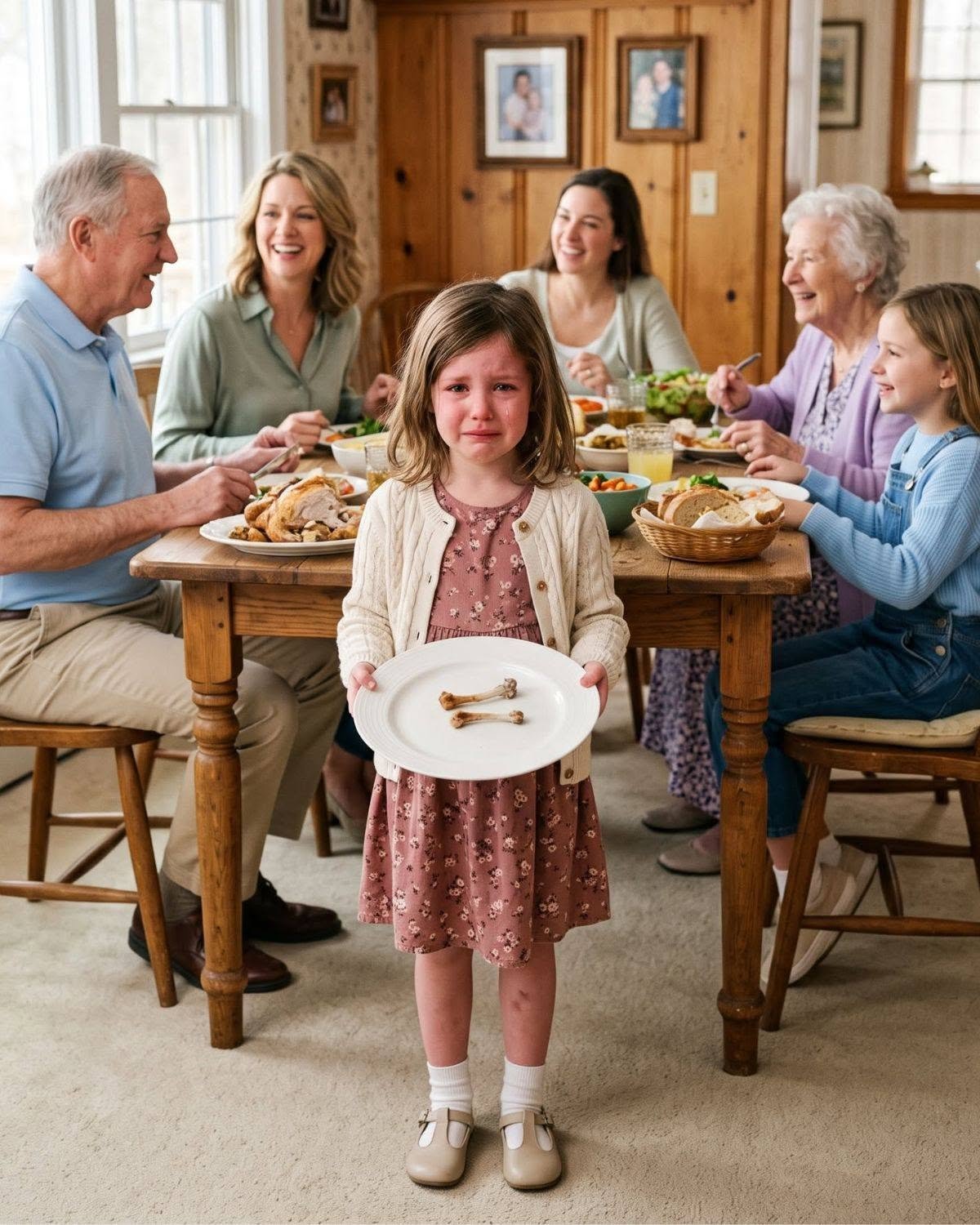
MY IN-LAWS TOOK MY DAUGHTER’S SERVICE DOG — AND EXPECTED ME TO DISCUSS IT OVER DINNER
I arrived at my in-laws’ house expecting the usual scene.
My eleven-year-old daughter, Lily, would normally be somewhere near the top of the stairs, with Max appearing beside her before I had even finished closing the front door.
But that evening, something felt wrong immediately.
The house was too quiet.
I found Lily upstairs.
She was terrified.
Her hands were shaking so badly that she could barely hold the note she had found.
Max was nowhere in sight.
The note contained only a few words.
It said he was “gone.”
Downstairs, meanwhile, everyone was preparing for what my mother-in-law had called a “special family dinner.”
I looked from Lily’s frightened face to the note in her hand and felt every instinct in me tighten.
But I didn’t confront anyone.
I didn’t start shouting.
Instead, I took out my phone.
And I began taking photographs.
Something told me I was going to need proof of exactly what had happened.
Because Max was not simply a dog that belonged to our family.
He was Lily’s certified psychiatric service dog.
He had been trained to recognize when her anxiety was escalating, interrupt panic episodes, and remain close when the world became too overwhelming for her.
For six years, Max had been the one constant Lily could depend on.
People who did not understand their relationship often saw only the surface.
They saw a girl who loved her dog.
They saw Max following Lily from room to room.
They saw him lying beside her chair, waiting outside the bathroom, or resting his head near her knee whenever she became quiet.
What they did not see was the change in Lily’s breathing before a panic episode.
They did not notice that Max often reacted before the adults around her even realized something was wrong.
They did not understand why Lily could enter a crowded family gathering with Max beside her when the same room might otherwise feel impossible.
Max gave her something no lecture about confidence had ever been able to provide.
A dependable response.
A sense of safety.
A familiar presence when her own body was telling her that she was in danger.
That was why the empty corner of the upstairs room disturbed me so much.
Max’s bed had always been there.
His bowls had always been nearby.
His toys had their own messy little corner that Lily was forever promising to organize.
Now everything was gone.
Not misplaced.
Not temporarily moved.
Removed.
The room didn’t look as though someone had forgotten something.
It looked planned.
Lily kept asking me where Max was.
Her voice was thin and uneven.
Every few seconds, she glanced toward the doorway as if Max might suddenly appear if she watched closely enough.
I sat in front of her and took both of her hands.
“Stay up here for me,” I said.
I kept my voice as steady as possible.
“I’m going to find out what happened.”
“Did Max run away?” she asked.
I looked at the note again.
I already had suspicions.
But Lily was frightened enough.
So I told her only what I knew.
“I don’t know yet.”
Then I started documenting the room.
First, I photographed the note exactly where Lily had found it.
I did not immediately put it in my pocket.
Then I photographed the empty place where Max’s bowls had been.
The area where he slept.
The bare corner where his toys normally stayed.
I also took wider photographs showing the entire room.
I wanted the images to make it impossible for anyone to later claim I had misunderstood what I had seen.
There was something deeply unnatural about doing that inside a family home.
I had been in that house for birthdays.
Holidays.
Ordinary weekends.
Countless family dinners where people complained about traffic, groceries, or who had forgotten dessert.
I had never imagined that one day I would stand upstairs photographing an empty dog bed because I was worried my own relatives might lie about what happened to my child’s service animal.
But I also understood what anger could do in a situation like this.
If I ran downstairs screaming, the argument would quickly become about my reaction.
They would call me emotional.
They would say I misunderstood.
They would talk over me until the original question disappeared underneath accusations about my attitude.
I wasn’t going to give them that opportunity.
So I left Lily upstairs and walked down toward the dining room.
The contrast between the two floors made my stomach turn.
Upstairs, my daughter was terrified and trying to control her breathing without the dog trained specifically to help her do that.
Downstairs, my mother-in-law was arranging dinner plates as if she were preparing for a photograph.
Polished silverware sat beside each setting.
Candles stood in the center of the table.
Something was roasting in the oven.
My father-in-law was opening a bottle of wine.
Nothing about their behavior suggested that an emergency had happened.
And that mattered.
If Max had accidentally escaped through a door, I would have expected panic.
If he had been hurt, I would have expected someone to call me.
If he had disappeared unexpectedly, I would have expected people searching the neighborhood.
Instead, they were setting the table.
“Where is Max?” I asked.
My mother-in-law barely looked up.
“You’ll understand at dinner.”
For a moment, I honestly thought I had misunderstood her.
Some answers are so inappropriate that your mind automatically tries to replace them with something more reasonable.
I stared at her.
“I’m asking where my daughter’s service dog is.”
My father-in-law exhaled loudly and put down the wine bottle.
His expression suggested that I was creating an inconvenience.
“Max is old,” he said.
Then he added that Max had become inconvenient.
And finally came the explanation that made everything upstairs suddenly make sense.
They believed Lily had become too dependent on him.
According to them, she needed to learn to manage her anxiety without an animal.
They spoke with the confidence of people who had already discussed the matter privately and decided that their judgment was more important than mine.
I listened.
Not because I agreed.
Because every sentence gave me more information.
This wasn’t an accident.
Max hadn’t wandered away.
Nobody had misplaced him.
They had intentionally removed him from Lily.
The realization landed with cold clarity.
For years, there had been comments.
Nothing dramatic enough to cause a major family fight.
But now I remembered every one of them.
“Does Lily really need Max everywhere?”
“Won’t she become dependent on him?”
“Maybe accommodations are stopping her from becoming stronger.”
I had answered those questions before.
I had explained what Max did.
I had explained that his role was not about spoiling Lily.
He was not a toy she carried around because she refused to grow up.
He was trained support.
I had assumed those conversations ended with disagreement.
Standing in that dining room, I realized my in-laws had apparently treated my explanations as suggestions they were free to ignore.
My mother-in-law continued arranging the table.
“You’ll understand at dinner,” she repeated.
Her calmness disturbed me almost more than the missing dog.
I did not argue.
At that moment, finding Max mattered more than winning a debate.
I walked outside.
Near the garage, I noticed fresh tire tracks.
Normally, I probably would not have paid attention.
But nothing felt normal anymore.
I photographed them.
Then I noticed something beneath a garden chair.
Red.
I bent down.
It was Max’s leash.
I recognized it immediately.
Lily had held that leash hundreds of times.
Seeing it without Max attached to the other end made my stomach tighten.
It looked as though someone had dropped it in a hurry and accidentally kicked it beneath the chair.
I photographed it before touching anything.
By then, I no longer wondered whether I was being too suspicious.
The note said Max was gone.
His belongings had been removed.
My in-laws admitted they believed Lily needed to live without him.
There were fresh tire tracks near the garage.
His leash had been left outside.
Those facts did not tell me where Max was.
But they told me enough about the kind of situation I was dealing with.
I went back inside.
My mother-in-law noticed my phone.
Her expression tightened.
Then she smiled.
“Stop investigating,” she said.
That word stayed with me.
Not worrying.
Not overreacting.
Investigating.
As though she already knew there was something to investigate.
She told me again that dinner would explain everything.
Then she said the family had made a difficult decision for Lily’s own good.
“One day, you’ll thank us.”
There was a time when that sentence would have pulled me immediately into an argument.
I would have demanded to know who gave them the right to make decisions for my daughter.
I would have asked how they could remove a psychiatric service dog from an eleven-year-old without her parent’s permission.
I would have asked how they could calmly prepare dinner while Lily sat upstairs terrified.
But anger was not going to tell me where Max was.
And every minute I spent fighting with them was another minute I wasn’t searching for him.
So I said nothing.
That seemed to surprise them more than shouting would have.
I turned around and went upstairs.
Lily was exactly where I had left her.
She looked at my face before I said anything.
“Did you find him?”
I sat beside her.
I hated that I couldn’t say yes.
“Not yet.”
Her fingers twisted into the fabric near her knees.
Her breathing was already becoming uneven.
And that made my anger rise again.
Because Max would normally have responded to that exact moment.