
The Weight of Silence
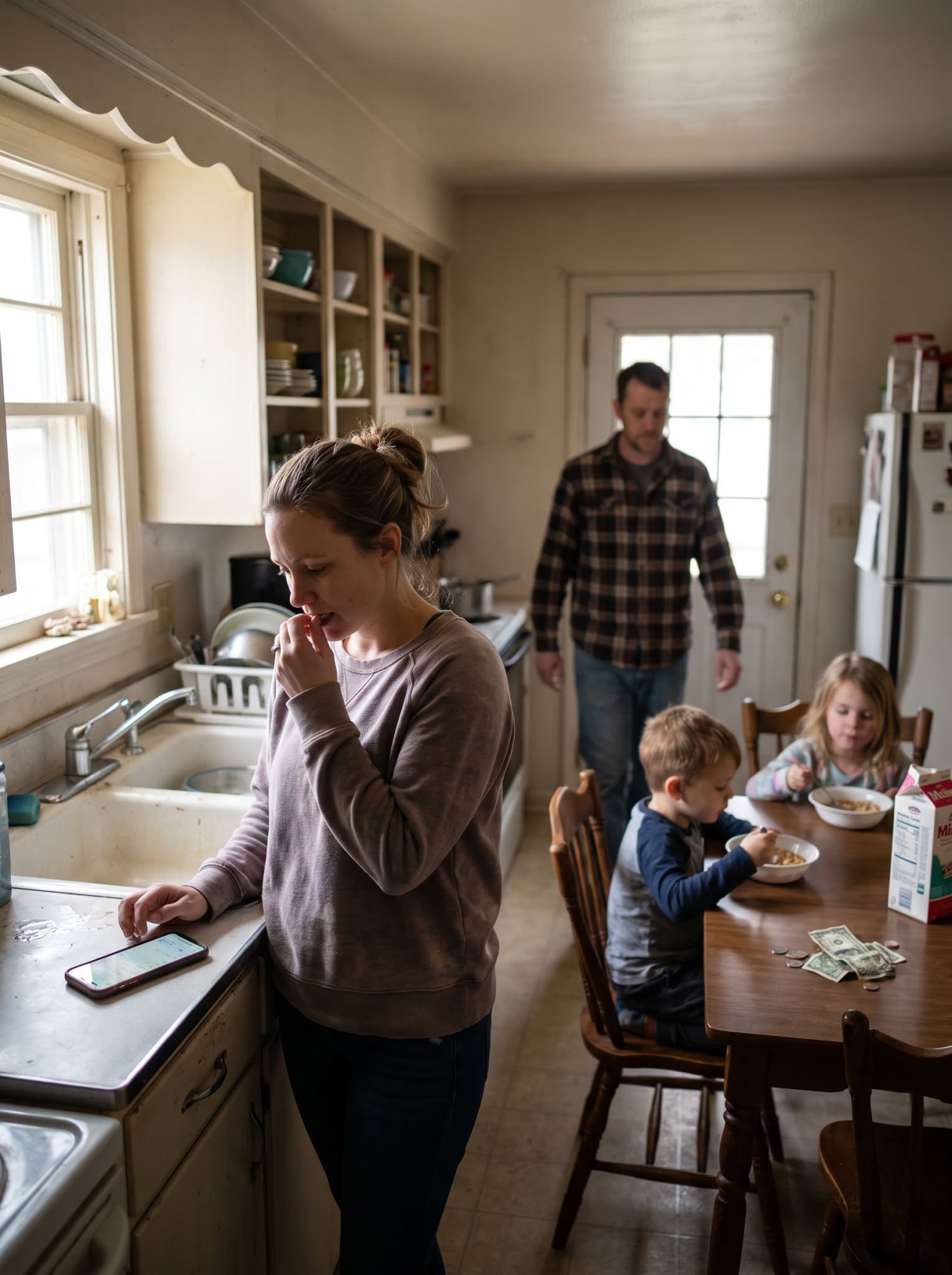
Raghav threw eighty dollars on the kitchen table like he was feeding a stray dog, and my children watched their mother’s face like they were learning which expression meant survival.
“Stop buying meat, Vaidehi. Rice and dal are enough for people like us.”
My son looked at the money. My daughter looked at me. And my husband shouted about rent in Chicago, about how it was choking him while I sat comfortably at home all day.
Comfortably.
I worked nights cleaning offices inside an elementary school. I scrubbed toilets after other people’s children went home, emptied their trash cans, wiped their desks, mopped their hallways. By five in the morning, my back was burning and my hands smelled of disinfectant. Then I came home and cooked breakfast, packed lunch boxes, washed Raghav’s uniforms, took the kids to school. I slept three broken hours between shifts. And still he called me comfortable.
For one year, he kept saying money was tight. America was expensive. Winter was cruel. Gas prices were killing him. The delivery van needed repairs. Every payday, he gave me less for groceries. First I stopped buying fish. Then chicken. Then fruit. Then milk, except for the children. I walked six blocks in snow to use coupons at the Indian grocery on Devon Avenue. I stitched my son’s torn sneakers with black thread. I watered down shampoo. I ate leftover rice with pickle so Raghav’s lunchbox could still have fresh sabzi.
I believed we were drowning together. I did not know I was drowning alone while he built a swimming pool for another woman.
Last Friday, he came home in a hurry. He told me he had an extra warehouse shift and asked me to pack his food fast. He went to shower and left his phone on the kitchen counter. Then it began vibrating. Again. Again. Again.
The screen lit up with an auto-payment notification. Tower Vista Residences. Monthly furnished apartment rent paid. Ms. Kiara may collect duplicate keys from concierge.
My body went cold.
Kiara. The young woman from the next block. No job. Fresh nails every week. Perfume strong enough to enter before she did. I touched the screen with hands that had cleaned strangers’ floors all night.
His WhatsApp opened to photos. Raghav and Kiara at a rooftop restaurant downtown. Raghav holding a steak dinner while my children had been eating boiled noodles. Raghav buying her gold earrings while I counted pennies for school socks. Then I saw his last message.
Rent is paid, my queen. Stay comfortable. My wife is on rice and dal thinking there’s no money in this country. That fool never leaves the apartment.
The kitchen did not spin. I did not faint. Something worse happened. My tears dried instantly. All those nights. All those swollen feet. All those lunchboxes packed with love. All those times I told my children, “Papa is working hard.” I had been funding another woman’s soft bed with my exhaustion.
Raghav came out of the bathroom smelling of my soap.
“Food ready?”
I looked at him. Then at the phone. Then at the lunchbox I had packed with hot parathas because, even poor, I had never sent my husband hungry.
“Yes,” I said.
He took it and left for his extra shift. I did not scream. I did not throw his clothes from the balcony. Not yet. I sat at the table and took photos of everything. The rental receipt. The messages. The restaurant bills. The transfers. The voice note where Kiara laughed and said, “Your wife really thinks rent is high?”
Then I opened the closet and pulled out every old suitcase we owned.
His shirts. His colognes. His leather shoes. His fake gold chain. His immigration papers. All packed into black garbage bags by midnight. I was not angry. Anger is for people who still have hope. I was something colder. I was certain.
At noon the next day, I called the building owner. The rent came from my school-cleaning salary. The money orders had my name. The lease had my signature. Raghav’s name was only added because I once believed marriage meant trust.
By evening, the lock was changed. By night, his things were in garbage bags near the door.
I thought he would beg. But fate wanted witnesses.
Yesterday afternoon, Raghav’s delivery van got a flat tire on Devon Avenue, right outside the grocery where half our Indian neighborhood shops. He called me twenty-three times. I did not answer. Then his phone, still connected to our family tablet, received another message from Kiara.
Baby, don’t come here tonight. Your wife’s lawyer called the apartment office asking for copies of the lease.
I stared at the tablet. Lawyer? I had not called any apartment office yet. Then another message came.
And please delete the papers about the children’s savings account before she finds out you emptied it for my deposit.
For a moment, the words did not make sense. My children’s savings account. The small credit union account I had opened the winter after my daughter Anika was born. The account where birthday money went. Diwali envelopes. Tax refunds. Every extra fifty dollars from my night shifts. The account I told my son Kabir was for his college dreams, and he once said, “Then I will become a doctor, Ma, so you never have to clean bathrooms again.”
I stared at the tablet until the letters blurred. Raghav had not just stolen from me. He had reached into my children’s future with the same hands that threw eighty dollars on my kitchen table.
The tablet buzzed again. Kiara: Also my concierge said a woman came asking questions. Indian. Older. Maybe your mother?
My blood went colder. My mother was in India. Then who?
Before I could think, the tablet rang. Raghav. Twenty-fourth call. This time, I answered.
His voice exploded through the speaker. “Vaidehi, where are you? My tire burst. I am standing like an idiot on Devon. Bring the spare key. And why did the building owner say the lock is changed?”
I looked around my apartment. His garbage bags were by the door. The children’s shoes were lined up neatly. Dinner was simmering on the stove because even war does not stop children from getting hungry.
“Ask your queen to bring the key,” I said.
Silence.
“Kiara,” I added.
His breathing turned sharp. “Vaidehi, listen—”
“No,” I said. “You listen. I know about Tower Vista Residences. I know about the rent. I know about the steak dinners. I know about the gold earrings. And now I know about Kabir and Anika’s savings account.”
He said nothing. That silence was uglier than any confession.
“Where are the papers?” I asked.
“What papers?”
“The account withdrawal papers.”
“Don’t start drama on the phone.”
Drama. That word followed women across countries, across languages, across kitchens and courtrooms. Men could destroy homes, drain accounts, lie in children’s faces, but the moment a woman named the wound, it became drama.
I lowered my voice. “Raghav, I have photos of everything. Your messages. Her messages. The rent receipts. If you come to this apartment shouting, I will call the police before you remove your shoes.”
His voice dropped into the one he used when he wanted to scare me without witnesses. “You think America will save you? You are nothing here without me.”
I looked at my hands. Cracked from bleach. Rough from winter. Strong from surviving him. “No,” I said. “I became something because of what I did while you were pretending to work.”
Then I ended the call.
For ten minutes, I stood completely still. Then I opened the banking app. The children’s savings account balance loaded slowly. Available balance: $12.43. I sat down on the kitchen floor. Not because I wanted to, but because my legs stopped obeying. There had been eighteen thousand seven hundred dollars. Not much to rich people. Everything to us. Every double shift. Every skipped doctor visit. Every time I told the children, “Next month we will buy new shoes.” Gone.
Anika came out of the bedroom holding her homework folder. “Ma? Why are you sitting on the floor?”
I wiped my face quickly, but she had already seen. She was seven. Old enough to understand tears. Too young to carry them.
“Come here,” I whispered.
She came slowly and sat beside me. Kabir followed from the hallway, holding his worn basketball.
“Is Papa angry again?” he asked.
I looked at both of them. Their faces. Their trust. Their hunger for a father who had been feeding another life with their mother’s exhaustion. “No,” I said. “Tonight, Papa is going to learn what happens when he hurts this house.”
Kabir’s eyes hardened in a way no ten-year-old boy’s eyes should. “Did he take our money?”
I froze. “How do you know?”
He looked down at the basketball. “I heard you once telling Mrs. Patel downstairs that the college account was our safety. And yesterday Papa asked me where you keep bank letters.”
My breath stopped. “What did you tell him?”
Kabir’s face crumpled. “I told him the blue folder because he said he needed to fix something for taxes. I’m sorry, Ma.”
I pulled him into my arms. “No. No, beta. You did nothing wrong. He used your trust. That is not your fault.”
Anika crawled into my lap too, and for a few seconds we sat on the cold kitchen floor, three people holding each other while the dal boiled over on the stove. Then the doorbell rang. All three of us froze.
I looked through the peephole. It was not Raghav. It was Mrs. Patel from downstairs. Beside her stood an older white woman in a navy coat, carrying a leather folder. Mrs. Patel lifted her hand. “Vaidehi beta, open. This is important.”
I opened the door but kept the chain on. Mrs. Patel’s eyes moved to my face and softened. “I heard everything last night when he came home shouting in the hallway. And this morning the building owner told me you changed the lock. Good.”
The woman beside her stepped forward. “My name is Margaret Ellis. I’m a family-law attorney. Mrs. Patel asked me to look at some documents.”
I blinked. “You called Kiara’s apartment?”
Margaret nodded once. “I did. Mrs. Patel came to me because she was worried about you and the children. We requested leasing information only where your wages appeared connected to payments. The office got nervous and called the tenant.”
Mrs. Patel placed a hand on my arm. “I should have told you, beta. But you never ask for help. So this time I did not wait.”
For the first time that day, my tears almost came back. Not from weakness. From being seen.
Margaret looked past me at the children, then lowered her voice. “May I come in?”
I unchained the door. Within fifteen minutes, my kitchen table looked different. Not like a place where eighty dollars had been thrown at me. Like a battlefield with evidence lined up. Tablet. Screenshots. Bank records. Rental receipt. Garbage bags. Children’s savings statement. Margaret read everything without interrupting. Then she looked at me.
“Did you authorize any withdrawal from the children’s account?”
“No.”
“Was his name on it?”
“As father. But withdrawals over five thousand needed my approval. I signed that at the credit union.”
Margaret’s face changed. “Then either the bank failed its own rule, or your signature was forged.”
My stomach dropped. Mrs. Patel muttered a prayer. Kabir stepped closer. “Can Papa go to jail?”
The room went silent. I turned to him. “I don’t want you to think about jail.”
“But he stole.”
I knelt before him. “Yes. And adults will handle it.”
His jaw trembled. “He said rice and dal are enough for people like us.”
Anika whispered, “But Kiara got steak?”
I closed my eyes. Children hear everything. Even when we hide receipts. Even when we smile over watered dal. Even when we say, “Papa is tired.” I held both their hands.
“Listen to me. What Papa did is wrong. What he said is wrong. But your worth was never in what was on your plate. I should have told you that sooner.”
Anika looked at me. “Are we poor?”
I swallowed. “We are not poor in love. Money, we will rebuild.”
Kabir asked, “Without him?”
I looked at the garbage bags by the door. “Yes.”
At 6:12 p.m., my phone rang. This time, it was not Raghav. It was Kiara. I answered on speaker. Her voice was shaky. “Vaidehi didi, listen. I didn’t know about the children’s money.”
Mrs. Patel’s eyebrows rose. Margaret silently started recording notes. I said nothing.
Kiara continued quickly. “He told me you were lazy. He told me you refused to work. He told me the money was his. I swear I didn’t know he took from kids.”
I laughed softly. “You knew I was eating rice and dal.”
Silence.
“You laughed about it in a voice note,” I said.
Her breathing changed. “I was angry. He said you insulted me.”
“I did not know you existed.”
That shut her up. Then she whispered, “He is coming to your building.”
I stood. “What?”
“He got the tire fixed. He is drunk. He said he will teach you manners. I don’t want trouble. I am leaving the apartment.”
“Kiara.”
“Yes?”
“Do not delete anything.”
End Part Here: My Husband Told Me To Make Miracles With Rice While He Paid For Another Woman’s Luxury…